What Is a High-Temperature Wire? Definition, Materials and Selection Guide
Learn what high-temperature wire is, common ratings and materials, and how to choose wire for voltage, current, heat and movement.

High-temperature wire is an insulated electrical conductor designed to maintain electrical insulation and mechanical integrity when ordinary building or control wire would degrade. There is no single universal temperature cutoff: depending on the catalog and standard, the term may describe products rated from about 125°C or 150°C to several hundred degrees Celsius.
TEBAOFLEX PRODUCT ROUTE
Review the high-temperature cable range
Open the dedicated product range to compare high-temperature cable constructions before sending the voltage, temperature and installation details for technical review.
What is a high temperature wire?
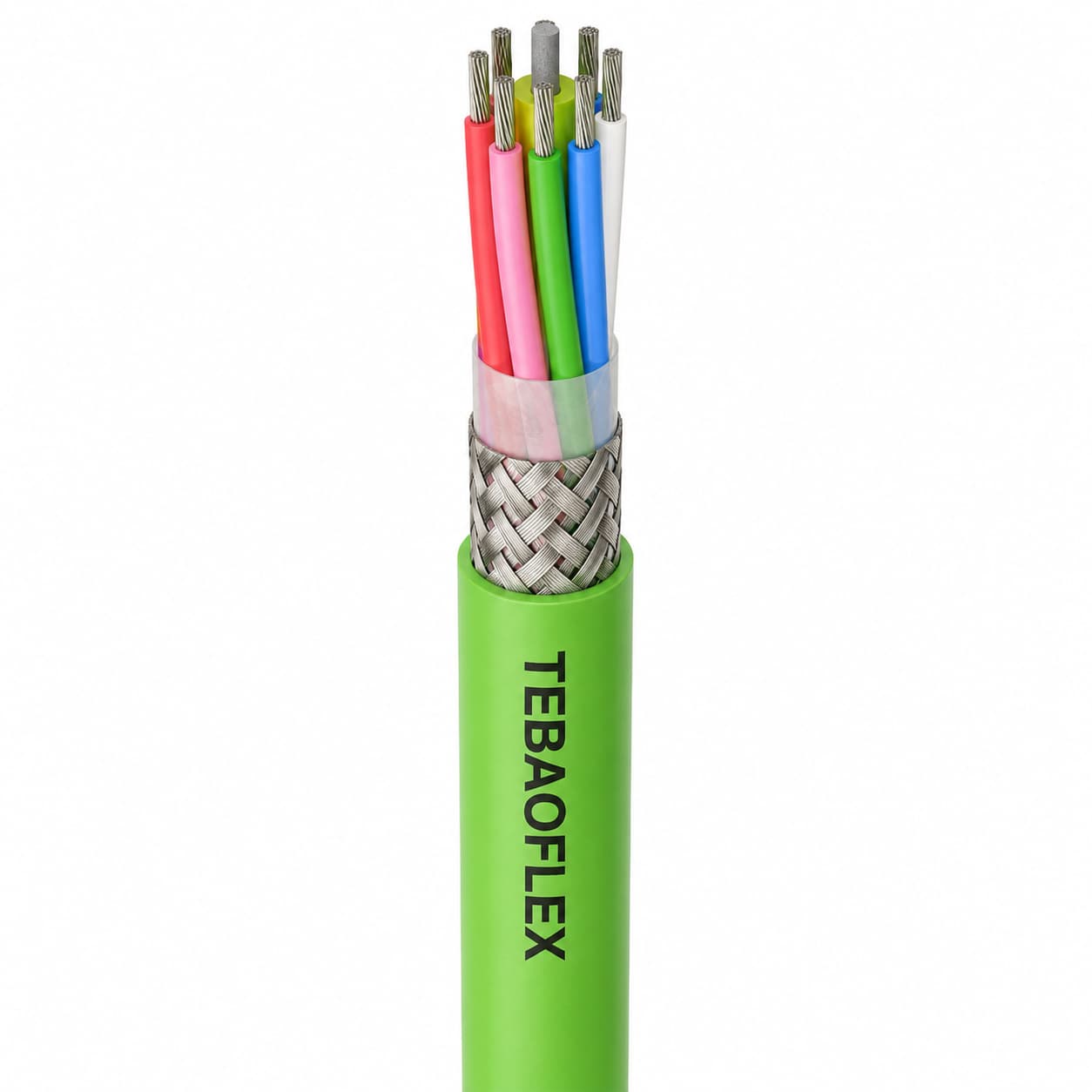
A high-temperature wire is a wire or cable construction whose insulation system is designed for a specified elevated operating temperature. The construction must keep the conductor electrically separated and physically protected under the stated conditions; it is not enough for the insulation to survive a brief touch of heat.
Current high-temperature wire guides commonly describe the product as a solution for locations where standard PVC or general-purpose rubber insulation can soften, crack, melt or lose electrical performance. The exact definition varies by product family: some catalogs use 125°C as a high-temperature class, while others begin at 150°C. For that reason, the correct specification is the published continuous conductor or ambient temperature rating for the exact product.
How hot can high-temperature wire get?
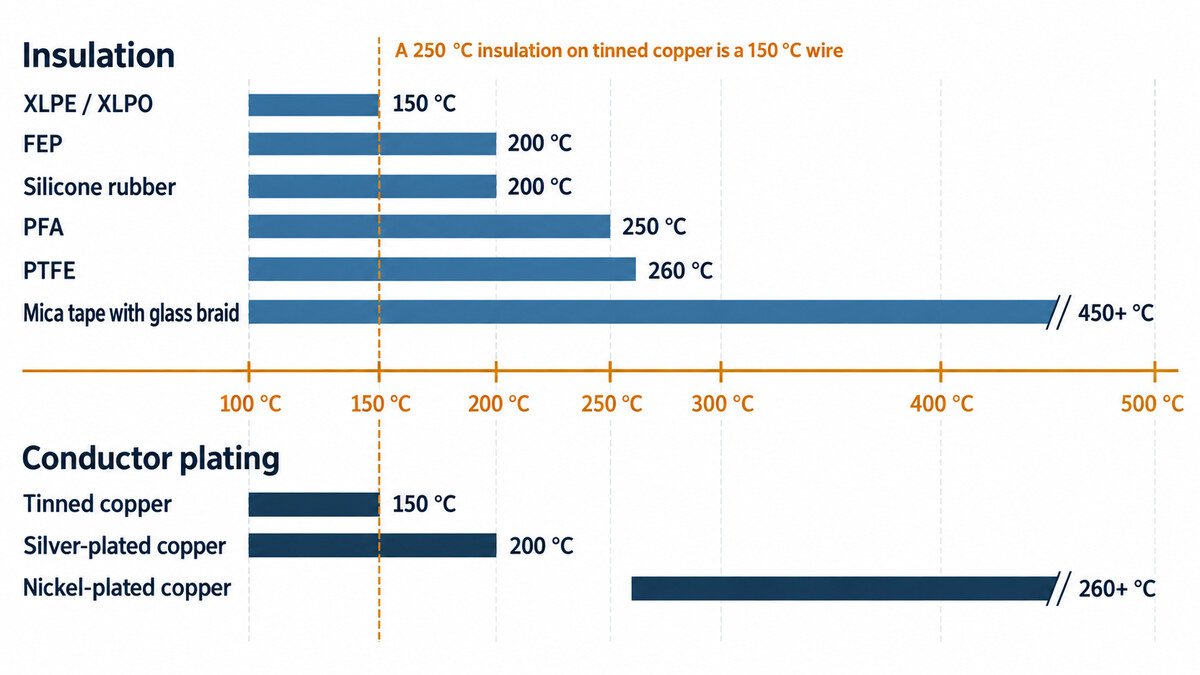
High-temperature wire may be rated at 125°C, 150°C, 180°C, 200°C, 250°C or higher, but those figures are not interchangeable. A continuous operating rating, an ambient-temperature rating, an overload rating and a short-circuit rating describe different conditions.
For example, a product may permit a higher conductor temperature for a short circuit than for normal continuous service. TEBAOFLEX’s published DAA1093 AAR S-501/RP-585 DLO wire is listed as a 125°C product, with a separate short-circuit temperature shown on its product data. That distinction is why an RFQ should state the normal maximum temperature, temporary overload condition and short-circuit requirement separately.
| Term | What it means | Why it matters |
|---|---|---|
| Ambient temperature | The temperature around the installed cable. | Heat transfer and derating depend on the installation environment. |
| Continuous conductor temperature | The maximum conductor temperature allowed during normal service. | This is usually the key thermal rating for continuous load selection. |
| Overload temperature | A permitted temporary condition defined by the product or standard. | It must not be treated as the normal operating rating. |
| Short-circuit temperature | A brief fault condition with a separate time limit. | It does not make the wire suitable for continuous operation at that temperature. |
Which materials are used in high-temperature wire?
The temperature capability comes from the complete construction, especially the insulation and protective layers. Common material groups include silicone rubber, PTFE, FEP, PFA, cross-linked polyolefin, mica, fiberglass braid and mineral insulation. Each solves a different combination of heat, flexibility, chemical exposure and mechanical stress.
| Construction material | Typical selection reason | Check before ordering |
|---|---|---|
| Silicone rubber | Flexible insulation for hot equipment, motor leads and compact routing. | Confirm the exact continuous rating, tear or abrasion protection, oil exposure and termination method. |
| PTFE, FEP or PFA | High thermal stability with strong electrical and chemical resistance in many designs. | Check flex life, cold flexibility, cut-through risk and compatibility with the installation. |
| XLPO or other cross-linked insulation | Thermoset performance with a balance of heat, mechanical and fluid resistance. | Confirm the voltage class, flame performance, conductor rating and product standard. |
| Mica, fiberglass or mineral insulation | Used when the thermal exposure is beyond the practical range of common polymer insulation. | Confirm bendability, moisture sealing, braid or jacket protection and termination requirements. |
Is high-temperature wire the same as resistance wire?
No. High-temperature wire is primarily designed to carry electrical power, control signals or instrumentation while its insulation remains within the specified temperature range. Resistance wire is intentionally made with a higher electrical resistance so that it generates heat when current flows. A high-temperature lead may connect a heater, but it is not automatically the heating element itself.
Where is high-temperature wire used?
High-temperature wire is used where heat is part of the electrical installation rather than an occasional accident. Common applications include industrial ovens and furnaces, heating equipment, motor and generator leads, steel and glass processing equipment, automotive engine compartments, electric powertrain assemblies, aerospace equipment and other OEM machinery.
The application alone does not select the cable. A furnace lead may need heat and braid protection; an automotive wire may need compact routing and vibration resistance; a mobile industrial cable may need heat resistance together with repeated bending, oil resistance and abrasion protection.
How do you choose the right high-temperature wire?
Choose the wire from the complete duty cycle, not from a temperature number or material name alone. Use the following sequence when preparing a technical request, then verify the final construction against the applicable datasheet, standard and installation requirements before approval.
In practice, the best choice is the construction that satisfies the thermal duty and the electrical load while also fitting the route, movement, environment, termination and approval requirements. A higher temperature label does not remove the need to check those other constraints.
- Record the thermal profile. State the highest continuous ambient and conductor temperature, any short-term peak, heating and cooling cycles, and the coldest installation temperature.
- Confirm electrical duty. Provide system voltage, current, phase arrangement, conductor size, core count, ampacity method and whether the circuit carries power, control, data or a temperature-sensing signal.
- Describe movement. Identify fixed, flexing, trailing, reeling, festoon, torsional, suspended or chain duty. Include travel length, speed, cycles, drum data and minimum bend radius where relevant.
- Match the environment. Note oil, water, steam, chemicals, UV, ozone, abrasion, impact, molten splash, radiation, dust and restricted ventilation. A heat-resistant insulation may still be unsuitable for the surrounding chemicals or movement.
- Verify the standard and approval scope. Ask for the exact product standard, voltage rating, temperature rating, test documents and market-specific approval. A company-level certificate does not automatically approve every cable construction.
- Check termination and installation. Confirm stripping length, lug or connector compatibility, screen bonding, bend radius, strain relief and the installation instructions supplied with the selected wire.
What does TEBAOFLEX offer for high-temperature wire applications?
TEBAOFLEX is the trade name used by Jiangsu Tebaoflex Special Cable, a special-cable manufacturer based in Taicang, Jiangsu, China. The company’s published cable range includes high-temperature and silicone cable families, but the correct product must be matched to the project’s electrical, thermal, mechanical and environmental requirements.
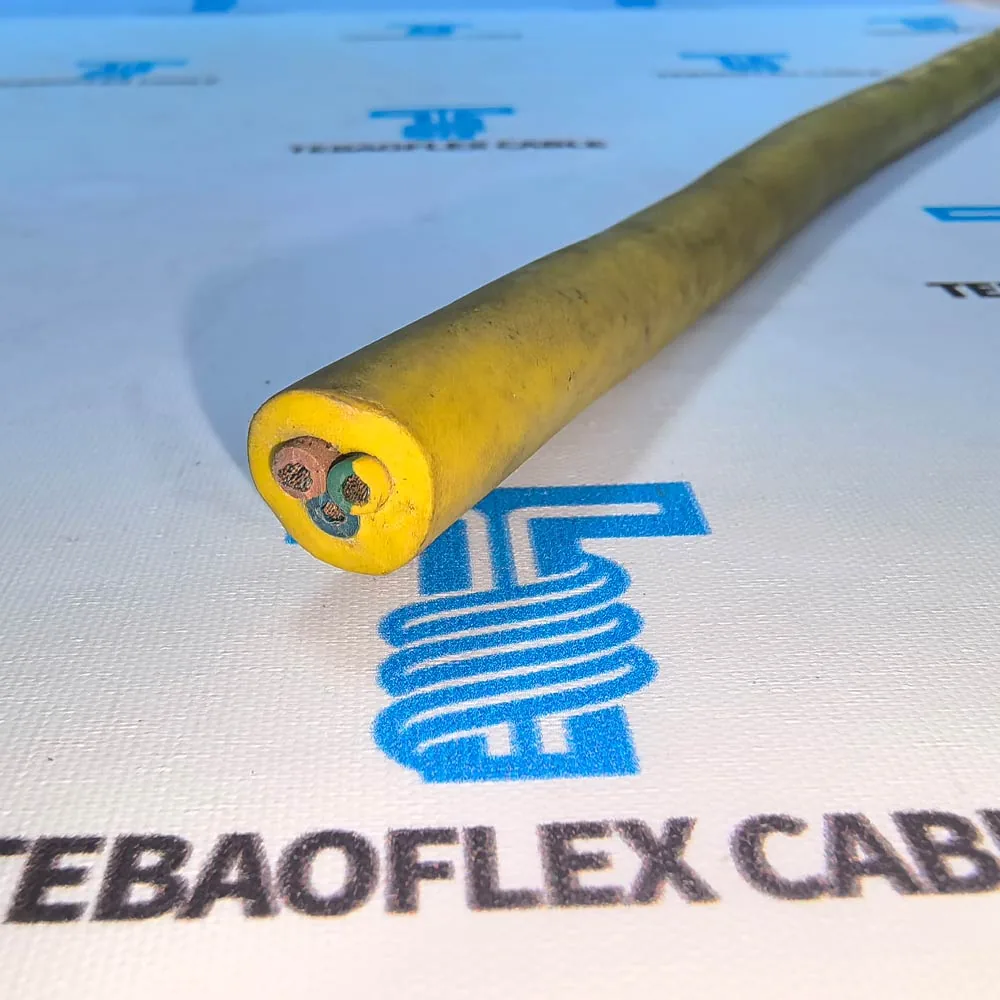
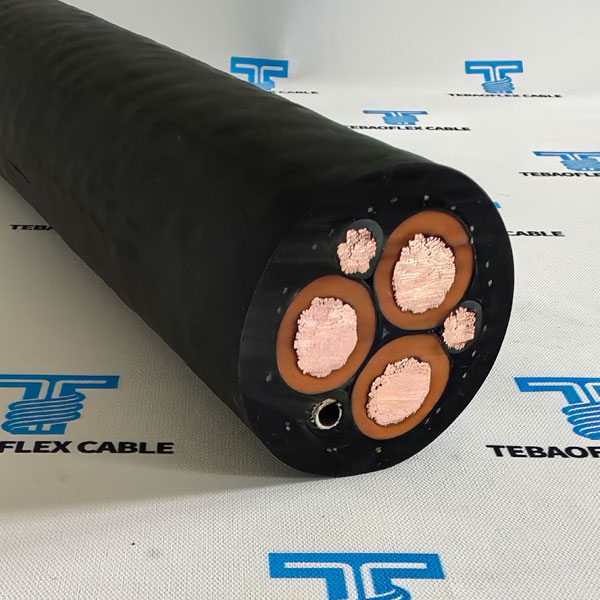
One published TEBAOFLEX example is the DAA1093 AAR S-501/RP-585 125°C XLPO DLO wire. Its product page lists 600V and 2,000V versions, stranded tinned copper conductors, XLPO insulation and a 125°C rating for diesel-electric locomotive, mining, motor-lead, shipyard and generator applications. This is an example of a high-temperature power wire; it should not be treated as a universal substitute for silicone, PTFE, mica or mineral-insulated constructions.
As of August 17, 2026, the company profile records UL/cUL, VDE, KC and ISO certificates with defined scopes. For a project quotation, TEBAOFLEX should confirm the approval and documentation that apply to the exact selected construction and destination market.
What information should be included in a high-temperature wire RFQ?
Send the cable name or existing marking if available, system voltage, current, conductor size, core count, maximum continuous temperature, transient temperature, movement pattern, installation length, environmental exposure, required standard, quantity and termination details. A drawing or photograph of the route is useful when the cable is installed near a heat source or moves repeatedly.
Use the TEBAOFLEX cable engineering service to describe the application and construction questions. You can also send the project information through the TEBAOFLEX contact route. The final wire selection remains subject to the project engineer, the applicable standard and the exact product documentation.
High-temperature wire FAQs
What temperature qualifies as high-temperature wire?
There is no single universal cutoff. Some catalogs use 125°C or above, while others describe 150°C or above as high temperature. Use the exact continuous rating of the product being specified, and separate it from overload and short-circuit ratings.
Is silicone wire automatically high-temperature wire?
No. Silicone is commonly used for heat-resistant insulation, but the actual temperature rating depends on the specific compound, construction, voltage class, jacket, installation and standard. Confirm the product datasheet and continuous rating rather than selecting by the word “silicone” alone.
Can a 200°C wire be used continuously at 200°C?
Only when the manufacturer’s datasheet defines 200°C as the applicable continuous rating for the actual installation. Ambient temperature, conductor temperature, ampacity, bundling, movement and termination can change the allowable operating condition, so the installed system still needs engineering review.
What is the difference between high-temperature wire and high-temperature cable?
Wire often describes a single insulated conductor or a simpler lead assembly. Cable usually describes two or more conductors and may include fillers, screens, armor, braids or an outer jacket. The boundary is product- and market-dependent, so the construction drawing is more useful than the label.