Port Cranes
Ship-to-Shore, RTG and RMG Cranes
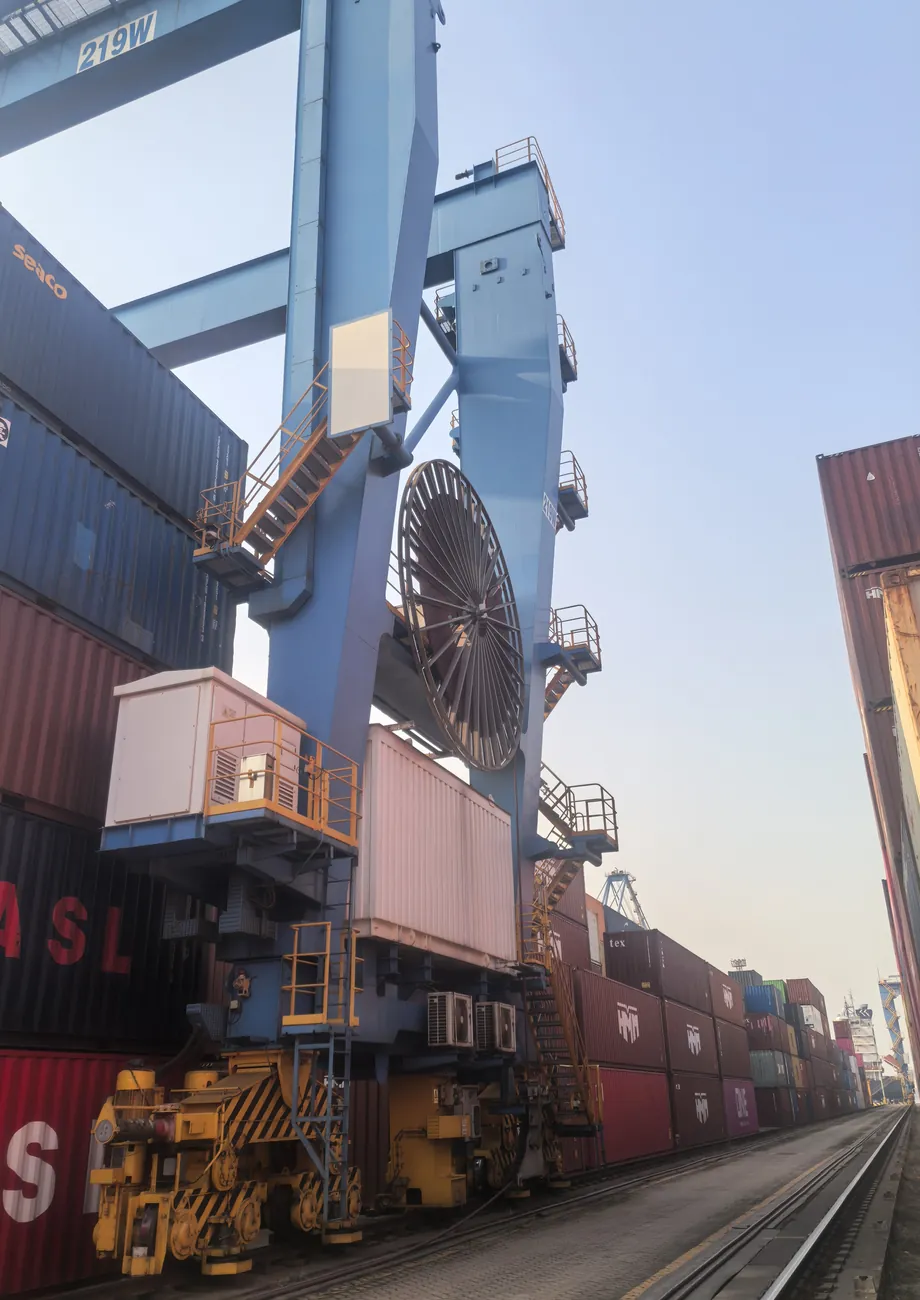
Reeling and festoon cables for container cranes, with flat and round festoon types and control cables for circuits that do not travel.


Heavy-duty rubber cables for mining, port cranes, submersible pumps, EV charging, elevators and marine duty. Pick a family to filter the range.
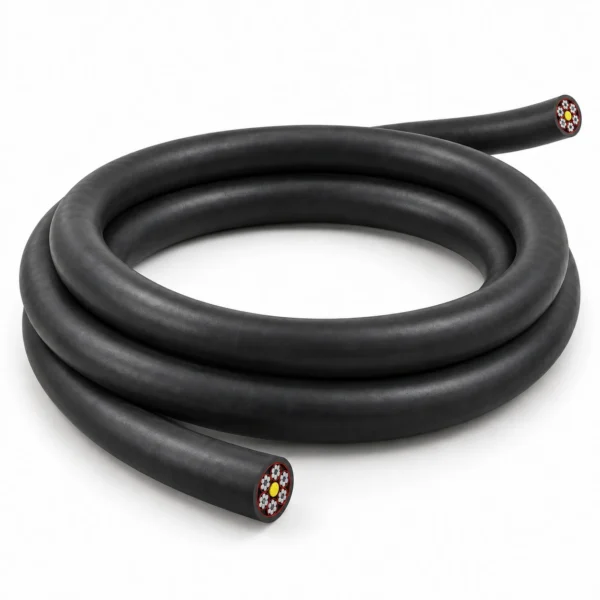
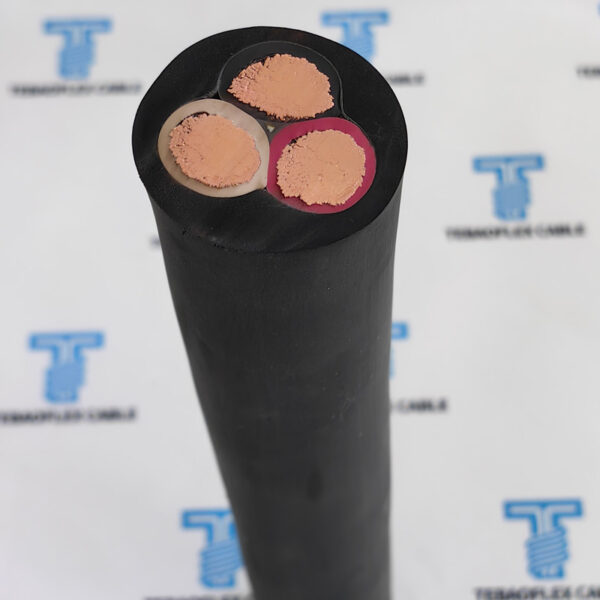
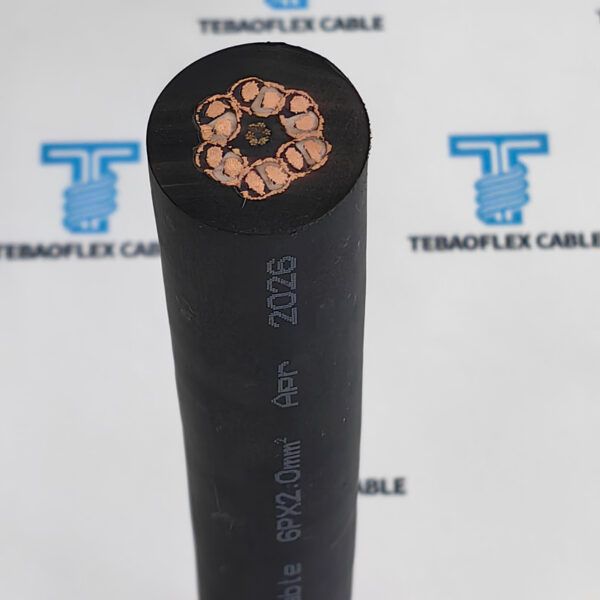
TEBAOFLEX port crane cables are built to move with the crane: round NSHTOU-J and PNCT cables for motorised or spring reels and spreader baskets, flat NGFLGÖU-J and screened NGFLCGÖU-J festoon cables, and round PUR-C-HF-J and CUR-2PNCT/3PNCT festoon alternatives. Ratings are 300/500 V, 600 V and 0.6/1 kV, with Class 5 or Class 6 copper, EPR insulation and chloroprene or halogen-free PUR sheaths for ship-to-shore, RTG and RMG cranes. YY, LiYY, YSLYSY and PUR-JZ control cables cover circuits that do not travel.
Showing all 8 results
Model comparison, operating conditions and RFQ checklist.
A port crane cable is a flexible power, control or data cable built to move with the crane. It is wound on a motorised or spring-driven reel, carried in loops on a festoon trolley track, dropped into a spreader basket, or laid as fixed control wiring. Compared with installation cable it uses finely stranded conductors and rubber or polyurethane sheaths, and it serves ship-to-shore, RTG and RMG cranes, stacker-reclaimers and hoists.
The cable-handling system sets the mechanical stress, so choose by system first.
Values are taken from each product page. A dash means the page states no value.
| Model | Rated voltage | Construction / key feature | Typical application | Reference standard |
|---|---|---|---|---|
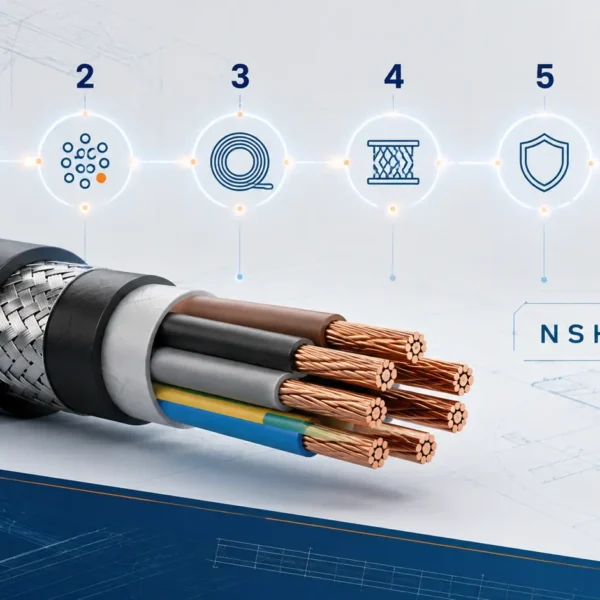
| NSHTOU-J rubber crane reeling cable | 0.6/1 kV | Class 5 tinned copper, EPR (3GI3) insulation, PCP sheaths with polyester anti-torsion braid | Reel systems, horizontal reeling | IEC/EN 60332-1-2 (flame propagation) |
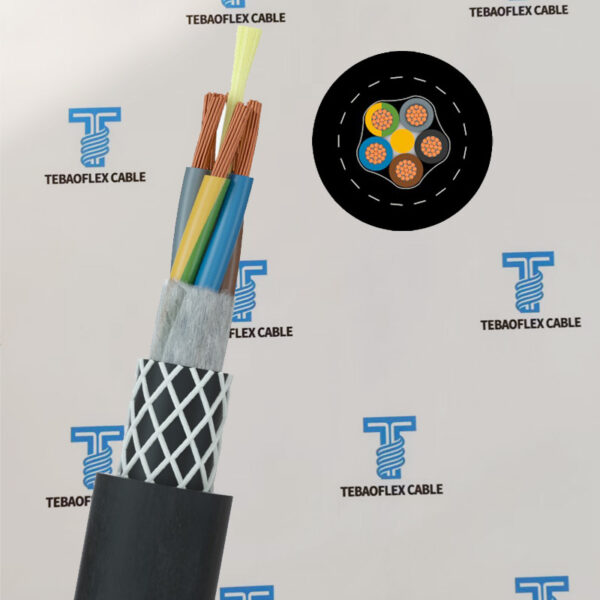
| 600V 2PNCT-SB-3C-T-B PNCT cable | 600 V | EPR insulation, chloroprene sheath; RE reeling, RE(V) vertical reel, H-3PNCT flat reel, CUR and SK festoon variants | Reeling, festoon and basket operation on port cranes | JIS C 3327 |
| 600V CUR-2PNCT / CUR-3PNCT-SB festoon cable | 600 V AC | Class 5 tinned copper, EPR insulation, chloroprene sheath; 3PNCT adds a canvas reinforcement layer | Festoon trolleys; 2PNCT light and medium duty, 3PNCT heavy duty and long travel | JIS C 3327 |
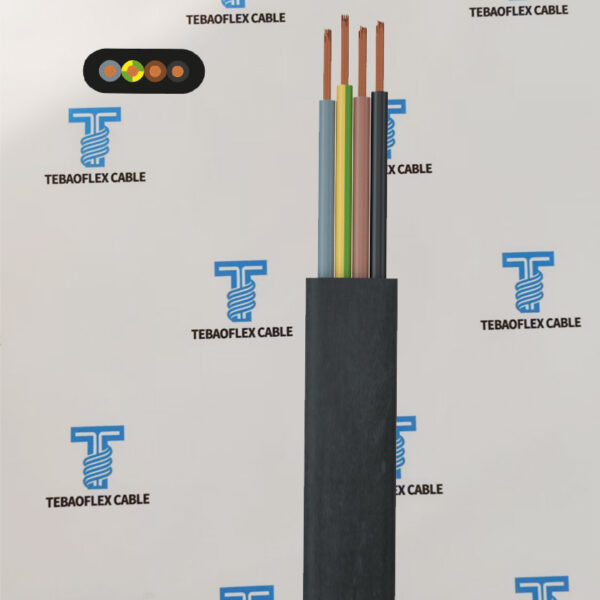
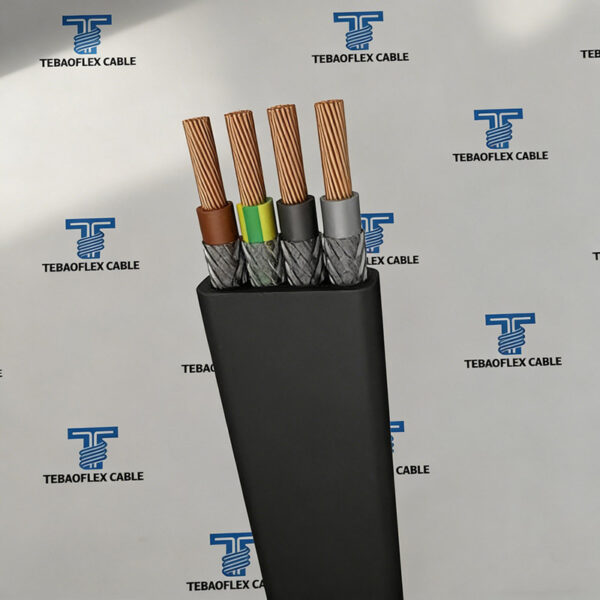
| Flat NGFLGÖU-J (NGFLGOEU) rubber festoon cable | 300/500 V | Flat, unscreened; copper Class 6 (≤25 mm²) or Class 5 (≥35 mm²); EPR insulation, chloroprene sheath | Festoon trolleys and conveyors, bending in one plane | DIN VDE 0250-809 |
| Flat NGFLCGÖU-J (NGFLCGOU-J) screened festoon cable | 300/500 V | Flat; EPR insulation, tinned copper wire braid screen, chloroprene sheath | Festoon circuits with frequency-converter or servo drives | – |
| PUR-C-HF-J EMC festoon cable | 0.6/1 kV | Round; Class 5 copper, halogen-free insulation, tinned copper braid (min. 80 % coverage), halogen-free flame-retardant PUR sheath | Crane bridge festoon systems; cable chains | DIN EN 60228 Class 5 (conductor); IEC 60332-1-2 (flame test) |
General-purpose types for fixed or occasionally moved wiring. Their pages give no reeling or festoon rating.
| Model | Rated voltage | Construction / key feature | Typical application | Reference standard |
|---|---|---|---|---|
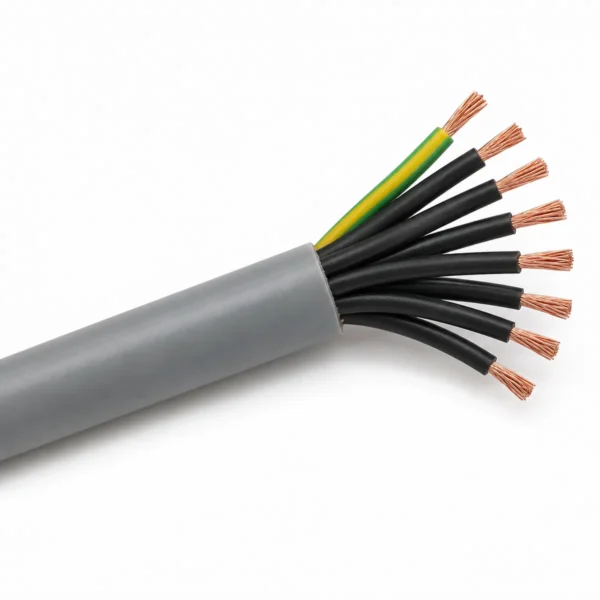
| YY Control Cable | Low voltage; see product page | Stranded copper, PVC insulation and sheath, unscreened | Control cabinets, indoor or protected wiring | – |
| LiYY Cable | Low voltage; see product page | Class 5 fine-stranded copper, PVC, unscreened | Signal and data circuits in panels | – |
| YSLYSY Cable | Low voltage; see product page | PVC insulation, overall copper braid or foil/braid screen, PVC sheath | Screened control and signal wiring | – |
| PUR-JZ Control Cable | Low voltage; see product page | Fine-stranded copper, numbered cores with green-yellow earth, PUR sheath | Handling equipment, occasional movement | – |
For a replacement-planning example, see the Hai Phong 6.6 kV 3PNCT replacement review, including the reel geometry, drawing and inspection information to confirm before production approval.
Further application background is in the port container crane cable solutions overview. Request current test reports and certification documents for the exact model at RFQ stage.
Send these details through the TEBAOFLEX contact page to have the construction and datasheet confirmed.
What sets TEBAOFLEX Port Crane Cable apart in service.
Constructions for motorised or spring reels, festoon trolleys and spreader baskets, chosen first by the cable-handling system on the crane.
NSHTOU-J has a polyester anti-torsion braid between PCP inner and outer sheaths, in a vulcanised bond, for frequent winding under tensile and torsional stress.
Flat NGFLGÖU-J and NGFLCGÖU-J stack on trolley saddles and bend in one plane, with Class 6 copper up to 25 mm².
Tinned copper wire braids of at least 80 % coverage on NGFLCGÖU-J and PUR-C-HF-J for frequency-converter and servo drives.
PUR-C-HF-J lists oil resistance to DIN EN 60811-404, ozone, UV and water use to 50 m; NSHTOU-J has an oil-, weather- and water-resistant sheath.
NSHTOU-J up to 120 m/min in horizontal reeling; PUR-C-HF-J up to 200 m/min on festoon systems and 60 m/min in horizontal reeling.
Capabilities across the Port Crane Cable range; each product page lists the exact construction, rating and reference standard.
| Specification | Available options |
|---|---|
| Product types | Reeling cable (NSHTOU-J, PNCT reeling variants); festoon cable (flat NGFLGÖU-J, screened NGFLCGÖU-J, PUR-C-HF-J, CUR-2PNCT/3PNCT, SK-3PNCT flat); auxiliary control cable (YY, LiYY, YSLYSY, PUR-JZ) |
| Rated voltage | 300/500 V (NGFLGÖU-J, NGFLCGÖU-J); 600 V (PNCT, CUR-2PNCT/3PNCT); 0.6/1 kV (NSHTOU-J, PUR-C-HF-J); low voltage (control cables) |
| Conductor | Class 5 tinned copper (NSHTOU-J, CUR-2PNCT/3PNCT); Class 5 plain copper (PUR-C-HF-J); Class 6 up to 25 mm² and Class 5 from 35 mm² (flat festoon cables); Class 5 fine-stranded copper (LiYY) |
| Cores and cross-section | NGFLGÖU-J from 4 cores (1.5–240 mm²) up to 24 cores; NGFLCGÖU-J from 4 × 1.5 to 4 × 120 mm²; 2–24 cores (PNCT, CUR-2PNCT/3PNCT); NSHTOU-J sizes include 5 × 1.5, 12 × 2.5 and 24 × 2.5 mm² |
| Insulation | EPR (reeling and festoon cables; type 3GI3 on NSHTOU-J); halogen-free EPR-based compound (PUR-C-HF-J); PVC (YY, LiYY, YSLYSY) |
| Sheath | Chloroprene rubber (PNCT, CUR-2PNCT/3PNCT, flat festoon cables); PCP inner and outer sheaths (NSHTOU-J); halogen-free flame-retardant PUR (PUR-C-HF-J); PVC (YY, LiYY, YSLYSY); PUR (PUR-JZ) |
| Screening | Tinned copper wire braid, minimum 80 % coverage (NGFLCGÖU-J, PUR-C-HF-J); overall copper braid or foil/braid screen (YSLYSY); unscreened (NGFLGÖU-J, YY, LiYY) |
| Reinforcement | Polyester anti-torsion braid (NSHTOU-J); canvas reinforcement layer (CUR-3PNCT); optional aramid tensile yarn (CUR-2PNCT/3PNCT); central textile strength member (PUR-C-HF-J) |
| Temperature | -25 to +80 °C flexible, -40 to +80 °C fixed (NSHTOU-J); -40 to +80 °C mobile, -50 to +80 °C fixed (PUR-C-HF-J); 80 °C rated temperature (PNCT, CUR-2PNCT/3PNCT) |
| Minimum bending radius | 8 × D mobile, 6 × D fixed (PUR-C-HF-J); 5 × D to 10 × D in motion (flat festoon cables, confirm per model) |
| Reference standards | JIS C 3327 (PNCT, CUR-2PNCT/3PNCT); DIN VDE 0250-809 and HD 308 S2 (NGFLGÖU-J); DIN EN 60228 (conductors); IEC/EN 60332-1-2 (flame propagation) |
| Documents | Datasheet, test report and certification documents for the exact model on request at RFQ stage |
Where Port Crane Cable from TEBAOFLEX is installed.
NSHTOU-J with a polyester anti-torsion braid for horizontal reeling at up to 120 m/min, where tensile load, torsion and layer pressure act together.
02PUR-C-HF-J screened festoon cable for crane bridges and for STS, RTG and RMG festoon systems, with festoon travel speeds up to 200 m/min.
03Flat NGFLGÖU-J stacks on trolley saddles for festoon trolleys, conveyors and material handling equipment that bend the cable in one plane.
04Screened NGFLCGÖU-J with a grounded tinned copper braid for frequency-conversion drives, servo systems and combined power and signal circuits.
05CUR-3PNCT-SB with a canvas reinforcement layer for heavy-duty festoon with long travel on RTG and RMG cranes and bucket wheel stacker-reclaimers.
06PNCT cables for basket operation and RE(V) vertical-reel variants; state the drop height and basket diameter in the enquiry.
Four decisions specify the right cable the first time; send them with your RFQ and our engineers confirm the type designation.
Motorised or spring reel, festoon trolley, spreader basket or fixed wiring: the system sets the tensile, torsion and bending load on the cable.
300/500 V flat festoon, 600 V PNCT or 0.6/1 kV reeling and PUR festoon cable, with cores, cross-sections and any data or fibre elements.
Travel speed and acceleration against the product limit; drum, sheave, roller and saddle diameters against the bending radius for moving use.
A screened braid on converter-fed drives; sheath resistance to water, oil, UV and salt; halogen-free only where the product page states it.
Cable packages engineered around the application, not just the cable.
Reeling and festoon cables for container cranes, with flat and round festoon types and control cables for circuits that do not travel.
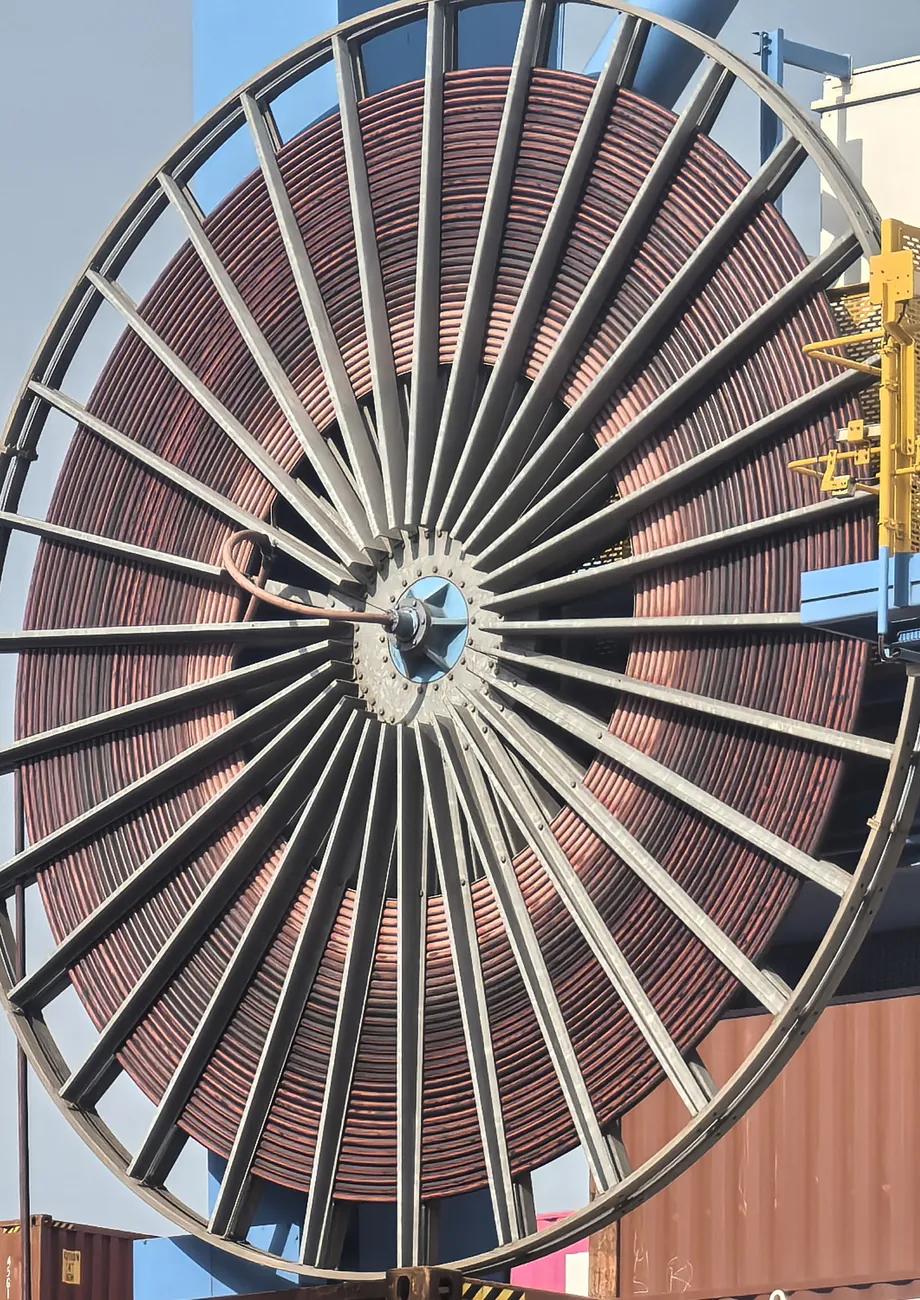
Round NSHTOU-J with a polyester anti-torsion braid for horizontal reels, and PNCT RE and RE(V) variants for reel and vertical-reel duty.
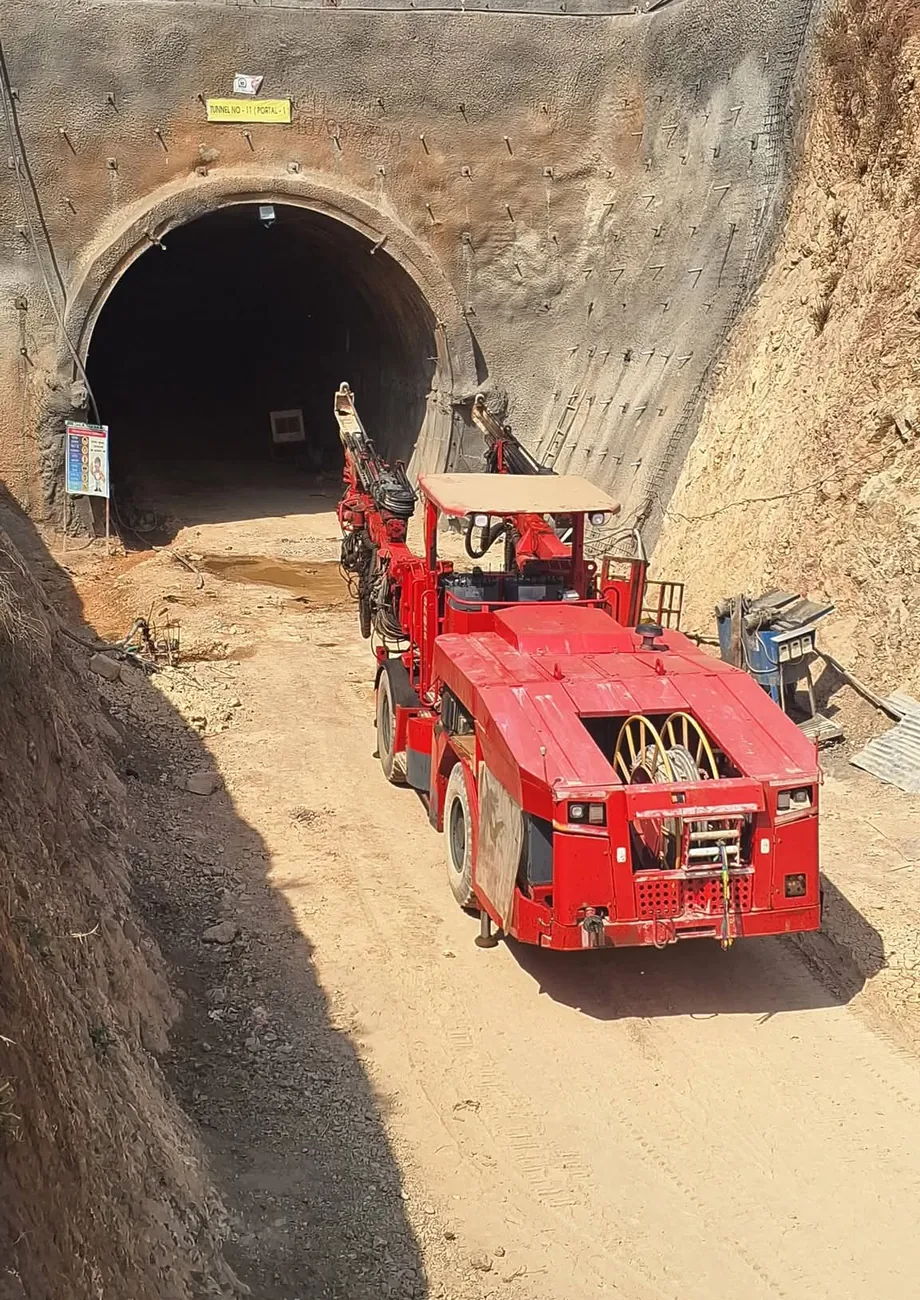
NSHTOU-J is also listed for underground and open-cast mines and conveyors; screened NGFLCGÖU-J serves converter drives at mines and steel mills.
Recent deliveries from the TEBAOFLEX project team.
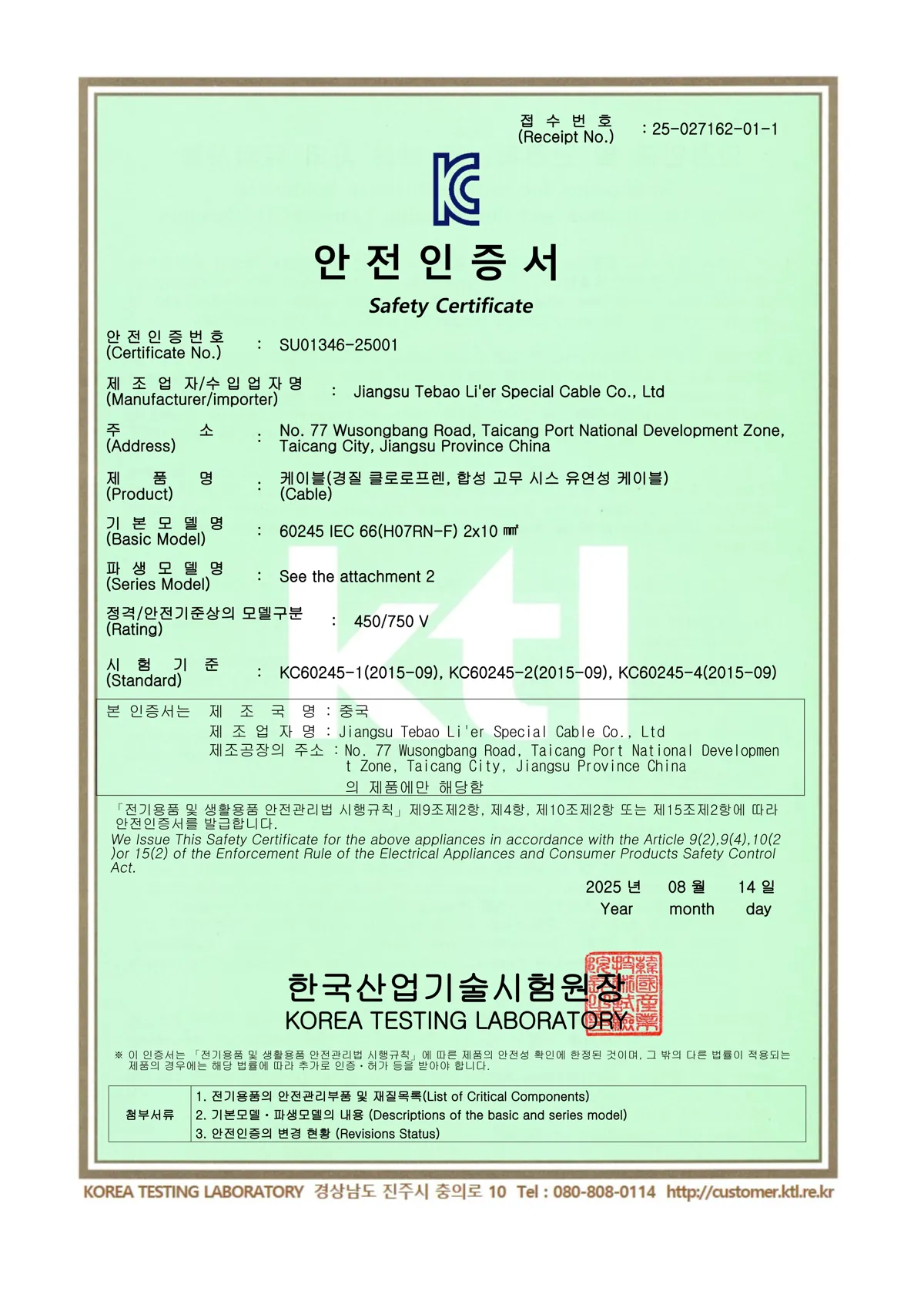
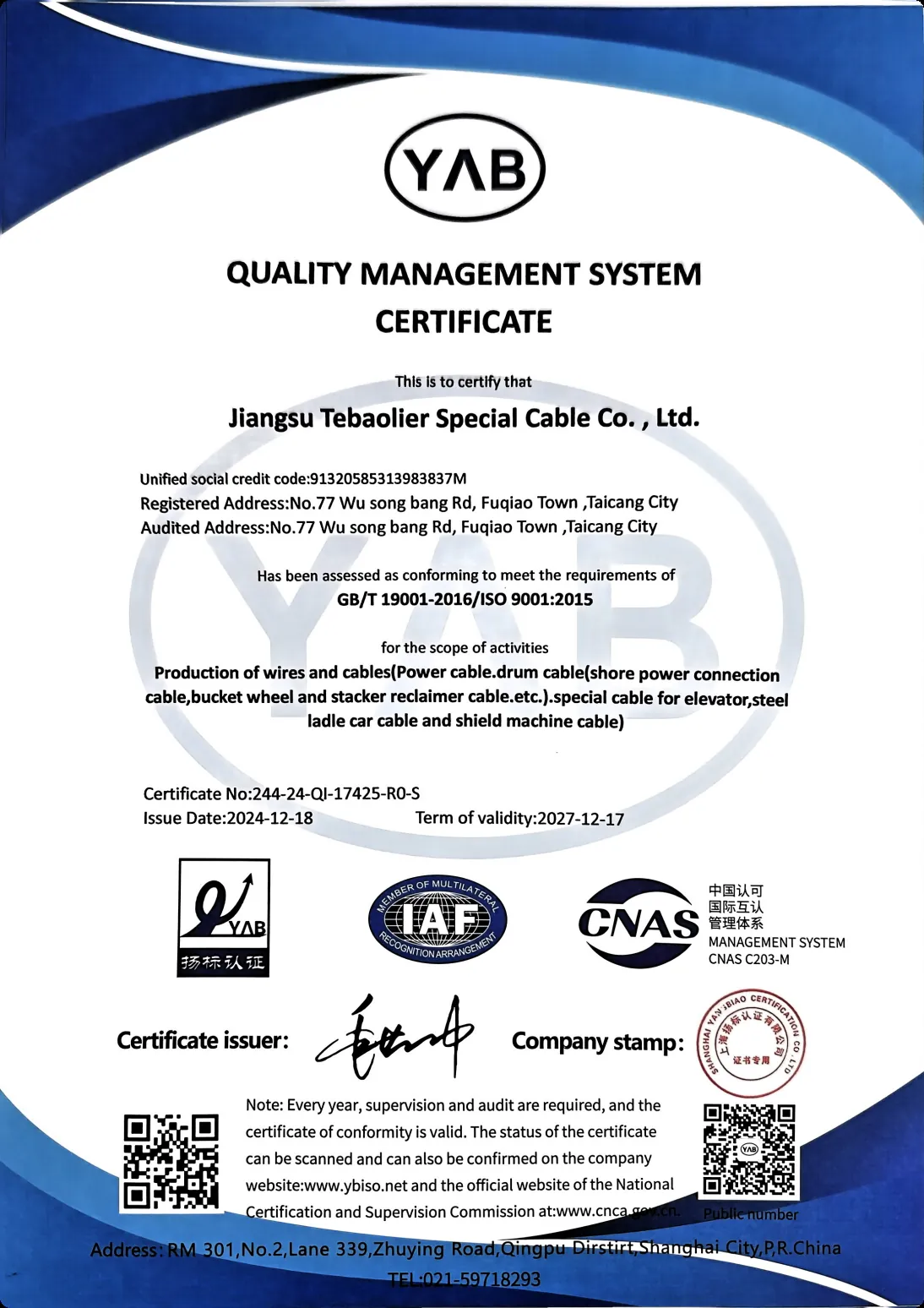
ISO 9001 quality management for cable production; ISO 14001 and ISO 45001 for sales and related management. UL and cUL (flexible cord), VDE (EN 50525-2-21), Korea KC, China MA and US MSHA approvals cover the certified types; CE is a third-party verification of conformity (VoC).
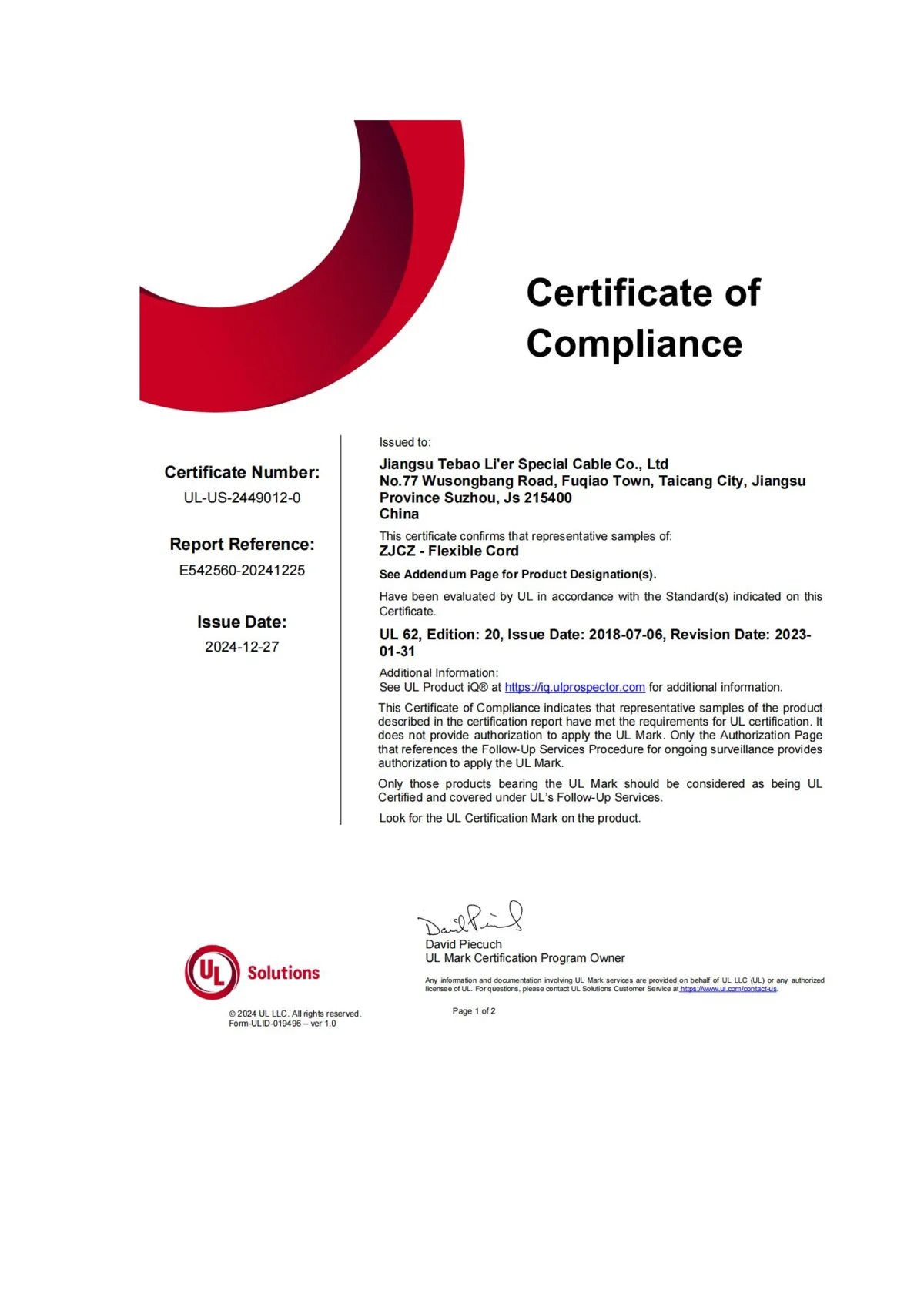
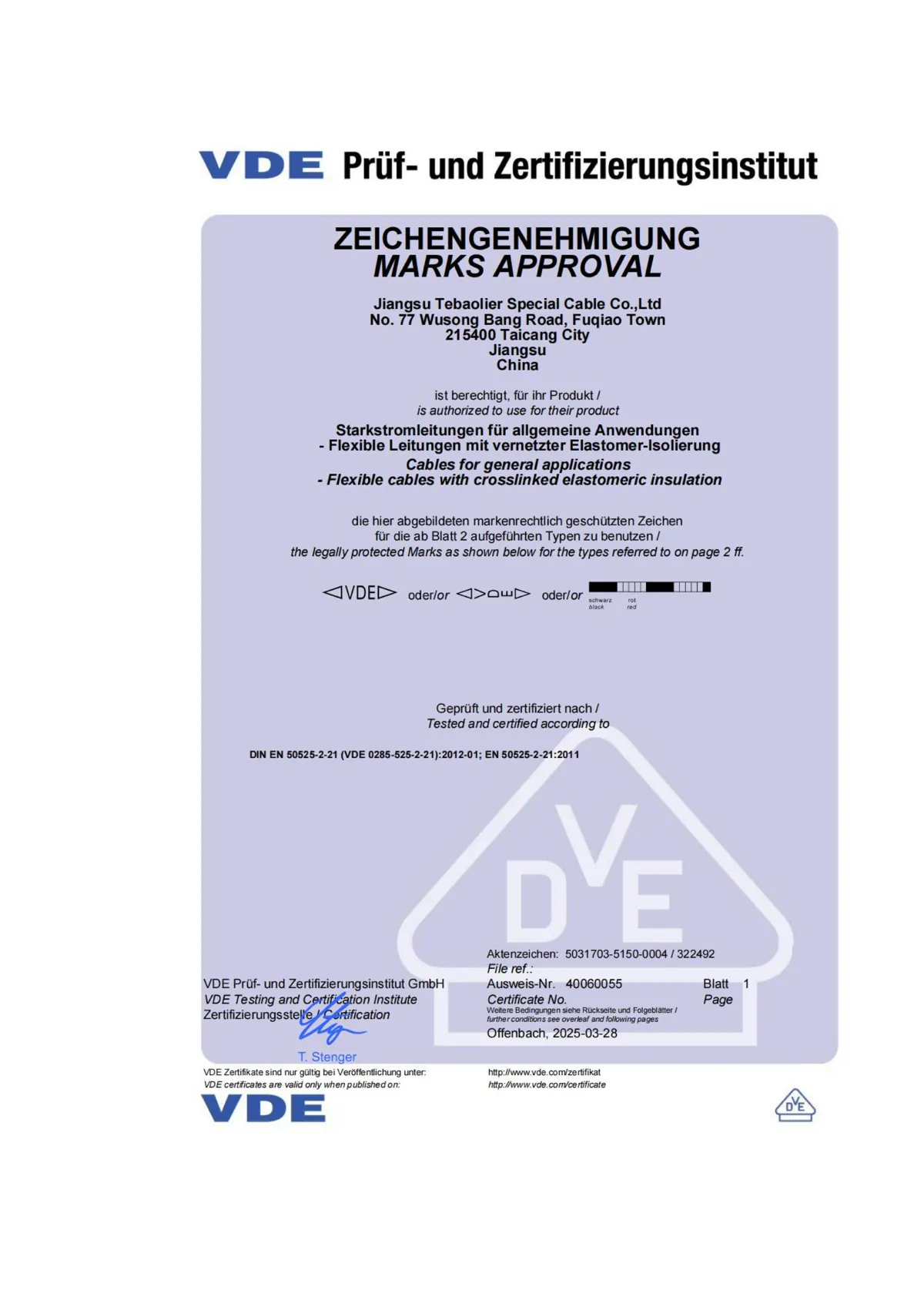
From compound to shipment, the production steps and routine tests behind each cable length.
EPR, CPE, PUR and silicone compounds are mixed and tested for hardness, tensile strength and elongation before use.
Tinned or bare copper is bunched and rope-stranded to Class 5/6 flexibility for trailing and reeling duty.
Cores are extruded and continuously vulcanised; wall thickness and spark tests are recorded on every length.
Cores, earth conductors, pilot and fibre-optic elements are laid up with the fillers and screens the type designation requires.
Reinforced double-sheath constructions are extruded and cured for abrasion, oil and tear resistance.
Conductor resistance, voltage withstand and insulation resistance tests at the levels set by the referenced standard.
Bending, tensile, hot-set, ozone and flame tests according to the referenced standard.
Metre marking, drum packing and documentation for worldwide project delivery.
Five-stage quality assurance from incoming copper to the packed drum.
Every batch of copper rod, rubber compound and reinforcing material is checked before it reaches the line.
Stranding, insulation extrusion, core assembly and sheathing run under recorded process parameters.
Finished lengths go through the routine tests required by the referenced VDE, ICEA, IEC or NEK standard.
Samples from production are tested for the duty a mining, crane or submersible cable will actually see.
Before packing, the cable is checked against the order and the flame-performance requirement of its standard.
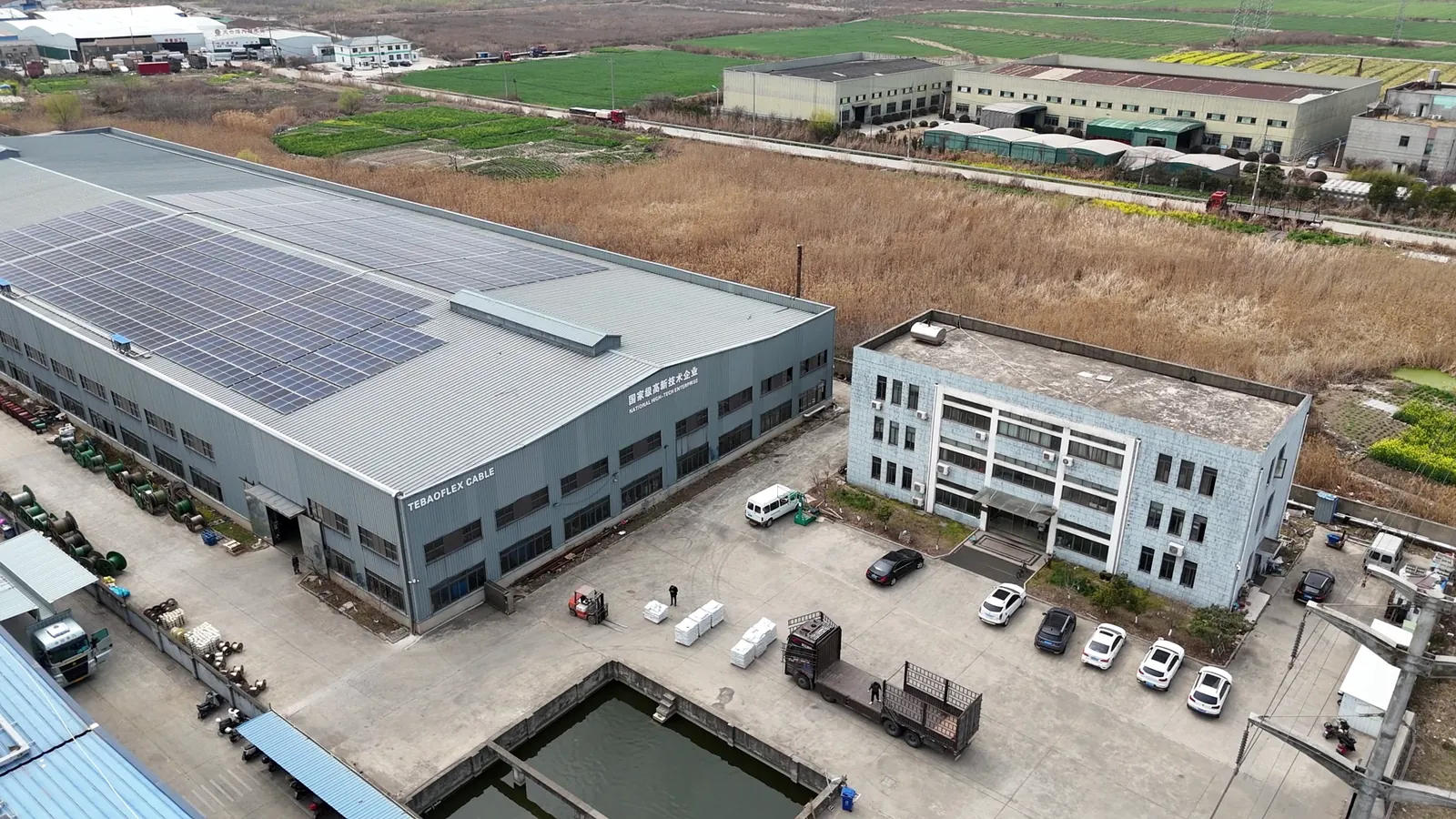
TEBAOFLEX CABLE, No.77 Wusongbang Road, Taicang, Suzhou.
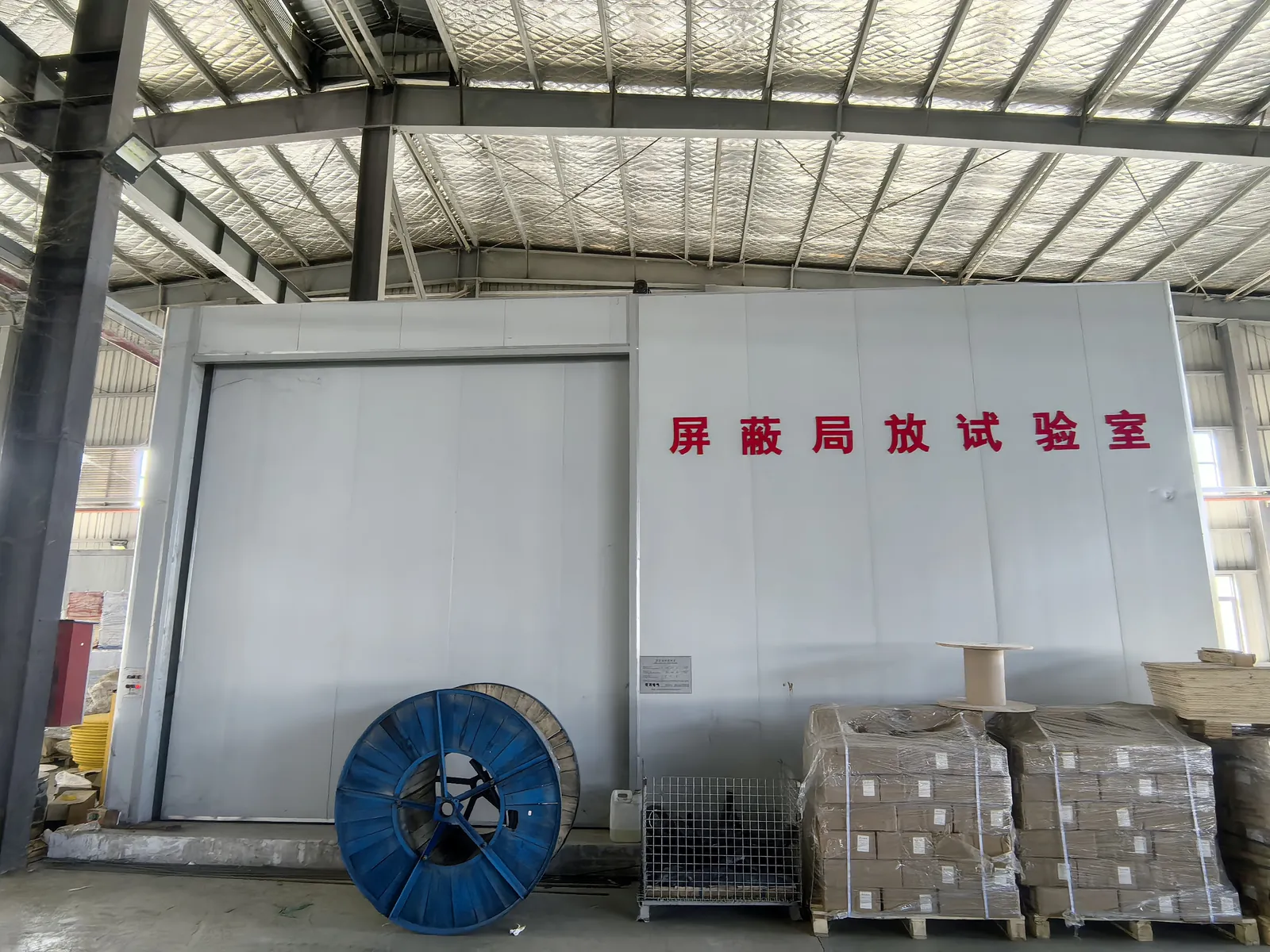
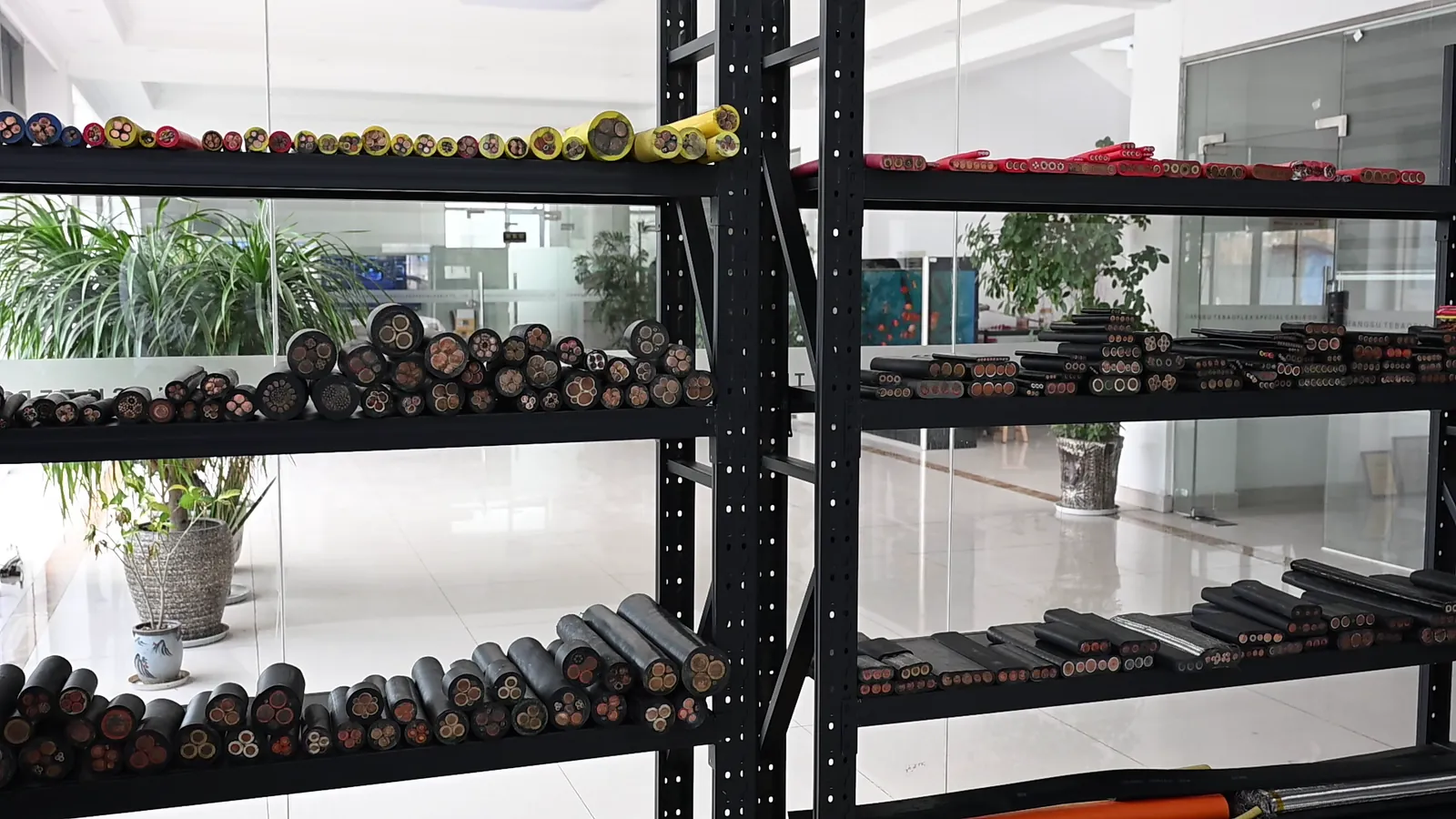
Selection and application guides from the TEBAOFLEX engineering team.
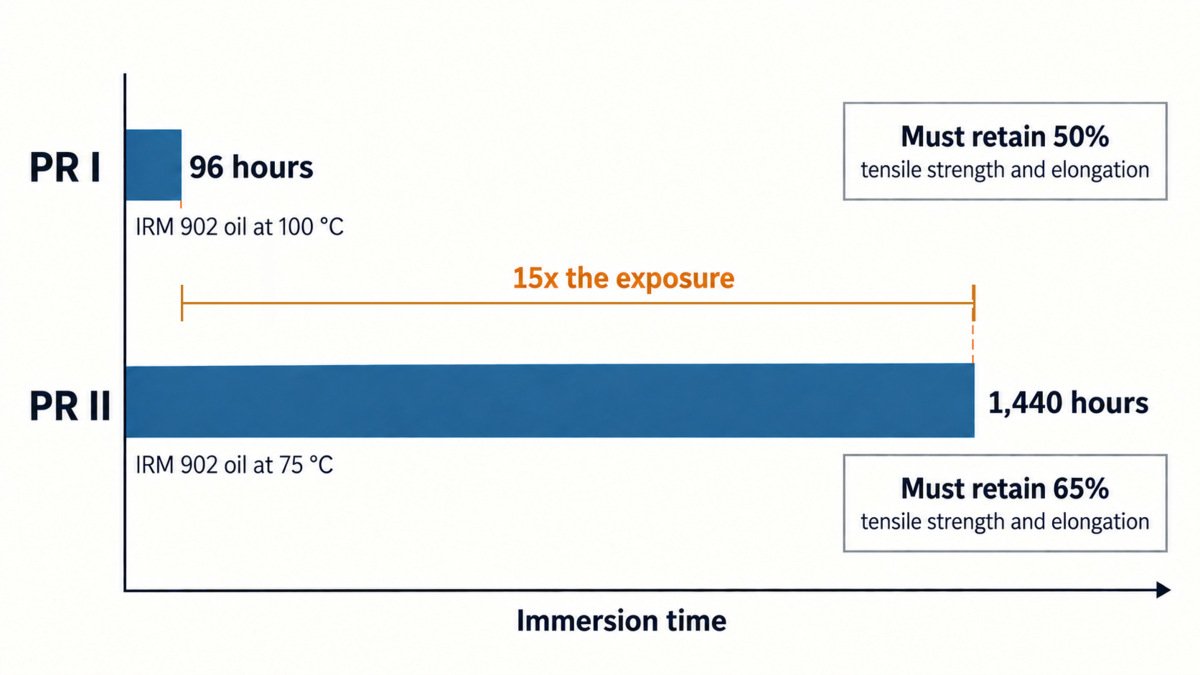
PR I is a 96-hour oil immersion, PR II is 1,440 hours with a higher pass mark. What the two UL ratings prove, and how to specify oil duty.
Read more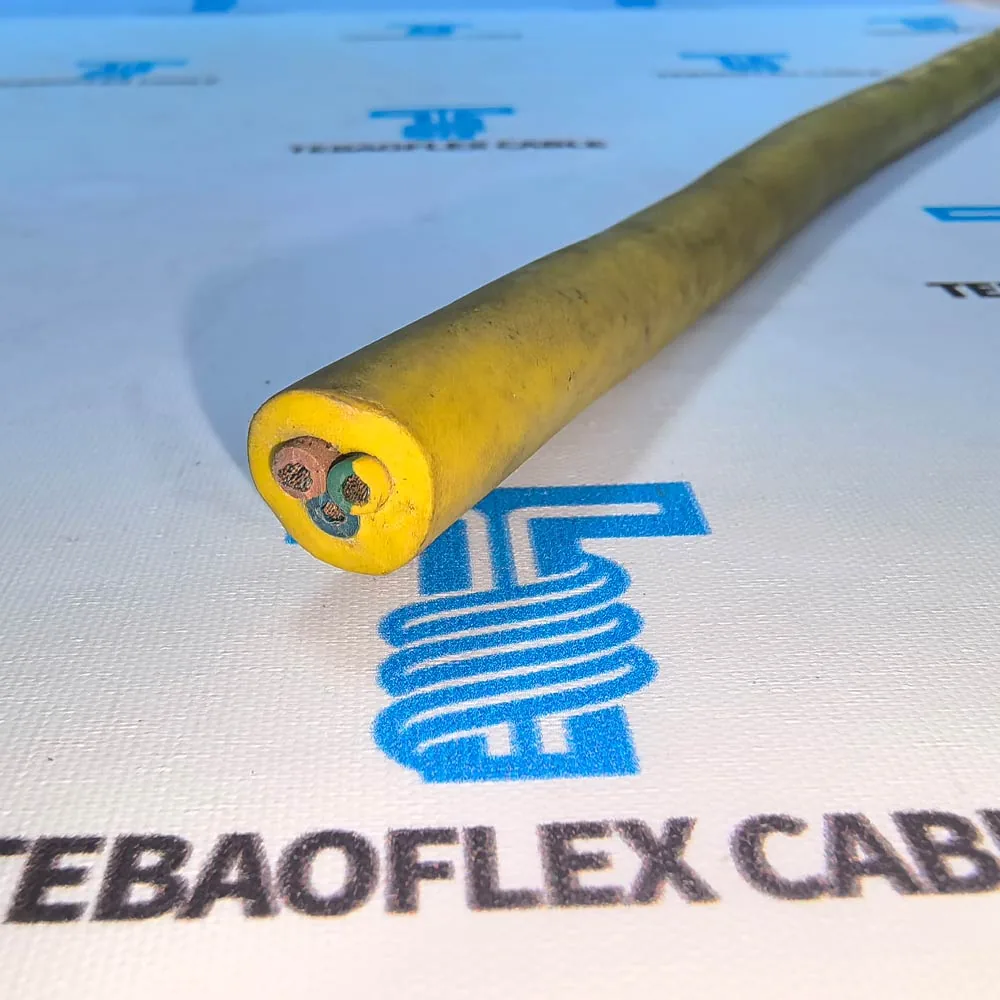
Learn what SO cord means, where it is used, and how to read type, AWG, conductor count and voltage markings, with a sample photo and a labeled example.
Read more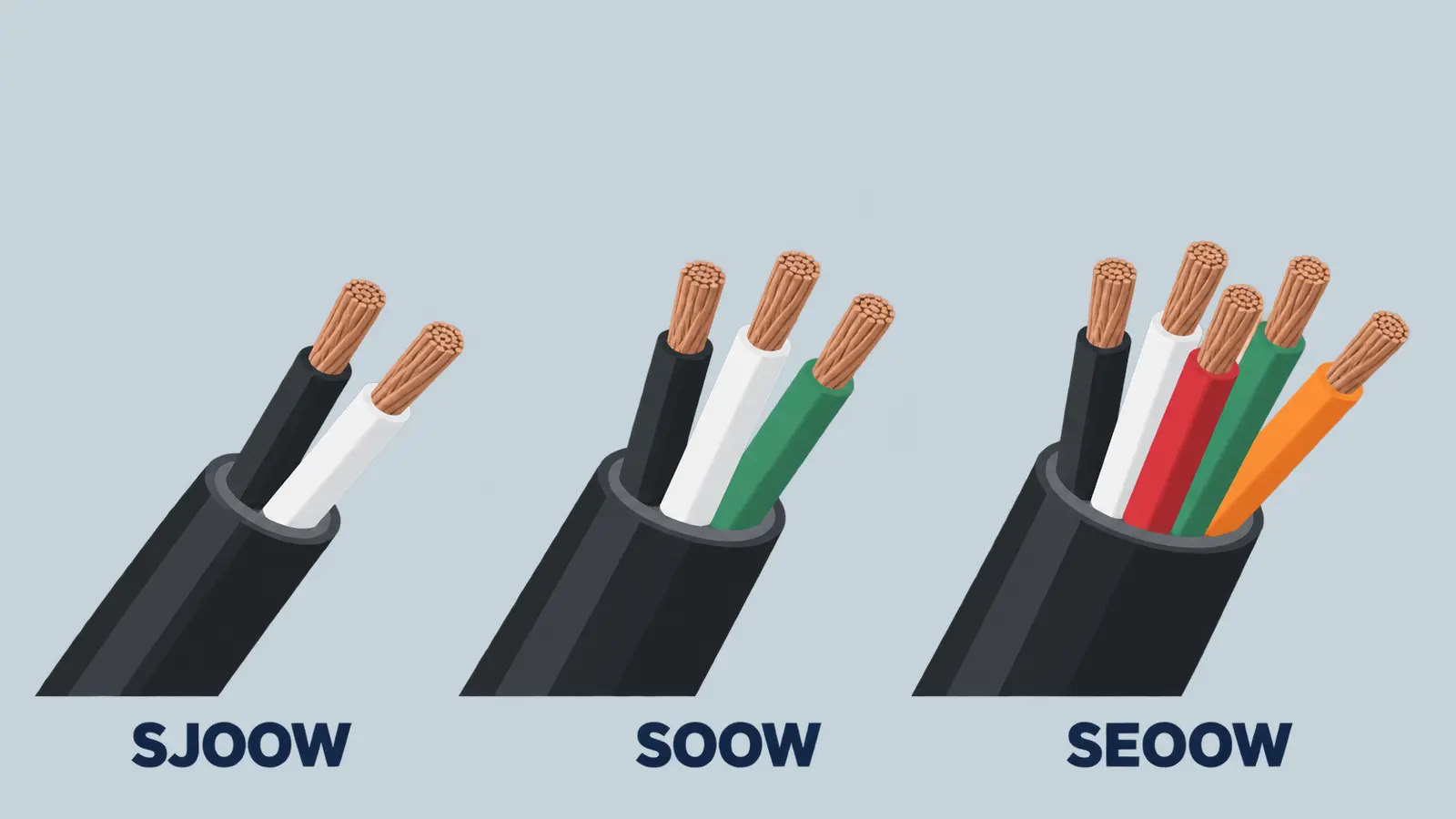
SOOW, SJOOW and SEOOW decoded letter by letter, with voltage, compound and temperature compared and NEC 400.5 ampacity for every size from 18 to 2 AWG.
Read moreQuick answers about Port Crane Cable from our engineers.
Choose by the cable-handling system. A reeling cable is wound and unwound on a motorised or spring reel and takes tensile load, torsion and layer pressure together, so use round NSHTOU-J with an anti-torsion braid or a PNCT reeling variant. A festoon cable hangs in loops on a trolley and bends repeatedly with little tension: flat NGFLGÖU-J or NGFLCGÖU-J, or round PUR-C-HF-J or CUR-2PNCT/3PNCT.
Use a screened construction on converter-fed drives. NGFLCGÖU-J adds a tinned copper wire braid to the flat NGFLGÖU-J design for frequency-conversion drives, servo systems and combined power and signal circuits, and the braid must be grounded. PUR-C-HF-J is a round 0.6/1 kV alternative with a tinned copper braid of at least 80 % coverage under a halogen-free, flame-retardant PUR sheath.
NSHTOU-J is listed for horizontal reeling at up to 120 m/min with a maximum acceleration of 0.4 m/s², and the tensile stress on the conductors may not exceed 15 N/mm². PUR-C-HF-J lists up to 200 m/min on festoon systems, 60 m/min horizontal and 200 m/min vertical reeling, a 15 N/mm² maximum tensile load and ±25°/m torsion. Compare these limits with the crane's speed and acceleration.
Both are 600 V AC festoon cables to JIS C 3327 with Class 5 tinned copper, EPR insulation and a chloroprene sheath in 2 to 24 cores. CUR-2PNCT is the standard grade for light and medium-duty festoon up to 60 m travel, such as workshop hoists and light gantry cranes. CUR-3PNCT adds a canvas reinforcement layer under the sheath for heavy-duty, long-travel festoon on RTG and RMG cranes and stacker-reclaimers.
Their product pages give no reeling or festoon rating. They are general-purpose low-voltage types for fixed or occasionally moved wiring: YY and LiYY are unscreened PVC cables, YSLYSY has an overall copper braid or foil/braid screen, and PUR-JZ has a PUR sheath with numbered cores and a green-yellow earth for handling equipment. Confirm voltage, temperature and motion duty for the exact variant.
The crane type and handling system (reel, festoon, basket or chain); rated voltage, cores, cross-sections, screening and any data or fibre elements; travel length or lift height, speed and acceleration; drum core, sheave and roller diameters and trolley spacing; ambient temperature and exposure to water, oil, UV or salt; the required standard, flame or halogen-free requirement and documents; and the length per drum, with the existing cable marking for replacements.
A special-cable manufacturer in Taicang, Suzhou, making heavy-duty and special cables since 2014.
UL and cUL, VDE, Korea KC, China MA and US MSHA approvals for the certified types, CE verification of conformity, and ISO 9001 quality management.
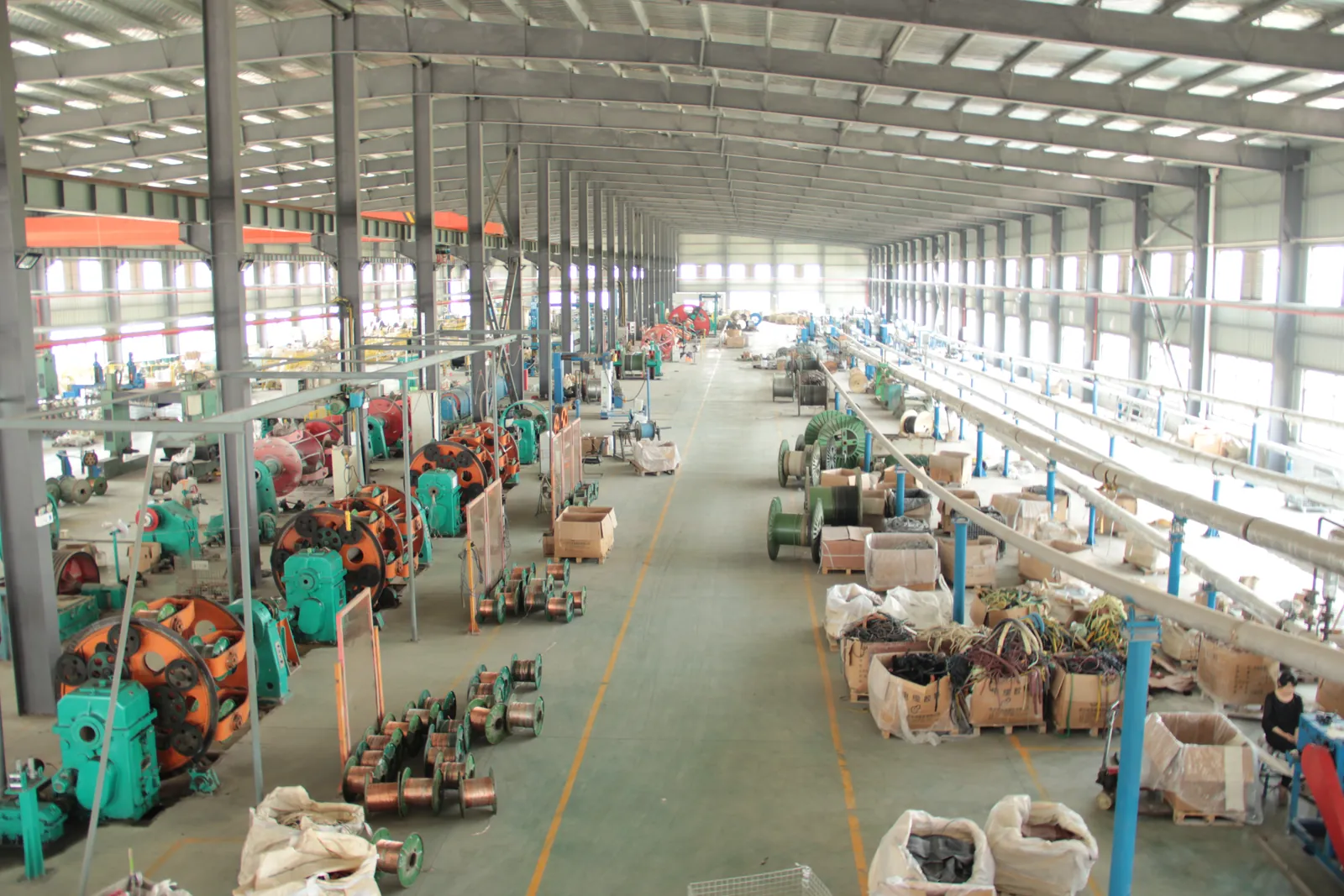
More than 200 sets of advanced production and test equipment at home and abroad, from compounding to final electrical testing.
Constructions engineered to VDE, ICEA, IEC and NEK 606 standards and checked against the real duty cycle of your equipment.
0.6/1 kV to 35 kV heavy-duty rubber cables, reeling and festoon crane cables, submersible, marine, ROV and high-temperature cables.
Special constructions, fibre-optic elements, colours, printing and lengths built to the specification of your project.
Cables working in tunnel engineering, marine and offshore equipment, mining, petrochemical, steel and urban construction projects around the world.
Send us the equipment, voltage, cores and operating conditions and our engineers will propose a cable construction and quotation.