

UL 1164 PTFE Wire 150°C 300V, Silver-Plated Copper
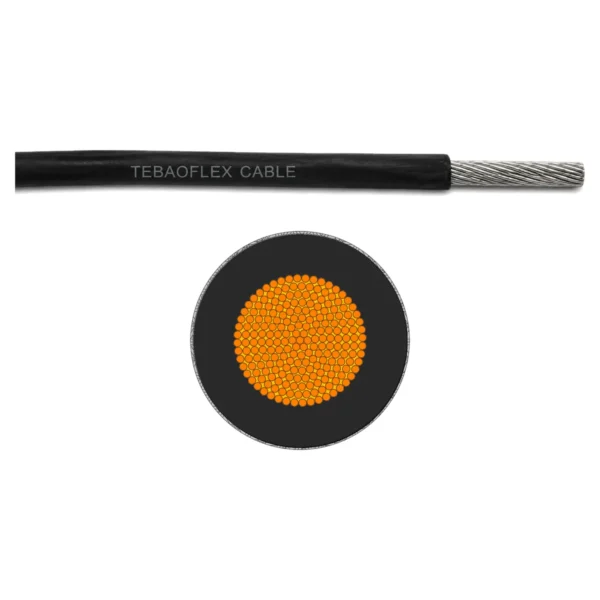
UL 1164 wire is a 300 V, 150 °C single-conductor wire with a 0.013 in extruded PTFE wall over silver-plated copper, made from 10 AWG to 32 AWG for appliance wiring and equipment exposed to chemicals, temperature extremes and dielectric stress.
- Voltage rating300 V (600 V electronic use)
- Temperature rating150 °C
- ConductorSilver-plated copper
- InsulationExtruded PTFE, 0.33 mm wall
- Sizes10 to 32 AWG
- Overall diameter0.991 mm to 3.71 mm
- Colours10 standard colours
- MarkingSurface printed, UL or CSA
UL 1164 is the UL wire style for 300 V, 150 °C wire with PTFE insulation. TEBAOFLEX builds it with an extruded PTFE wall of 0.013 in (0.33 mm) over silver-plated copper, in 27 constructions from 10 AWG to 32 AWG: 37 strands at 10 AWG, 19 strands from 12 AWG to 16 AWG, 19 or 7 strands from 18 AWG to 28 AWG, solid conductors from 20 AWG to 28 AWG, and 7 strands at 30 and 32 AWG.
Choose UL 1164 for appliance wiring and for equipment where the wire meets chemicals, temperature extremes or dielectric stress and stays within 150 °C. The thin, even PTFE wall keeps the finished wire small, down to 0.039 in (0.991 mm) at 32 AWG, which helps in crowded assemblies; for electronic use only, the wire may be applied at up to 600 V.
Browse the UL style wire category for the other PTFE, FEP, silicone and XLPE styles or download the UL 1164 datasheet (PDF).
Application & Features
Selection overview
UL 1164 is used for general appliance wiring and for high-temperature industrial equipment where leads are exposed to chemicals, temperature extremes or dielectric stress. The 10 AWG to 16 AWG strandings suit power leads inside appliances and machines, while the fine solid and 7-strand sizes from 20 AWG to 32 AWG suit compact electronic assemblies; in electronic use only, a 600 V rating is permitted.
Within the TEBAOFLEX PTFE range, compare UL 1180 for 300 V wire rated 200 °C, UL 1198 where a 600 V, 150 °C rating is needed, and UL 1815 for 300 V appliance and electronic wiring at 250 °C.
- 0.33 mm PTFE wallA thin extruded wall that keeps the wire small and light in crowded equipment.
- 150 °C ratingFor appliance and industrial wiring that runs at elevated temperatures.
- Silver-plated copperPlating that protects the copper strands and keeps them easy to solder.
- Chemical and dielectric resistancePTFE insulation for wiring exposed to chemicals, temperature extremes and dielectric stress.
Specifications
Technical data
Nominal values for UL 1164 constructions. The final construction is confirmed on the TEBAOFLEX datasheet issued with your quotation.
Electrical, thermal and material data
| Parameter | Value |
|---|---|
| Voltage rating | 300 V; 600 V for electronic use only |
| Temperature rating | 150 °C |
| Conductor | Silver-plated copper |
| Insulation | Extruded PTFE |
| Insulation wall | 0.013 in (0.33 mm) |
| Construction | Flexible wire available in multiple AWG and stranding options |
| Colours | 10 standard colours available |
| Identification | Surface printed as required by UL or CSA |
| Wire style | UL 1164, UL 1180 and CSA 300 V styles |
| Application | General appliance wiring and equipment exposed to chemicals, temperature extremes and dielectric stress; high-temperature industrial applications |
Dimensions and electrical data, 10 to 20 AWG
| AWG | Stranding | Conductor dia. in (mm) | Insulation dia. in (mm) | Weight lb/1000 ft (kg/km) | Resistance Ohm/1000 ft (Ohm/km) |
|---|---|---|---|---|---|
| 10 | 37/0.0167 | 0.113 (2.87) | 0.146 (3.71) | 39.3 (58.5) | 1.19 (3.90) |
| 10 | 37/26 | 0.109 (2.77) | 0.141 (3.58) | 35.1 (52.2) | 1.19 (3.90) |
| 12 | 19/0.0186 | 0.088 (2.24) | 0.125 (3.18) | 26.3 (39.1) | 1.81 (5.94) |
| 12 | 19/25 | 0.084 (2.13) | 0.116 (2.95) | 23.2 (34.5) | 1.81 (5.94) |
| 14 | 19/0.0147 | 0.070 (1.78) | 0.105 (2.67) | 17.1 (25.4) | 2.87 (9.41) |
| 14 | 19/27 | 0.067 (1.70) | 0.102 (2.59) | 16.4 (24.4) | 2.87 (9.41) |
| 16 | 19/0.0117 | 0.056 (1.42) | 0.090 (2.29) | 11.6 (17.3) | 4.52 (14.8) |
| 16 | 19/29 | 0.053 (1.35) | 0.086 (2.18) | 11.0 (16.4) | 4.54 (14.9) |
| 18 | 19/30 | 0.047 (1.19) | 0.079 (2.01) | 8.79 (13.1) | 5.80 (19.0) |
| 18 | 7/26 | 0.048 (1.22) | 0.079 (2.01) | 8.72 (13.0) | 6.01 (19.7) |
| 20 | 19/32 | 0.038 (0.965) | 0.068 (1.73) | 6.09 (9.06) | 8.87 (29.1) |
| 20 | 7/28 | 0.038 (0.965) | 0.068 (1.73) | 6.01 (8.94) | 9.56 (31.4) |
| 20 | SOLID | 0.032 (0.813) | 0.061 (1.55) | 5.12 (7.62) | 10.1 (33.1) |
Dimensions and electrical data, 22 to 32 AWG
| AWG | Stranding | Conductor dia. in (mm) | Insulation dia. in (mm) | Weight lb/1000 ft (kg/km) | Resistance Ohm/1000 ft (Ohm/km) |
|---|---|---|---|---|---|
| 22 | 19/34 | 0.030 (0.762) | 0.060 (1.52) | 4.34 (6.46) | 14.8 (48.5) |
| 22 | 7/30 | 0.030 (0.762) | 0.060 (1.52) | 4.29 (6.38) | 15.2 (49.9) |
| 22 | SOLID | 0.025 (0.635) | 0.054 (1.37) | 3.65 (5.43) | 16.5 (54.1) |
| 24 | 19/36 | 0.024 (0.610) | 0.053 (1.35) | 3.13 (4.66) | 23.6 (77.4) |
| 24 | 7/32 | 0.024 (0.610) | 0.053 (1.35) | 3.13 (4.66) | 23.9 (78.4) |
| 24 | SOLID | 0.020 (0.508) | 0.049 (1.24) | 2.72 (4.05) | 25.7 (84.3) |
| 26 | 19/38 | 0.019 (0.483) | 0.048 (1.22) | 2.40 (3.57) | 37.3 (122) |
| 26 | 7/34 | 0.019 (0.483) | 0.048 (1.22) | 2.36 (3.51) | 38.7 (127) |
| 26 | SOLID | 0.016 (0.406) | 0.045 (1.14) | 2.09 (3.11) | 41.0 (134) |
| 28 | 19/40 | 0.015 (0.381) | 0.045 (1.14) | 1.91 (2.84) | 63.1 (207) |
| 28 | 7/36 | 0.015 (0.381) | 0.045 (1.14) | 1.91 (2.84) | 62.0 (203) |
| 28 | SOLID | 0.013 (0.330) | 0.042 (1.07) | 1.68 (2.50) | 65.3 (214) |
| 30 | 7/38 | 0.012 (0.305) | 0.041 (1.04) | 1.52 (2.26) | 97.5 (320) |
| 32 | 7/40 | 0.009 (0.229) | 0.039 (0.991) | 1.29 (1.92) | 166 (544) |
Selection note: Values are nominal. Before ordering, ask our engineers to confirm the reference temperature for the resistance values, the current rating for your installation, the minimum bending radius, the flame-test marking and the put-up lengths you need.
Standards & References
Applicable standards and compliance
- Wire styleUL 1164 single-conductor wire style, 300 V and 150 °C; UL 1180 and CSA 300 V style markings are available for the same construction.
- ConductorSilver-plated copper, from 37 strands at 10 AWG to 7 strands at 30 and 32 AWG, with solid conductors from 20 AWG to 28 AWG.
- Voltage scope300 V for appliance and equipment wiring; 600 V is permitted for electronic use only.
- ApprovalsUL style, CSA and flame-test markings for your order are confirmed and quoted per order.
Construction
Material and build-up
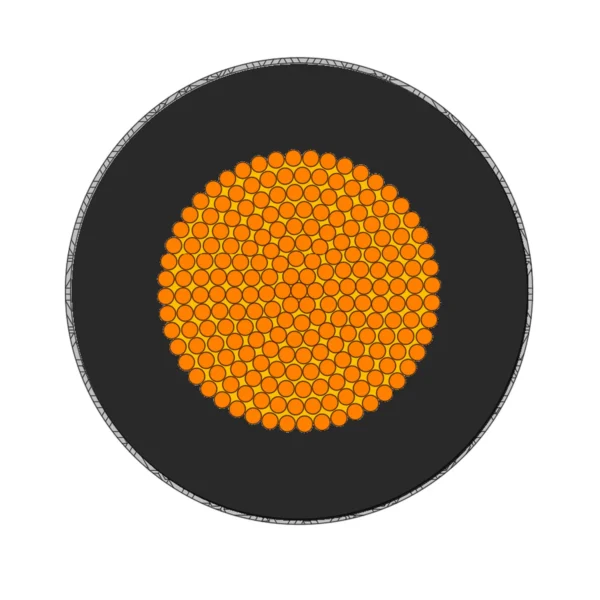
UL 1164 is a single-conductor wire with two layers: a solid or stranded silver-plated copper conductor and one extruded PTFE wall of 0.013 in (0.33 mm).
- Conductor: silver-plated copper, stranded with 37, 19 or 7 strands, or solid from 20 AWG to 28 AWG; the plating protects the copper and keeps it easy to solder.
- Stranding choice: every size from 10 AWG to 28 AWG is offered in two or three builds, for example 19/0.0186 or 19/25 at 12 AWG; at 20 AWG to 28 AWG the solid conductor gives the smallest insulation diameter.
- Insulation: extruded PTFE with a 0.013 in (0.33 mm) wall, for wiring exposed to chemicals, temperature extremes and dielectric stress.
- Identification: surface printing as required by UL or CSA, in 10 standard insulation colours.
FAQ
Selection questions
What is UL 1164 wire?
UL 1164 is a UL wire style for 300 V, 150 °C wire. The TEBAOFLEX version uses a 0.013 in (0.33 mm) extruded PTFE wall over silver-plated copper, from 10 AWG to 32 AWG, for appliance wiring and equipment exposed to chemicals, temperature extremes and dielectric stress.
How is UL 1164 different from UL 1180 and UL 1198?
All three are PTFE wires with silver-plated copper conductors. UL 1164 is rated 300 V and 150 °C. UL 1180 keeps the 300 V rating and is rated 200 °C, and UL 1198 keeps 150 °C and is rated 600 V for circuits that need the higher voltage class.
Which stranding should I choose?
Each size from 10 AWG to 28 AWG comes in more than one build. Solid conductors, from 20 AWG to 28 AWG, give the smallest diameter for fixed wiring; 7-strand and 19-strand conductors suit leads that are routed, bent or moved. Quote the AWG and stranding from the size tables when you ask for a price.
What does 600 V for electronic use mean?
The 300 V rating applies to appliance and equipment wiring. In electronic use only, the wire may be applied at up to 600 V. Tell us the voltage your circuit sees when you request a quotation.
What should I send for a quotation?
Send the UL style, AWG size and stranding, insulation colour, put-up length, quantity and any UL or CSA marking requirement. Our engineers confirm the construction on the datasheet issued with your quotation.
Request this cable.
Send the UL style, AWG size and stranding, insulation colour, put-up length, quantity and marking requirement, and we will confirm the construction and quote.
Quality Assurance
Testing at every stage in our own workshop and laboratory, from incoming copper to the packed drum.
Raw Material Inspection
Every batch of copper rod, rubber compound and reinforcing material is checked before it reaches the line.
- Copper: conductor resistance, elongation and surface condition on incoming rod and drawn wire
- EPR, CPE, PUR and silicone compounds: hardness, tensile strength, elongation and ageing samples from each mix
- Suppliers and batch numbers are recorded so every drum can be traced back to its materials
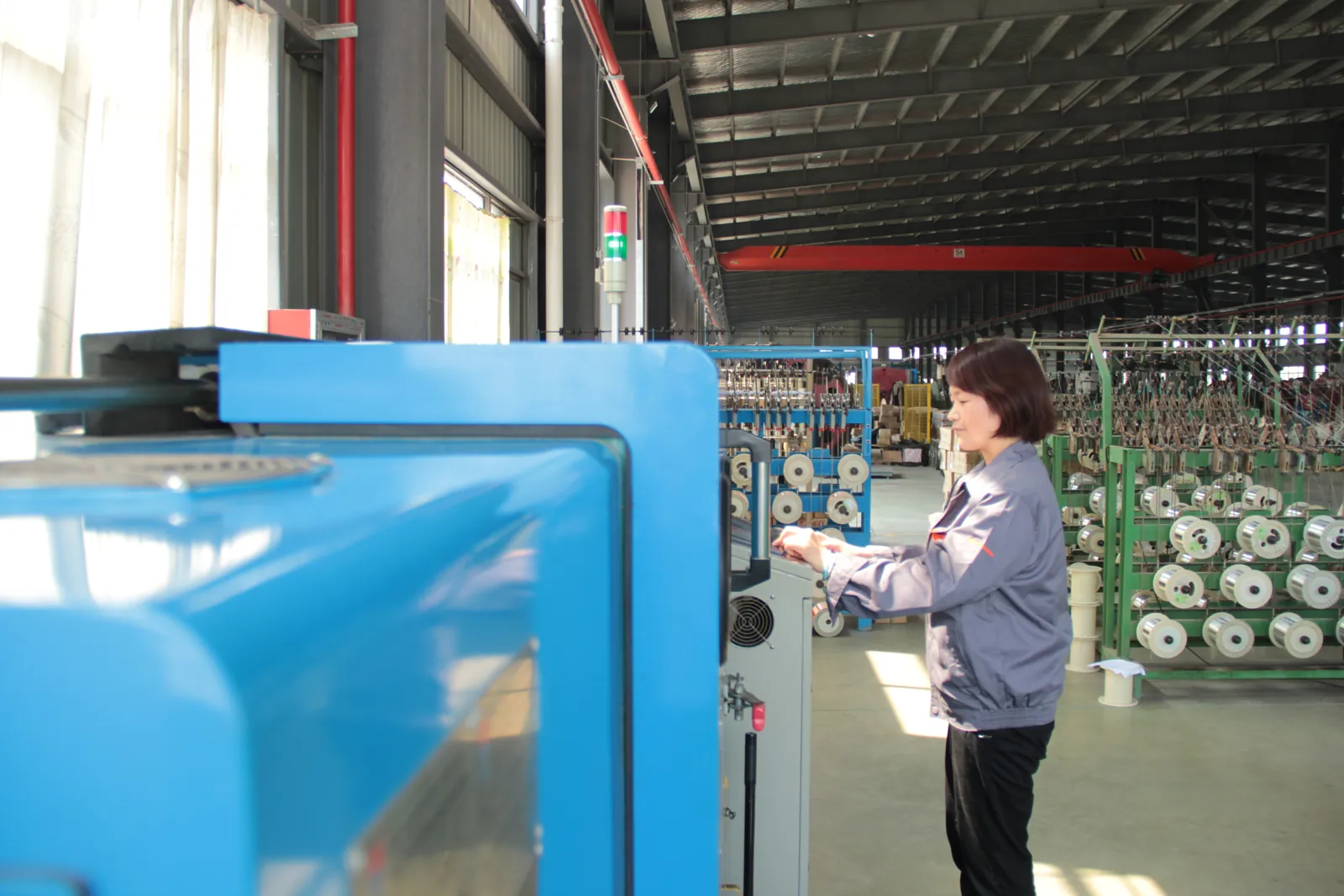
Manufacturing Process Control
Stranding, insulation extrusion, core assembly and sheathing run under recorded process parameters.
- Class 5/6 stranding with lay length and tension monitored for trailing and reeling flexibility
- Continuous-vulcanisation extrusion with wall thickness and spark tests logged on every length
- Operators sign off each stage before the cable moves to the next machine
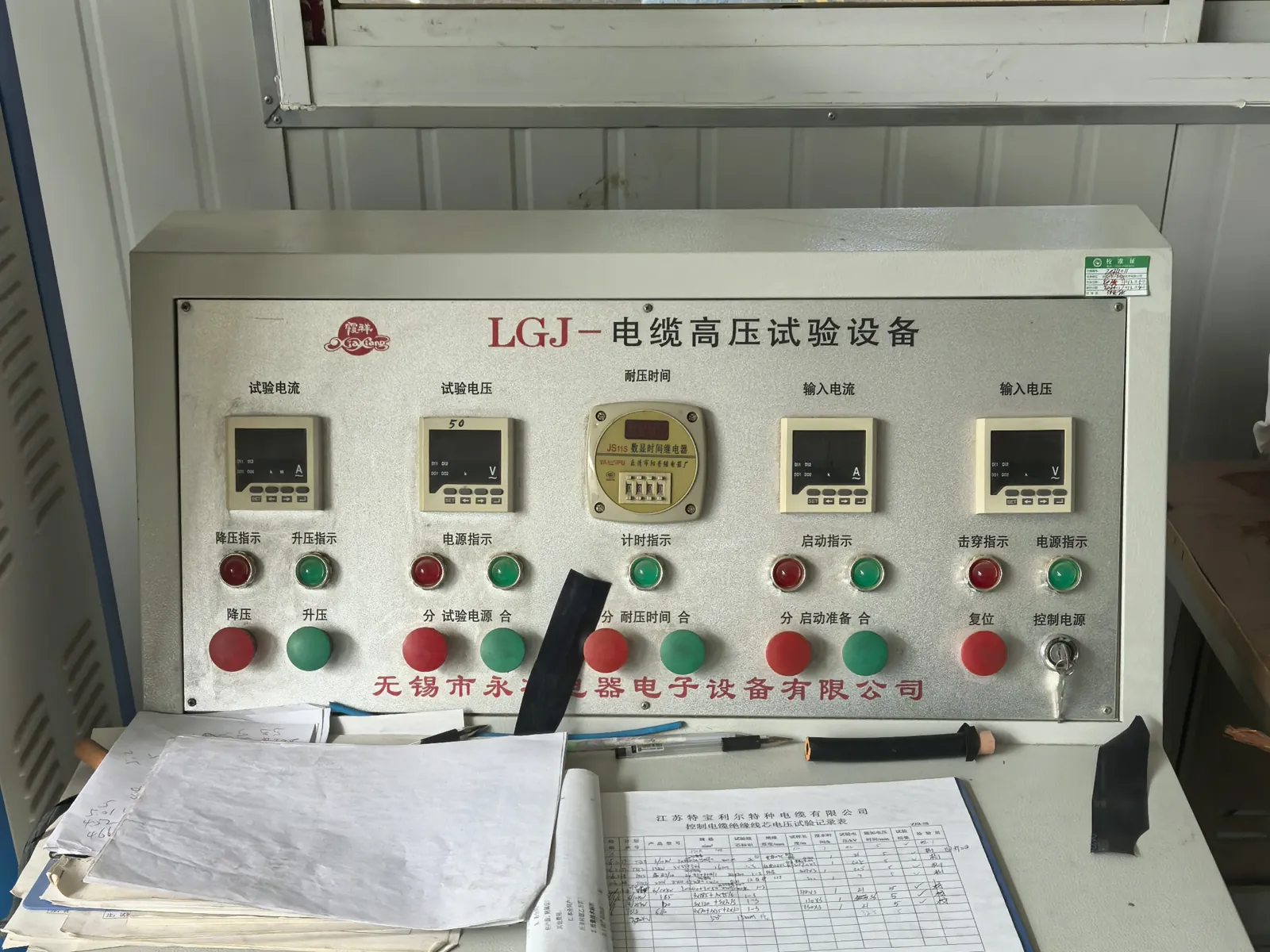
Electrical Testing
Finished lengths go through the routine tests required by the referenced VDE, ICEA, IEC or NEK standard.
- Conductor resistance and insulation resistance on every length
- Voltage withstand (3.5 kV and higher) and partial-discharge measurement in the shielded HV laboratory
- Screen and pilot-core continuity checks for mining and reeling constructions
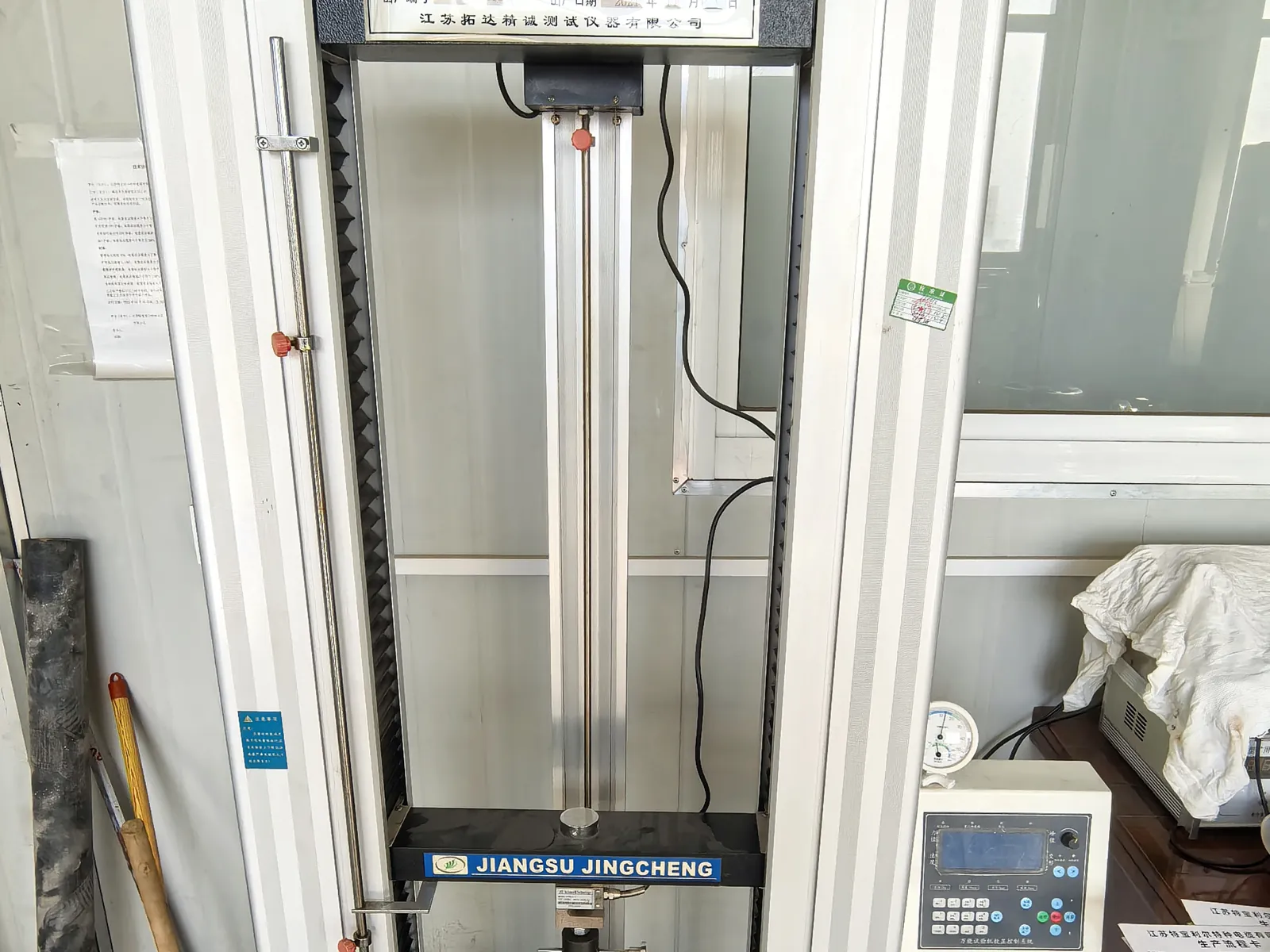
Mechanical and Ageing Tests
Samples from production are tested for the duty a mining, crane or submersible cable will actually see.
- Tensile strength and elongation of insulation and sheath before and after ageing
- Hot-set, ozone, oil-immersion and low-temperature bending tests
- Constant-temperature water bath for insulation resistance of submersible constructions
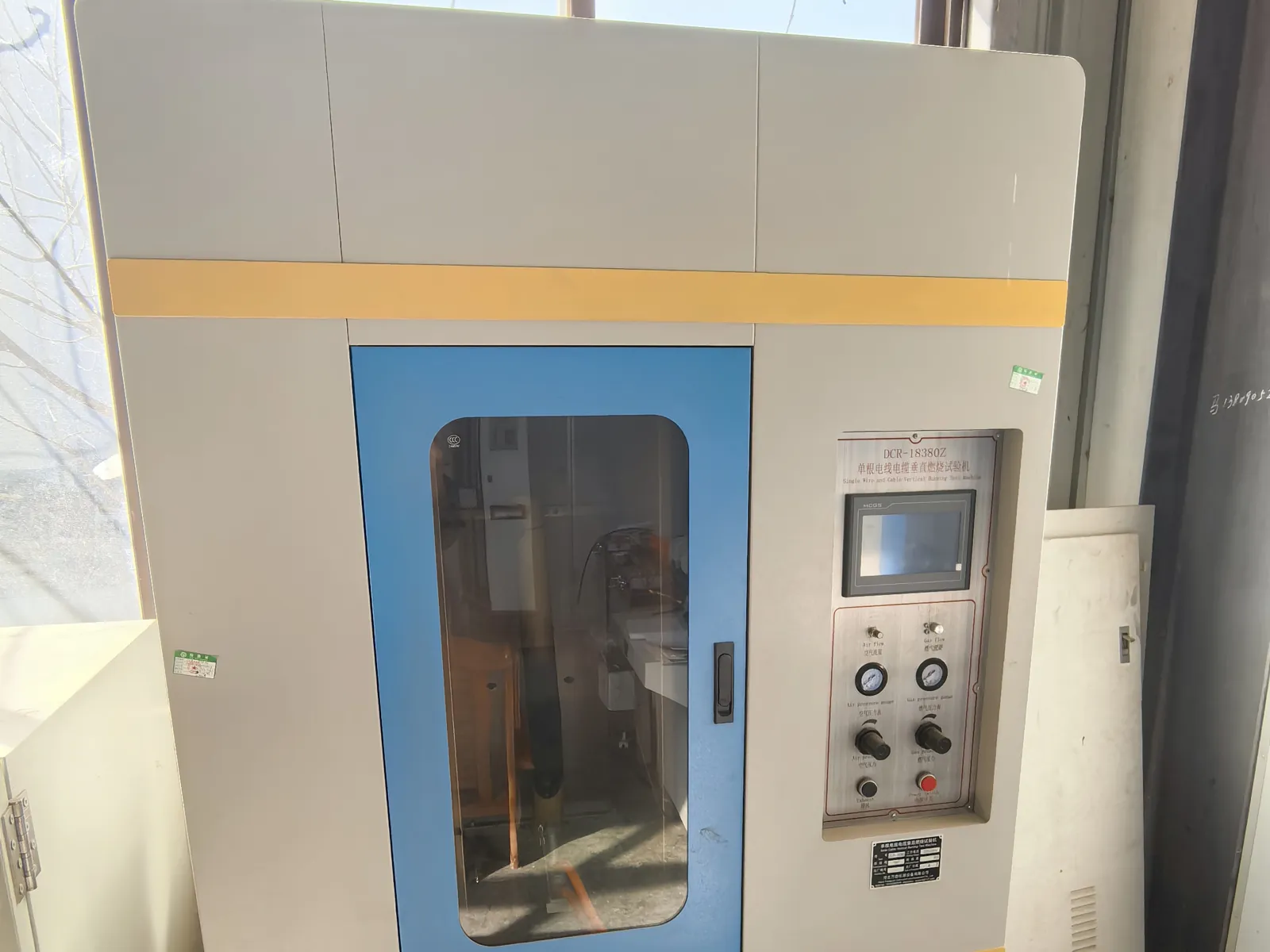
Flame Test and Final Inspection
Before packing, the cable is checked against the order and the flame-performance requirement of its standard.
- Single-cable vertical flame test to IEC 60332-1-2 where specified
- Metre marking, printing, drum length and appearance inspection
- Test report and packing list issued with every shipment
Related products
-
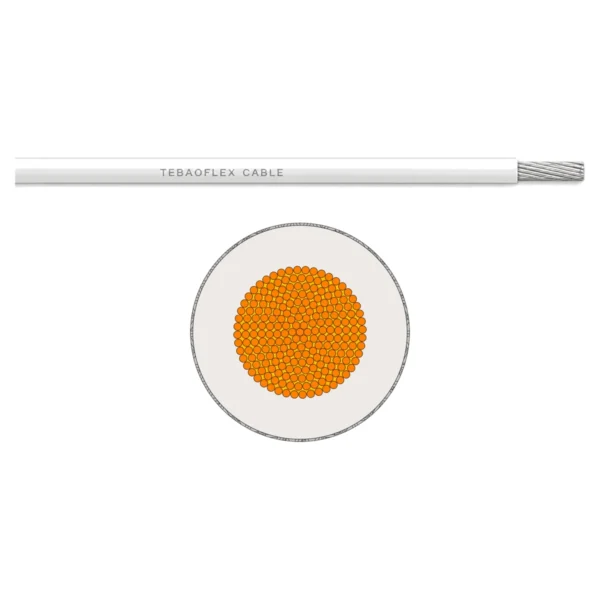
UL 1199 PTFE Wire 200°C 600V, Silver-Plated Copper
-
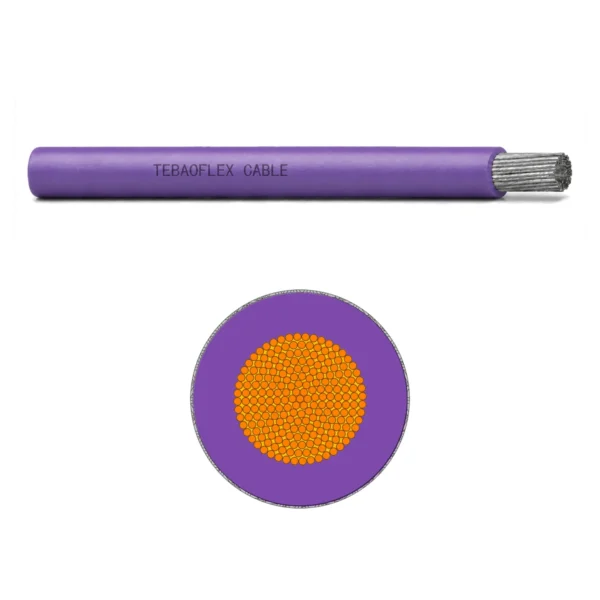
UL 1815 PTFE Wire 250°C 300V, Silver- or Nickel-Plated Copper
-
UL 1570 Mineral-Filled PTFE Wire 250°C 600V, Nickel-Plated Copper
-
UL 1659 PTFE Lead Wire 250°C 600V, Nickel-Plated Copper
-
UL 3266 XLPE Wire 125°C 300V, Low-Smoke Non-Halogen, 10–30 AWG
-
UL 1213 PTFE Hook-Up Wire 105°C 600V, Silver-Plated Copper
-
UL 3132 Silicone Rubber Wire 150°C 300V, Tinned or Bare Copper
-
UL 3173 XLPE Wire 125°C 600V, Low-Smoke Non-Halogen
Need Pricing for This Cable?
Tell us the length, cores, cross-section and delivery country and we will reply with a quotation and datasheet.