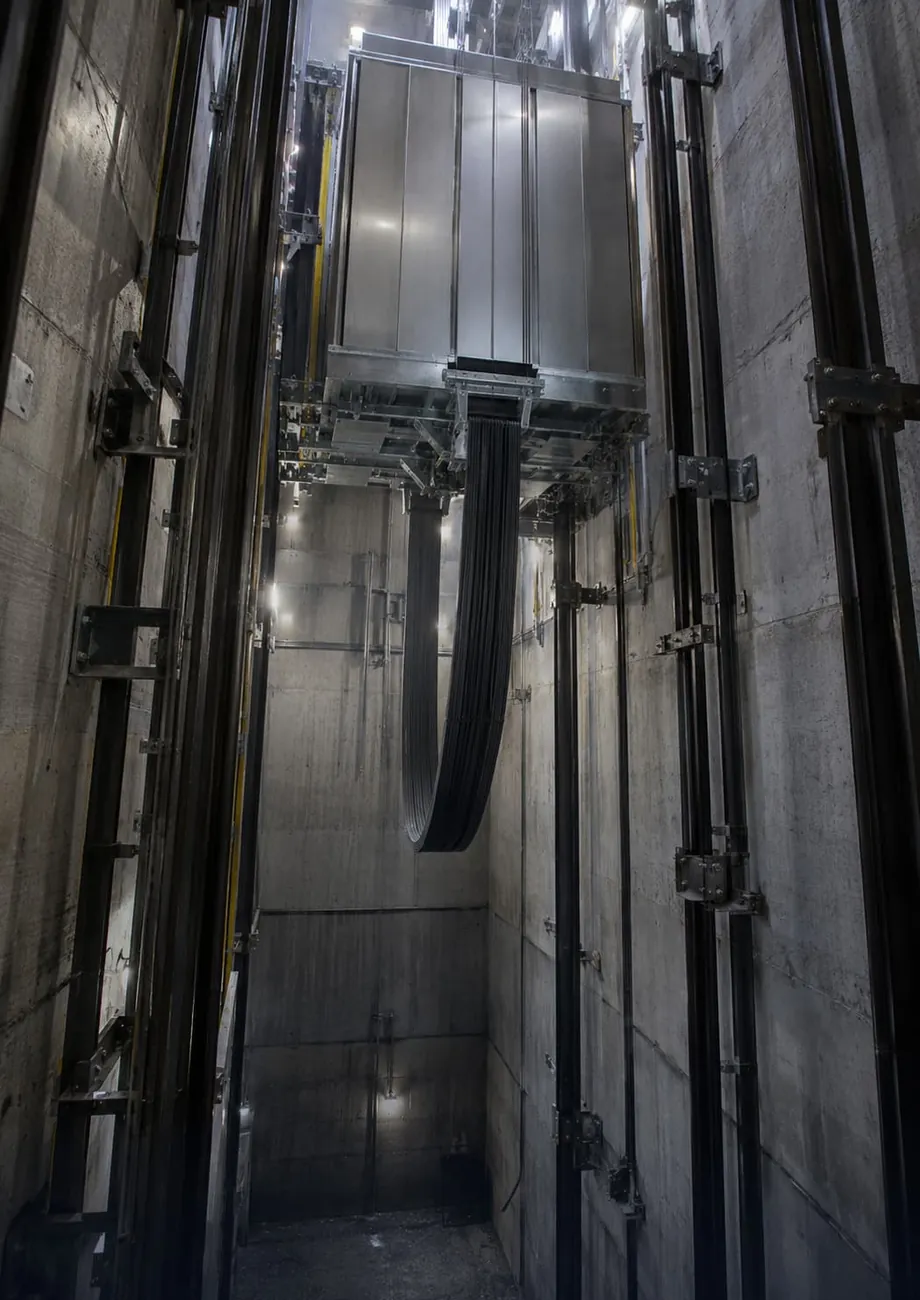
Elevators
Elevator Travelling Cables
A flat travelling cable that carries Ethernet to the lift car for IP cameras, Wi-Fi access points, digital signage and VoIP systems.

Heavy-duty rubber cables for mining, port cranes, submersible pumps, EV charging, elevators and marine duty. Pick a family to filter the range.
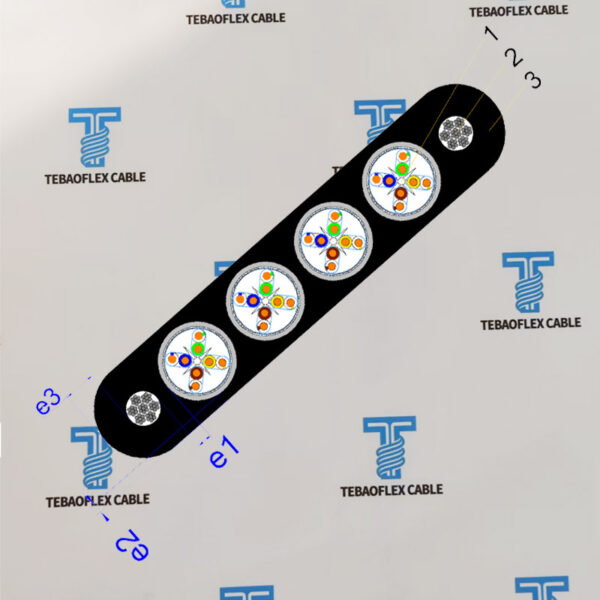
TEBAOFLEX elevator travelling cables carry Ethernet data between the building and the moving lift car. The category currently lists one model, the flat 4xCAT6 cable: four CAT 6E S/FTP data elements and steel wire (ST) elements under a PVC outer sheath, rated 48/100 V with IEC 11801 as the applied standard. It supports channels of up to 50 m to RJ45 plug systems, with a signal booster for taller buildings.
Showing the single result
What sets TEBAOFLEX Elevator Travelling Cable apart in service.
Four separate CAT 6E S/FTP elements in one flat cable, each with four pairs and optimised for RJ45 plug systems on LAN and Ethernet links.
Aluminium/polyester tape screening and a tinned copper wire braid with ≥85% braid density help maintain signal integrity on each CAT 6E element.
Supports a channel of up to 50 m from transceiver to receiver; a signal booster between two cable connections extends the link in taller buildings.
Steel wire (ST) elements with a calculated breaking load of 167 kgf run alongside the data elements inside the flat PVC outer sheath.
A flat profile of approx. 8.2 × 38.9 mm and 478 kg/km, with nominal PVC outer sheath thicknesses of 1, 0.7 and 1.8 mm (e1, e2, e3).
Rated 48/100 V for low-voltage data and communication circuits, with IEC 11801 listed as the applied standard for the cable and its CAT 6E elements.
Capabilities across the Elevator Travelling Cable range; each product page lists the exact construction, rating and reference standard.
| Specification | Available options |
|---|---|
| Product types | Flat elevator travelling cable with four CAT 6E S/FTP data elements and steel wire (ST) elements (4xCAT6) |
| Rated voltage | 48/100 V |
| Data elements | 4 × CAT 6E S/FTP, 4 pairs each, optimised for RJ45 plug systems |
| Conductor | Solid copper, 1/0.51 mm, 0.2047 mm² (24 AWG in the element table; AWG 26 in the product summary); ≤85.6 Ω/km at 20 °C |
| Insulation | HDPE, 0.22 mm nominal |
| Screening | Aluminium/polyester tape, 0.05 mm; tinned copper wire braid, 0.13 mm wires, ≥85% braid density; central separator and polyester tape |
| Sheath | PVC: 0.5 mm on each CAT 6E element; outer sheath 1 / 0.7 / 1.8 mm nominal (e1 / e2 / e3) |
| Reinforcement | Steel wire (ST) element, 1.5 mm, calculated breaking load 167 kgf |
| Dimensions and weight | Approx. 8.2 × 38.9 mm (height × width), 478 kg/km; CAT 6E element approx. 6.8 mm OD, 56.7 kg/km |
| Channel length | Up to 50 m from transceiver to receiver; signal booster between cable connections for longer runs |
| Reference standards | IEC 11801 |
| Documents | Datasheet, test report and certification documents for the exact model on request at RFQ stage |
Where Elevator Travelling Cable from TEBAOFLEX is installed.
Screened CAT 6E elements carry video from IP-based security cameras in the lift car to the building network over LAN or Ethernet.
02One of the four CAT 6E elements can serve an in-car Wi-Fi access point, with the Ethernet link terminated on RJ45 plug systems.
03High-definition digital signage and advertising displays in the car receive their content over the Ethernet elements of the travelling cable.
04ISDN and VoIP communication systems between the car and the building can run on their own screened element within the same cable.
05Beyond the 50 m channel length, a signal booster between two cable connections keeps the Ethernet link stable in taller buildings.
06Four separate data elements in one flat cable for elevators that run several LAN, Ethernet or Internet services to the car at once.
Four decisions specify the right cable the first time; send them with your RFQ and our engineers confirm the type designation.
Travel height, speed, loop depth, suspension, guide arrangement and cycle duty; for data runs beyond the 50 m channel, plan a signal booster.
Power, control, emergency, Ethernet or other signal elements, plus shielding and connectors; the 4xCAT6 cable carries four CAT 6E S/FTP elements for RJ45 plug systems.
Cable weight, bend radius and support; the 4xCAT6 cable weighs approx. 478 kg/km, with steel wire elements of 167 kgf calculated breaking load.
Fire and smoke requirements and the local lift inspection scope; a CAT6 or voltage label on its own is not a complete compliance record.
Cable packages engineered around the application, not just the cable.
A flat travelling cable that carries Ethernet to the lift car for IP cameras, Wi-Fi access points, digital signage and VoIP systems.
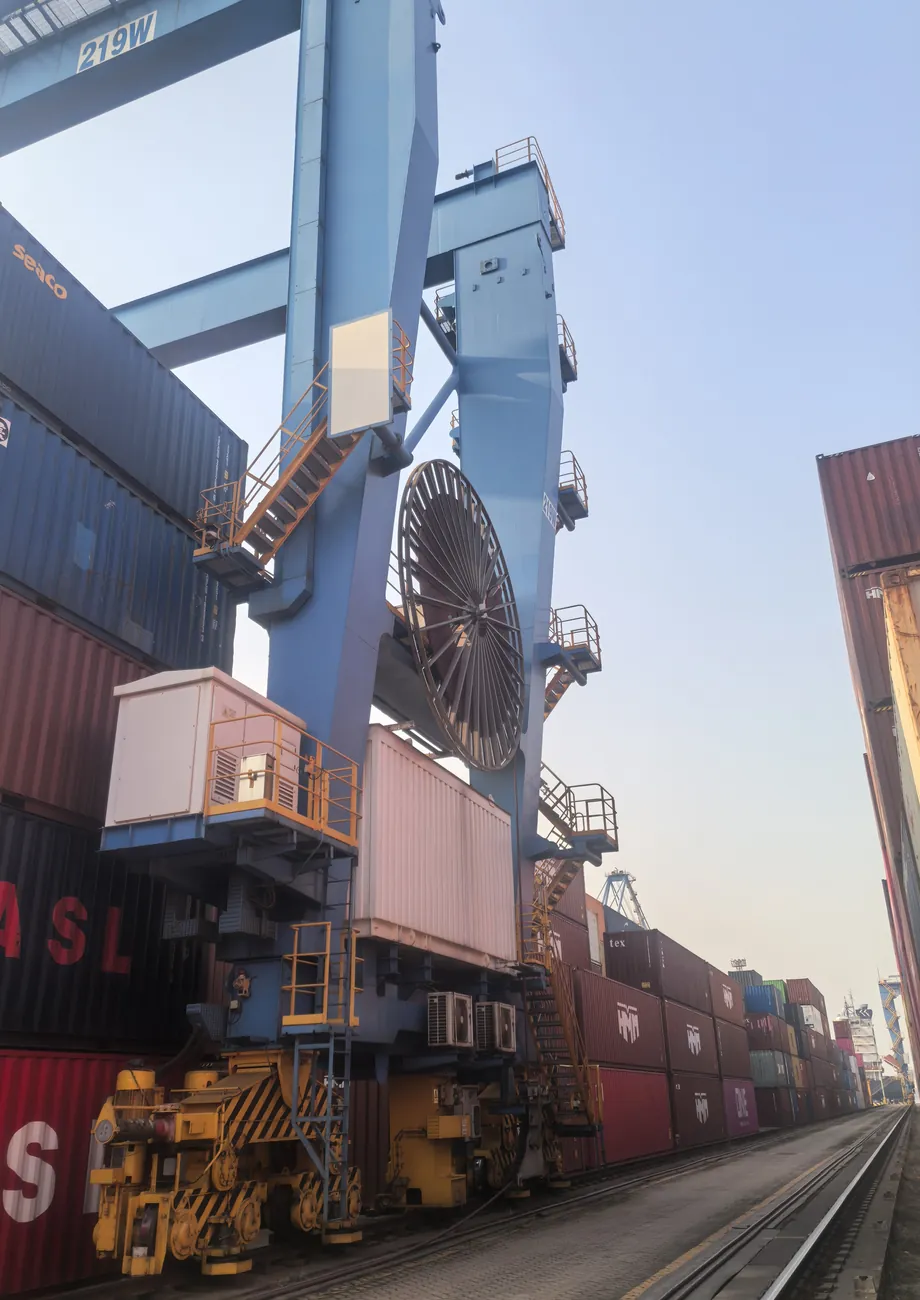
Reeling and festoon cables for ship-to-shore, RTG and RMG cranes, on cable routes that travel with the moving equipment.
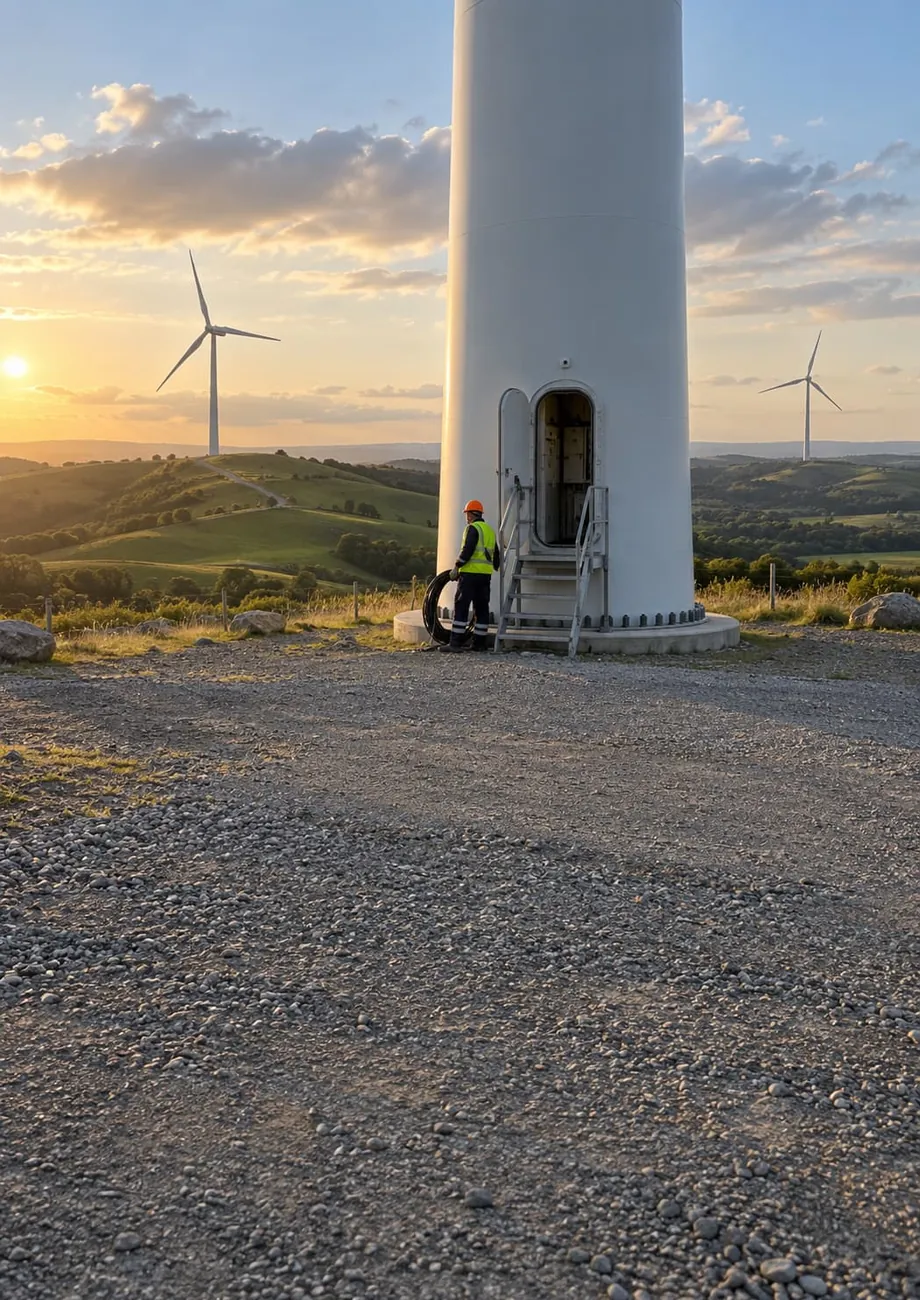
Torsion-resistant tower and turbine cables for wind energy projects, from the wider TEBAOFLEX flexible cable range.
Recent deliveries from the TEBAOFLEX project team.
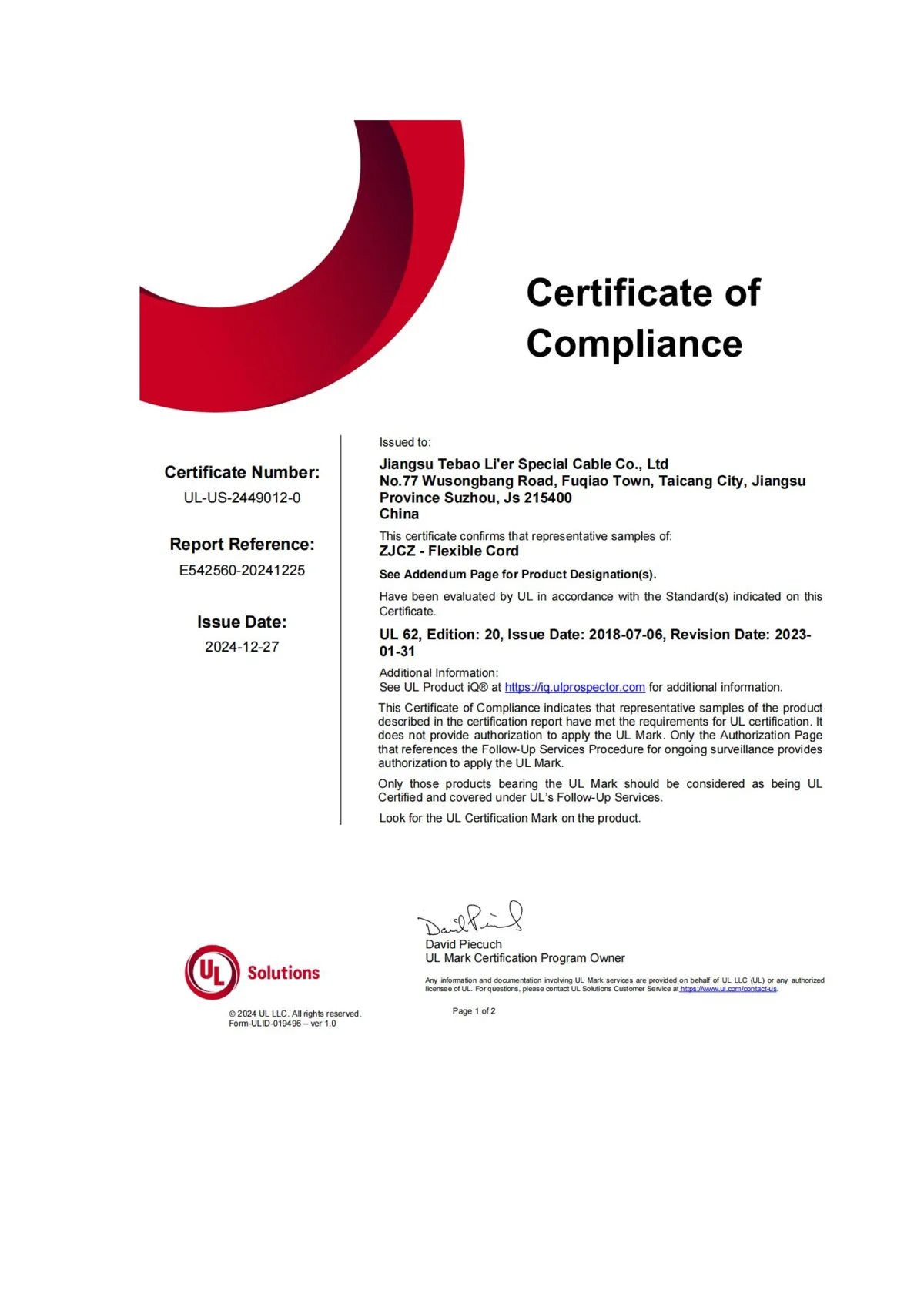
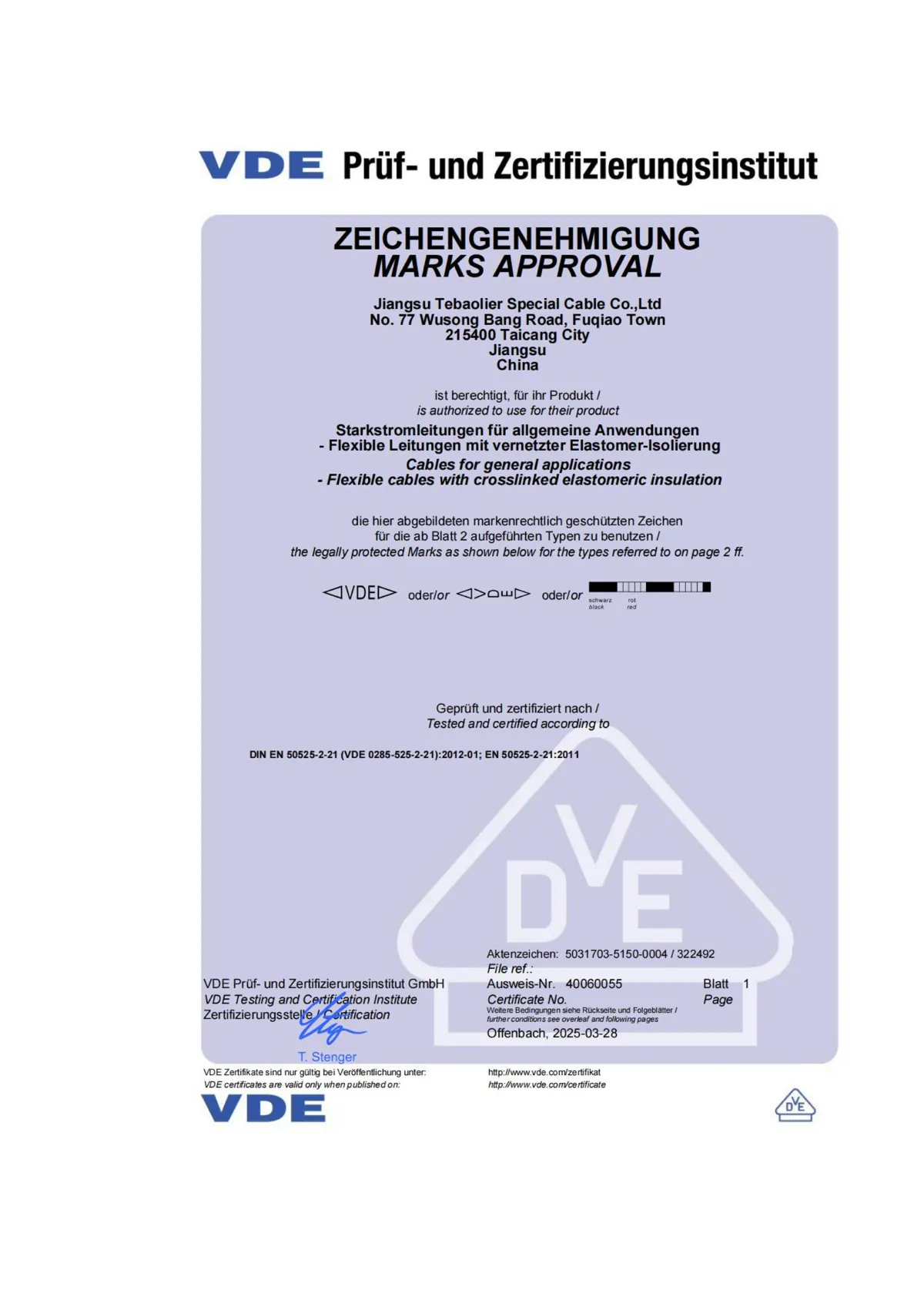
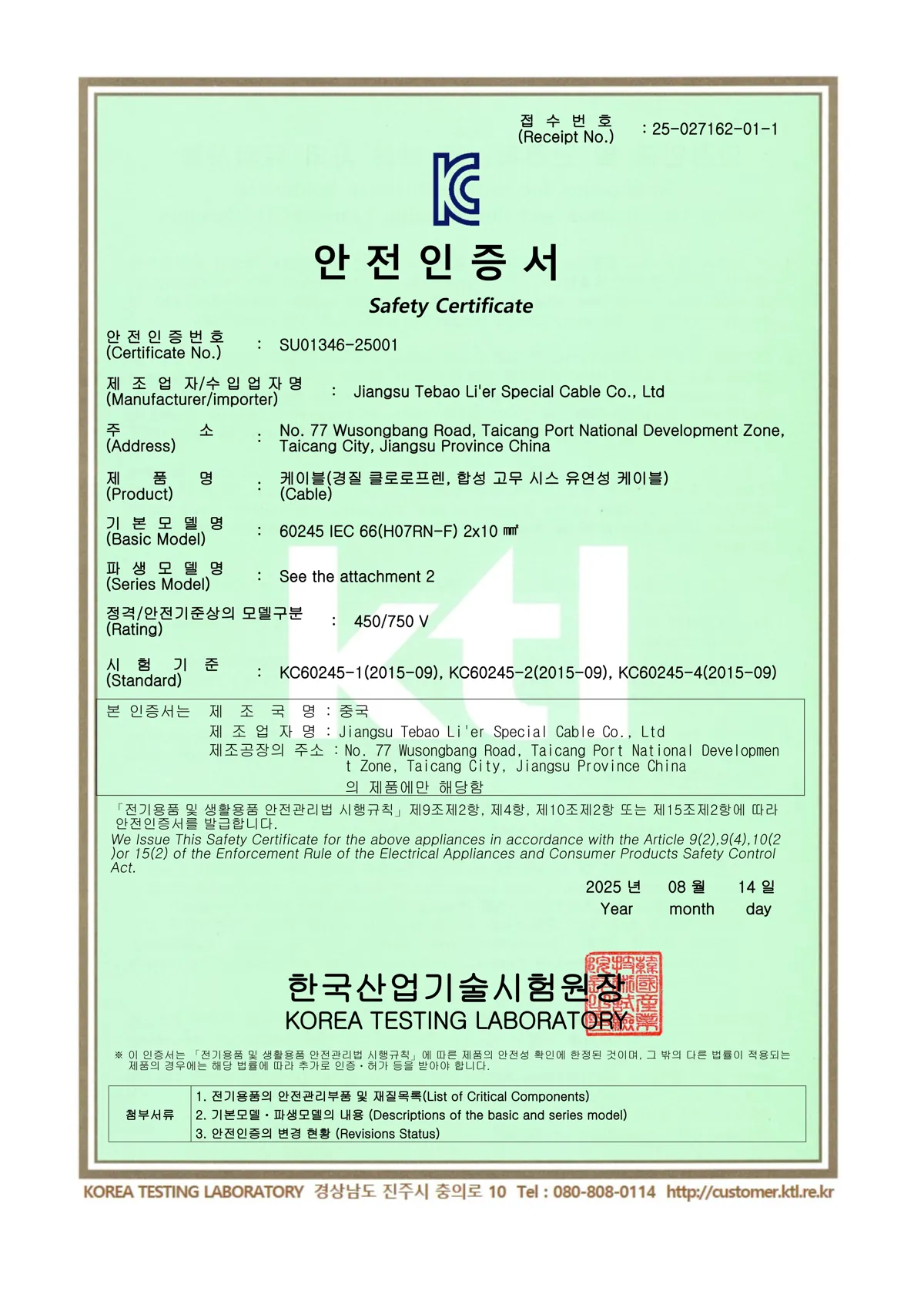
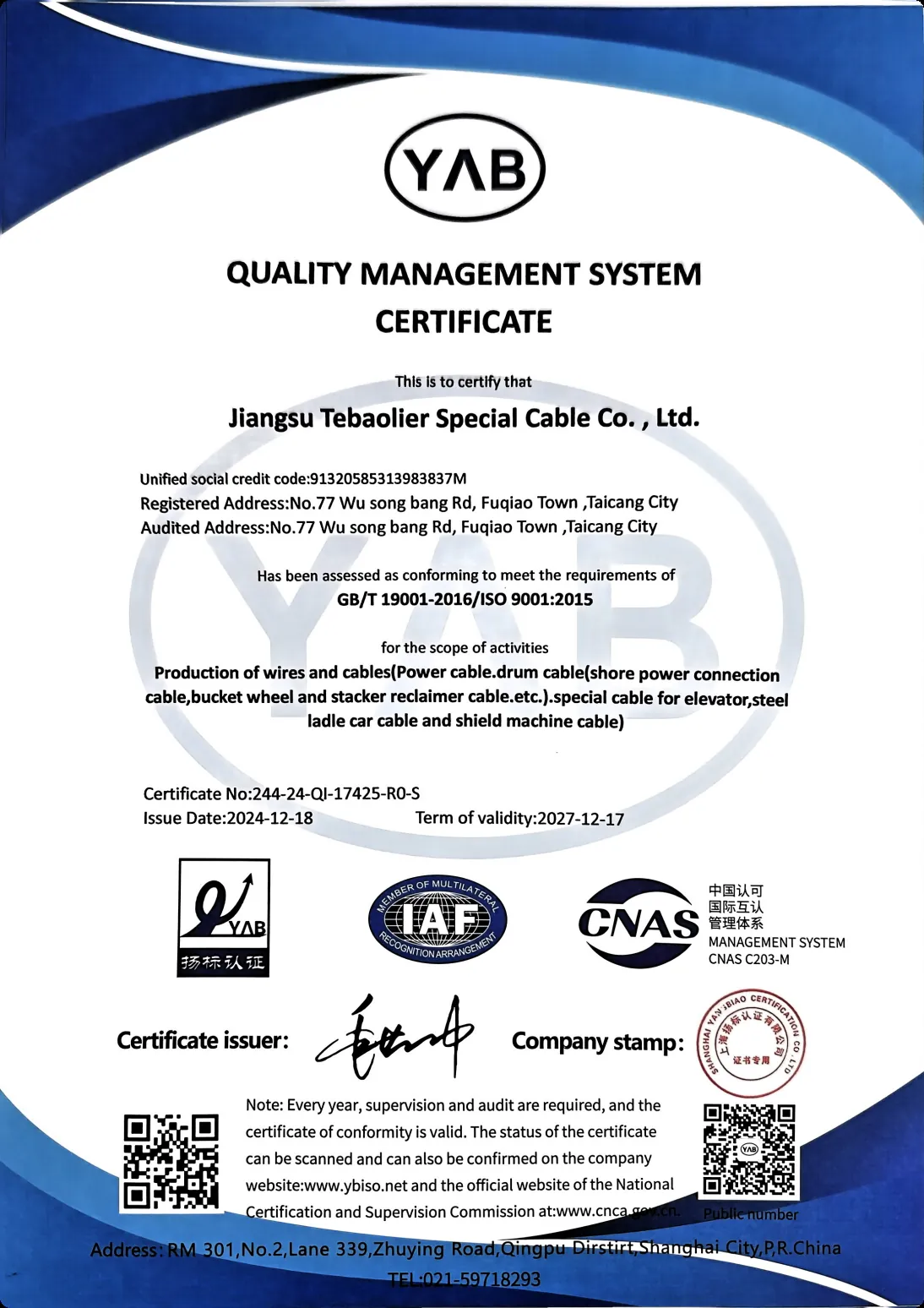
ISO 9001 quality management for cable production; ISO 14001 and ISO 45001 for sales and related management. UL and cUL (flexible cord), VDE (EN 50525-2-21), Korea KC, China MA and US MSHA approvals cover the certified types; CE is a third-party verification of conformity (VoC).
From compound to shipment, the production steps and routine tests behind each cable length.
EPR, CPE, PUR and silicone compounds are mixed and tested for hardness, tensile strength and elongation before use.
Tinned or bare copper is bunched and rope-stranded to Class 5/6 flexibility for trailing and reeling duty.
Cores are extruded and continuously vulcanised; wall thickness and spark tests are recorded on every length.
Cores, earth conductors, pilot and fibre-optic elements are laid up with the fillers and screens the type designation requires.
Reinforced double-sheath constructions are extruded and cured for abrasion, oil and tear resistance.
Conductor resistance, voltage withstand and insulation resistance tests at the levels set by the referenced standard.
Bending, tensile, hot-set, ozone and flame tests according to the referenced standard.
Metre marking, drum packing and documentation for worldwide project delivery.
Five-stage quality assurance from incoming copper to the packed drum.
Every batch of copper rod, rubber compound and reinforcing material is checked before it reaches the line.
Stranding, insulation extrusion, core assembly and sheathing run under recorded process parameters.
Finished lengths go through the routine tests required by the referenced VDE, ICEA, IEC or NEK standard.
Samples from production are tested for the duty a mining, crane or submersible cable will actually see.
Before packing, the cable is checked against the order and the flame-performance requirement of its standard.
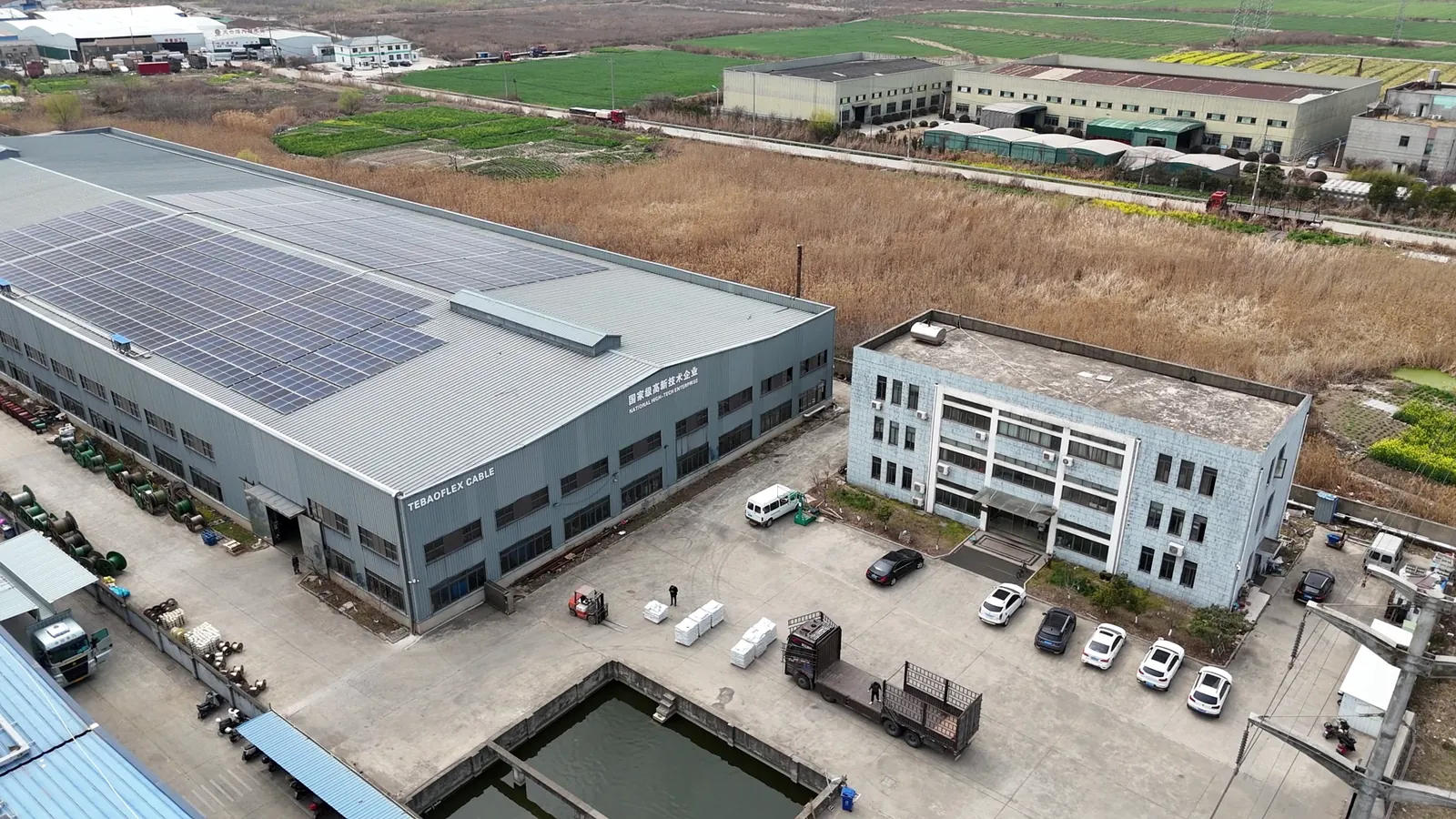
TEBAOFLEX CABLE, No.77 Wusongbang Road, Taicang, Suzhou.
Selection and application guides from the TEBAOFLEX engineering team.
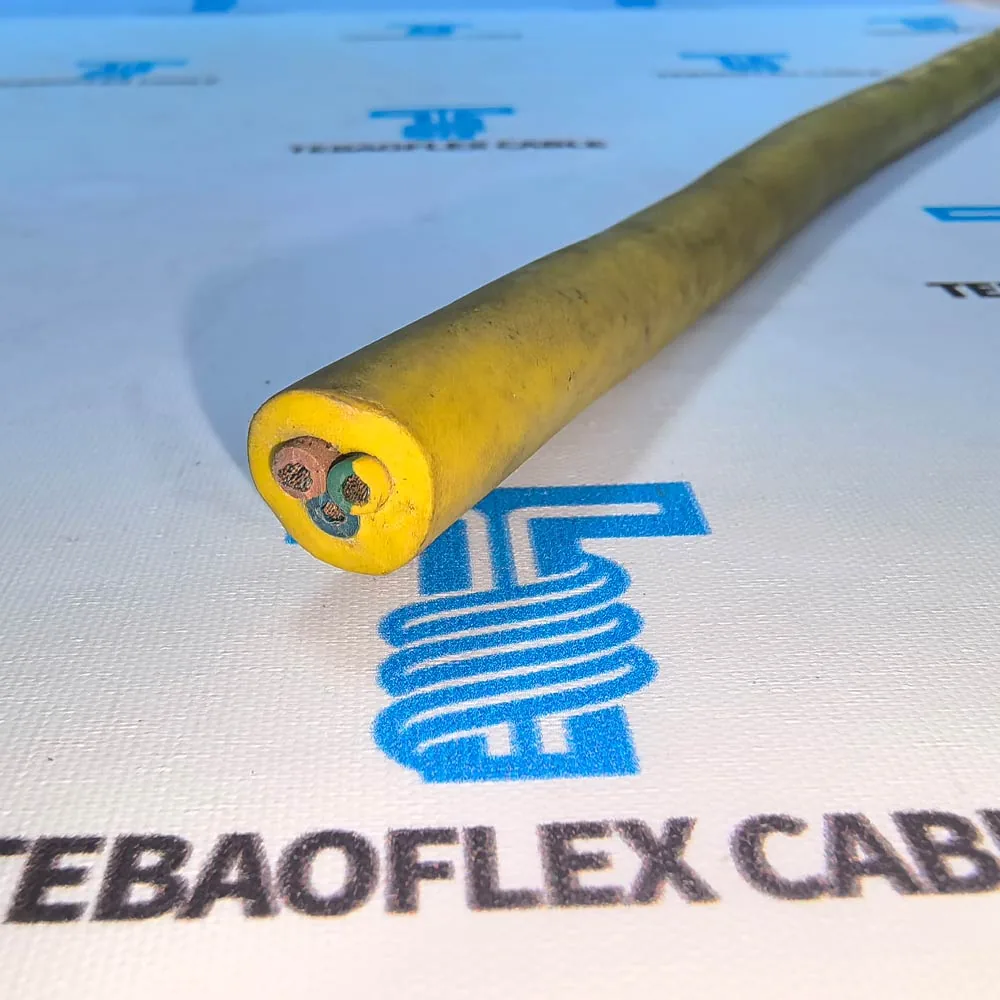
Learn what SO cord means, where it is used, and how to read type, AWG, conductor count and voltage markings, with a sample photo and a labeled example.
Read more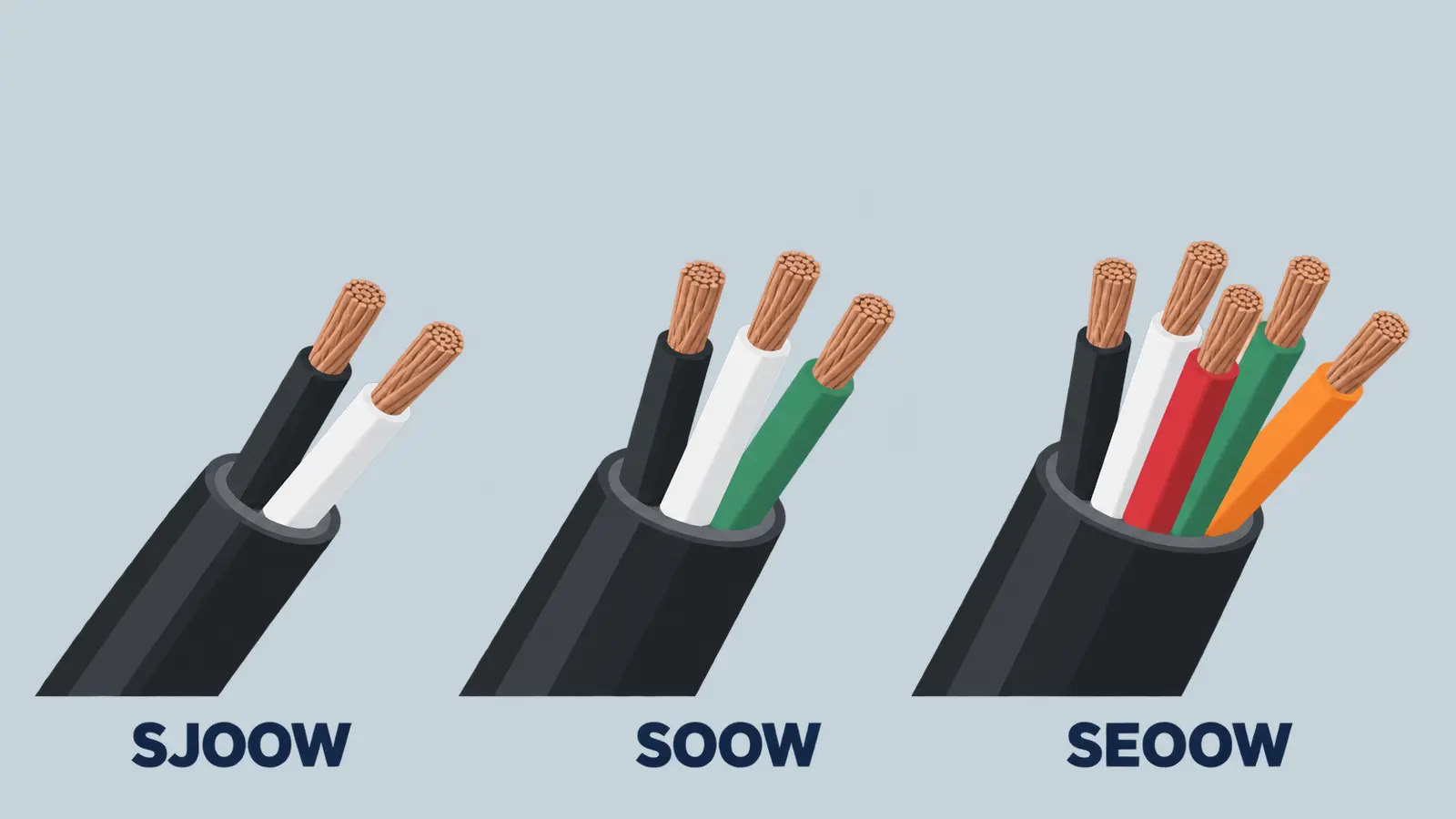
SOOW, SJOOW and SEOOW decoded letter by letter, with voltage, compound and temperature compared and NEC 400.5 ampacity for every size from 18 to 2 AWG.
Read more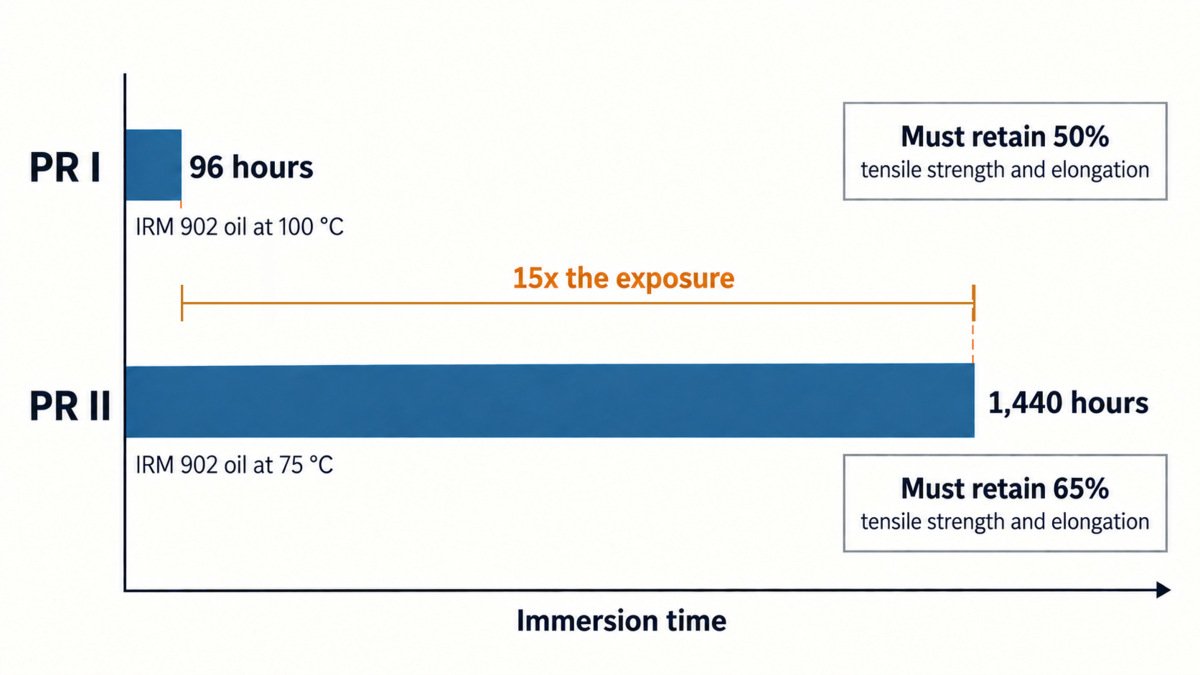
PR I is a 96-hour oil immersion, PR II is 1,440 hours with a higher pass mark. What the two UL ratings prove, and how to specify oil duty.
Read moreQuick answers about Elevator Travelling Cable from our engineers.
It is a flat travelling cable that combines four separate CAT 6E S/FTP data elements with steel wire (ST) elements under a PVC outer sheath. It is rated 48/100 V with IEC 11801 as the applied standard, measures approx. 8.2 × 38.9 mm and weighs about 478 kg/km. The CAT 6E elements are optimised for RJ45 plug systems for LAN, Ethernet and Internet connectivity in the car.
The cable is designed for a channel of up to 50 m from transceiver to receiver. For longer distances, as in taller buildings, a signal booster can be added between two cable connections. State the travel height, loop depth and required channel length in the RFQ so the booster position can be planned together with the lift layout.
Each element has four pairs of solid copper conductors (1/0.51 mm, 0.2047 mm²) with 0.22 mm HDPE insulation, arranged around a central separator. Screening is an aluminium/polyester tape of 0.05 mm plus a tinned copper wire braid with ≥85% braid density. A polyester tape, a tear rope and a 0.5 mm PVC sheath complete the element, which is about 6.8 mm in diameter.
The product page lists data-intensive elevator systems that need LAN, Ethernet or Internet connectivity: IP-based security cameras, in-car Wi-Fi access points, high-definition digital signage and advertising displays, and ISDN and VoIP communication systems. With four separate CAT 6E elements, several of these services can run to the car in one travelling cable, each terminated on RJ45 plug systems.
No power or control cores are listed for the 4xCAT6 cable; its construction is four CAT 6E data elements and steel wire (ST) elements. If the lift also needs power, control, emergency or other signal circuits in the travelling cable, list them in the RFQ together with the shielding and connector requirements so the complete cable arrangement can be reviewed.
The lift layout and loop geometry: travel height, speed, loop depth, suspension, guide arrangement and cycle duty. The power, control, emergency, Ethernet or other signal elements, with shielding and connectors. The expected cable weight, bend radius and support, the fire and smoke requirements, and the local lift inspection scope. Add the existing cable marking or the lift drawing; a CAT6 or voltage label alone is not a complete compliance record.
A special-cable manufacturer in Taicang, Suzhou, making heavy-duty and special cables since 2014.
UL and cUL, VDE, Korea KC, China MA and US MSHA approvals for the certified types, CE verification of conformity, and ISO 9001 quality management.
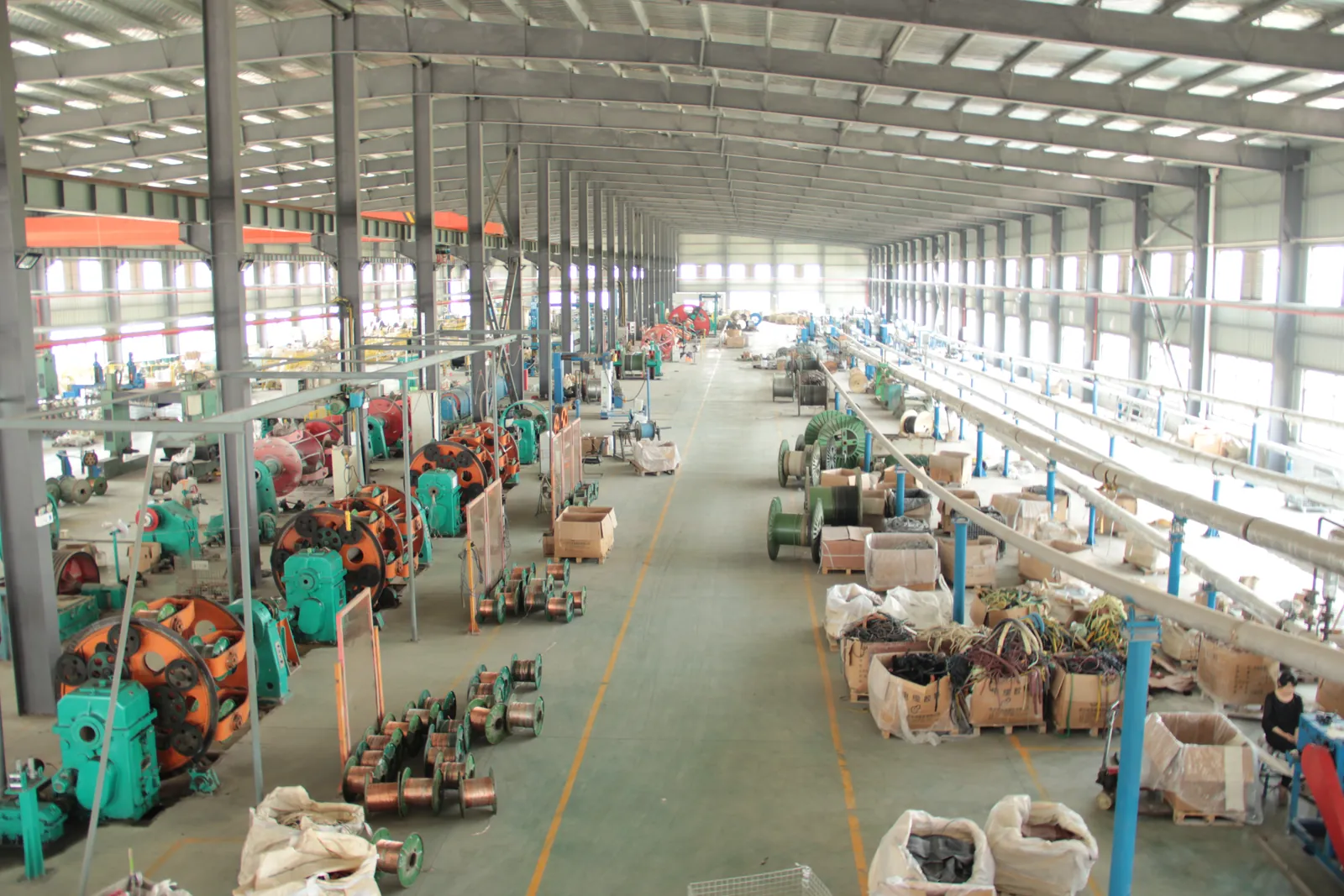
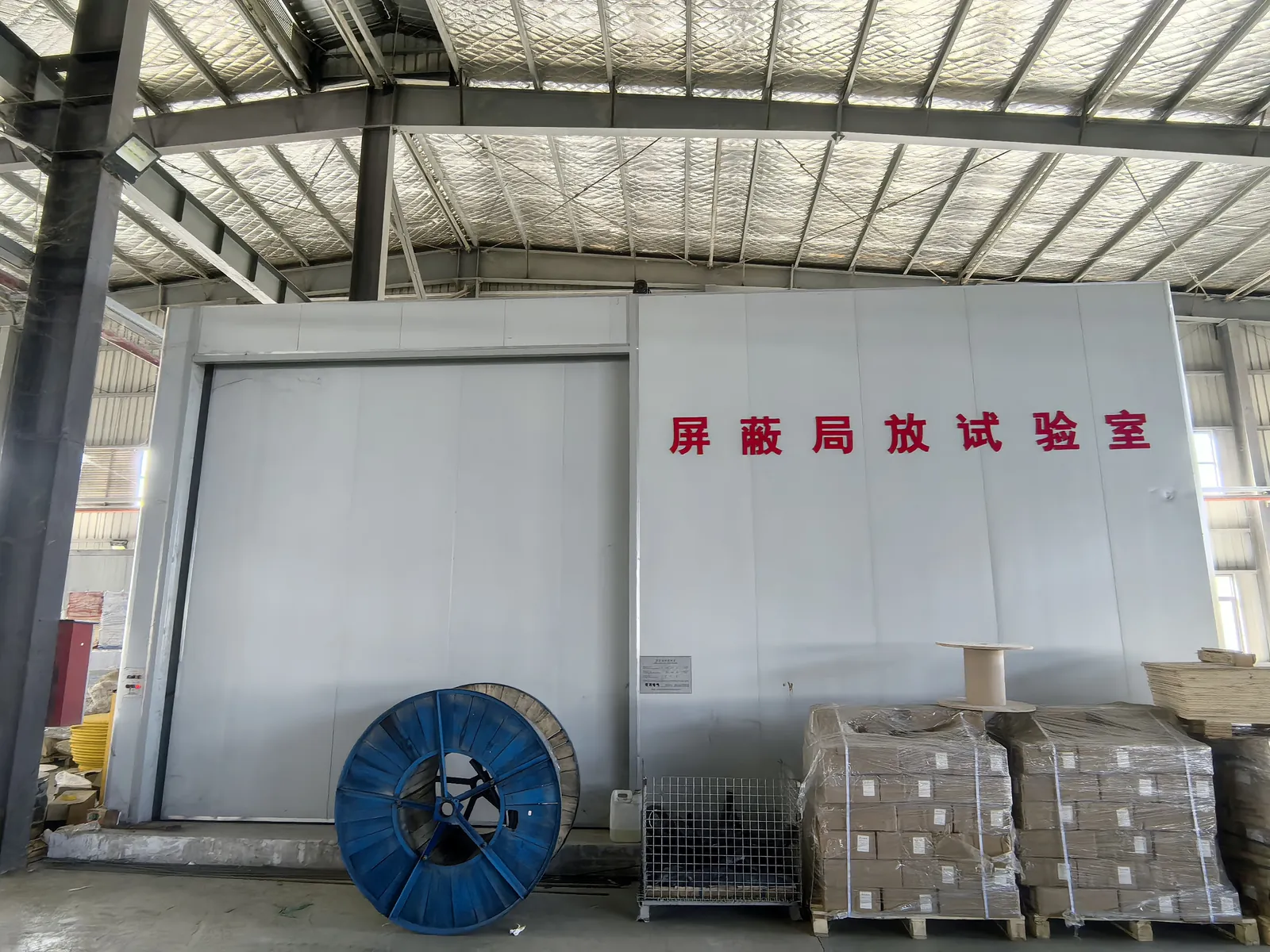
More than 200 sets of advanced production and test equipment at home and abroad, from compounding to final electrical testing.
Constructions engineered to VDE, ICEA, IEC and NEK 606 standards and checked against the real duty cycle of your equipment.
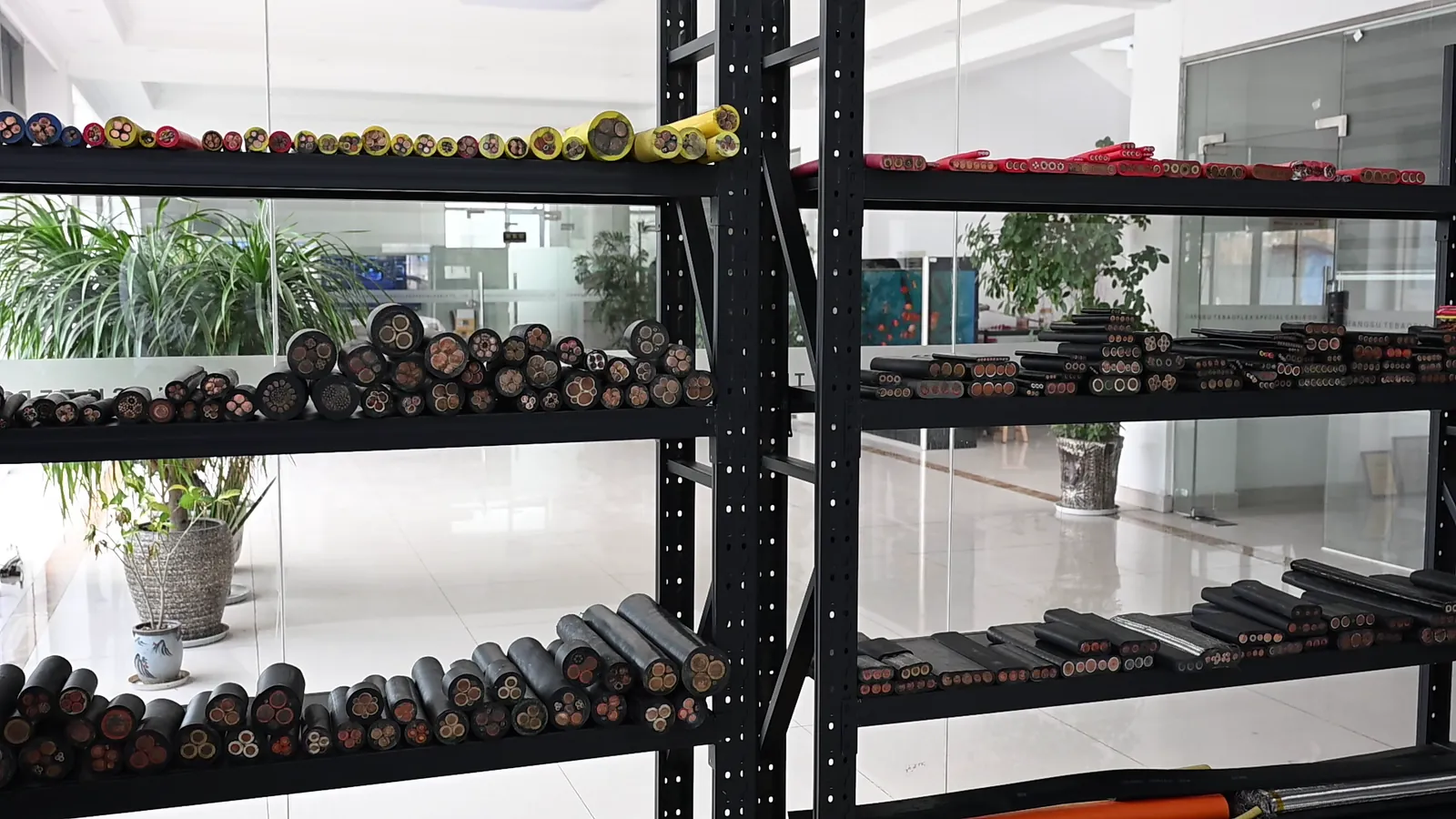
0.6/1 kV to 35 kV heavy-duty rubber cables, reeling and festoon crane cables, submersible, marine, ROV and high-temperature cables.
Special constructions, fibre-optic elements, colours, printing and lengths built to the specification of your project.
Cables working in tunnel engineering, marine and offshore equipment, mining, petrochemical, steel and urban construction projects around the world.
Send us the equipment, voltage, cores and operating conditions and our engineers will propose a cable construction and quotation.