

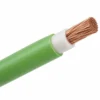
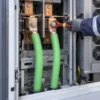
FG16(O)R16 Single-Core EV DC Charging Cable 600/1000V AC, 1800V DC
FG16(O)R16 single-core EV DC cable for high-power charging stations: 600/1000V AC and up to 1800V DC, Class 5 flexible copper, G16 HEPR insulation and grey R16 PVC sheath in 4mm² to 400mm² sizes.
- Voltage (AC)600/1000 V
- Maximum DC voltage1800 V DC
- ConductorClass 5 flexible copper
- Insulation / sheathG16 HEPR / R16 PVC, grey
- Sizes4 mm² to 400 mm²
- Operating temperature-15°C to +90°C
- Min. bending radius6 × overall diameter
- ApplicationEV DC charging power links
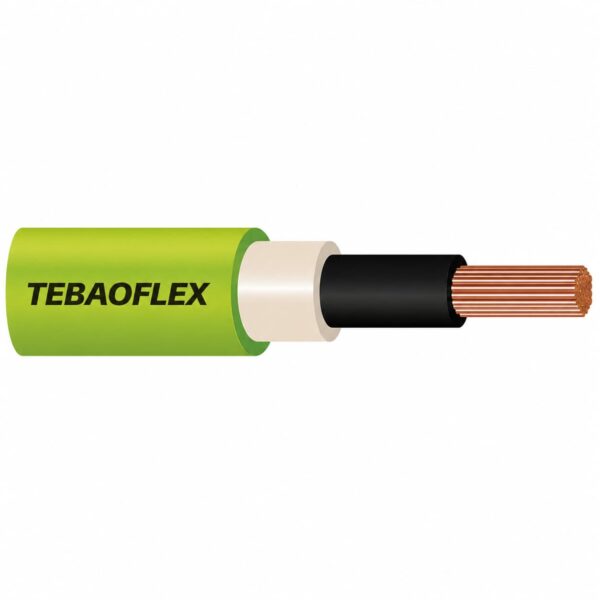
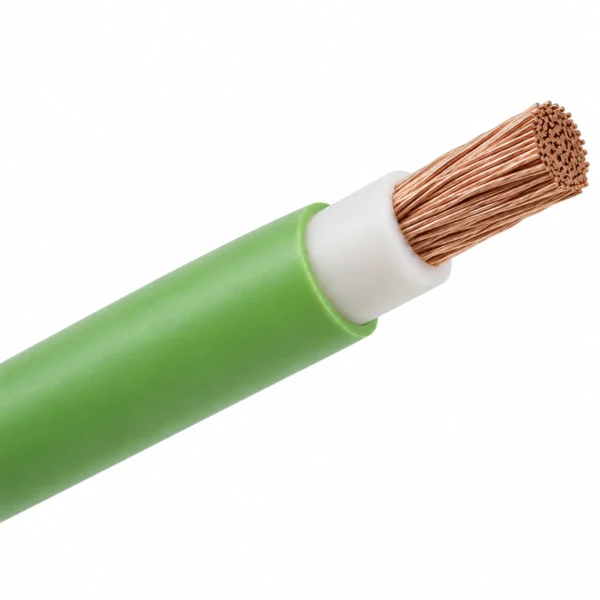
FG16(O)R16 is a flexible single-core power cable with a Class 5 stranded copper conductor, G16 hard-grade ethylene propylene rubber (HEPR) insulation and a grey R16 PVC outer sheath. It is rated 600/1000 V AC and may be used up to 1800 V DC, which makes it a practical choice for the DC side of high-power electric vehicle charging stations.
The single-core build lets installers run the positive and negative DC conductors, and the protective conductor, as separate cables sized to the charger's current. Fifteen cross-sections from 4 mm² to 400 mm² cover everything from auxiliary DC feeds to the heavy links between power cabinets and dispensers.
Browse the EV charging cable category for related cables.
Application & Features
Selection overview
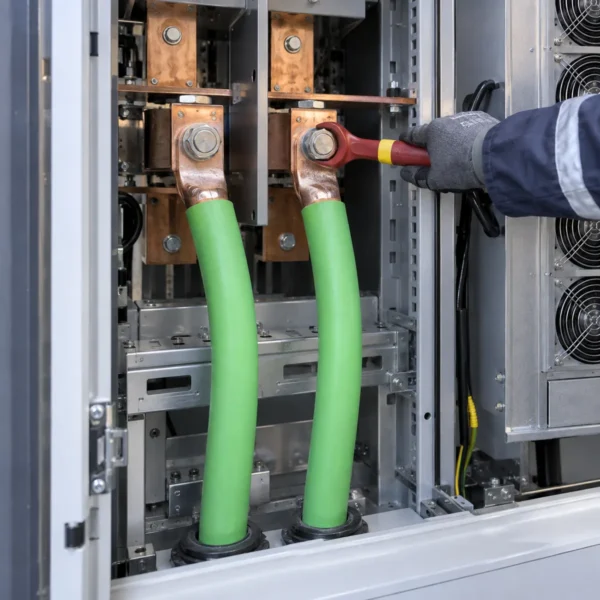
Many high-power charging sites separate the power conversion from the charging point: a cabinet holds the rectifier modules, and one or more dispensers at the parking bays hold the connectors. The DC link between them carries high current over a fixed route through ducts, trenches, cable trays and the plinths of the equipment. FG16(O)R16 is suited to this route because its DC voltage value covers the DC bus of the charger and its flexible Class 5 conductor is easier to bend into cabinets and glands than a rigid conductor of the same size.
The cable can be installed internally and externally where support and protection are defined for the route, including in pipes and conduit and inside metal structures. The same construction is used for DC connections between battery storage, inverters and charging equipment on sites that combine storage with fast charging. Current-carrying capacity depends on the installation method, grouping and ambient temperature, so the cross-section is chosen per route with our engineers.
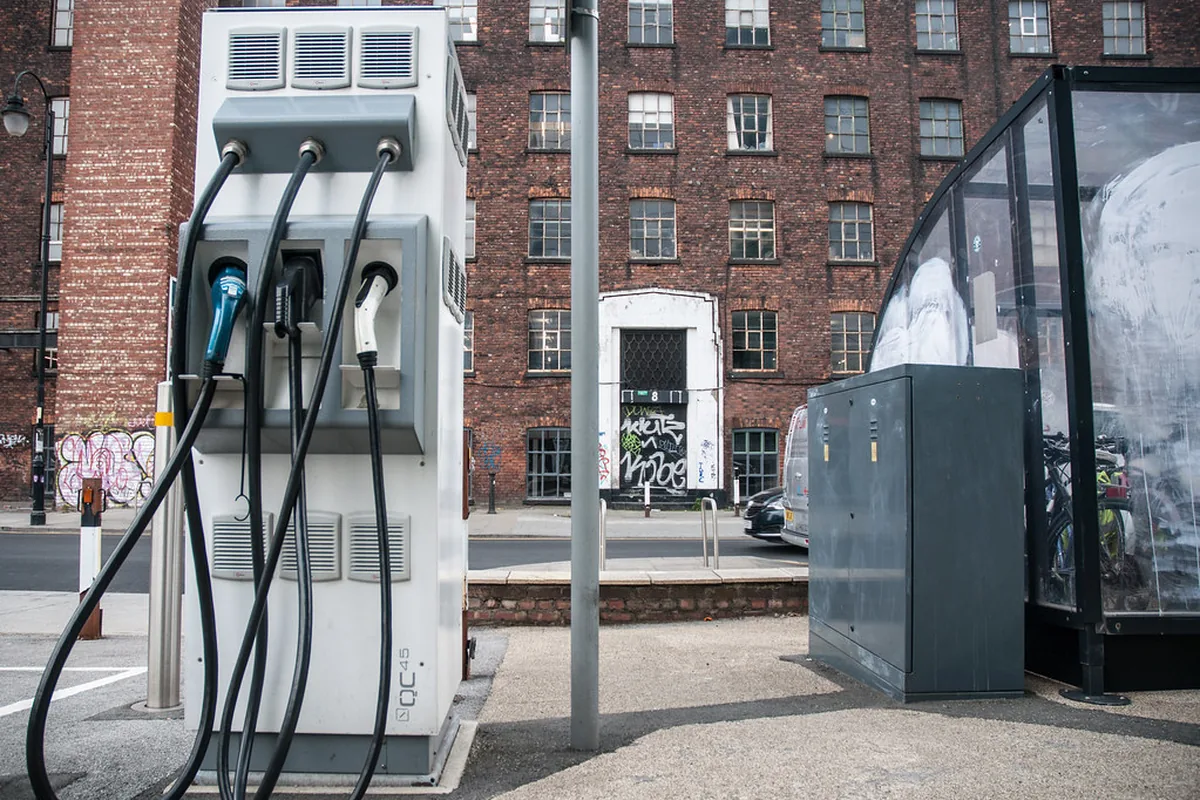
- High-power charging stationsSingle-core DC links between power cabinets and dispensers, sized to the charger current.
- Internal and external routesFor approved conduit, pipe, tray and metal-structure routes where support and protection are defined.
- Flexible large conductorsClass 5 stranded copper makes large sizes easier to bend into cabinets, plinths and glands.
- Wide size rangeFifteen nominal areas from 4 mm² to 400 mm² for auxiliary feeds up to the main DC bus.
Specifications
Technical data
Values from the current TEBAOFLEX FG16(O)R16 datasheet. The final construction is confirmed on the approved datasheet for your order.
Electrical and environmental data
| Parameter | Value |
|---|---|
| Voltage rating | 600/1000V AC |
| Maximum DC voltage | 1800V DC |
| Operating temperature | -15°C to +90°C |
| Minimum bend radius | 6 × overall diameter |
| Short-circuit temperature up to 240mm² | +250°C |
| Short-circuit temperature above 240mm² | +220°C |
| Conductor | Class 5 flexible stranded copper |
| Insulation | G16 HEPR (hard-grade ethylene propylene rubber) |
| Outer sheath | R16 PVC, grey |
| Available sizes | 4mm² to 400mm² |
FG16(O)R16 cable dimensions
| Nominal area | Stranding | Conductor diameter | Overall diameter | Weight |
|---|---|---|---|---|
| 4mm² | 50/0.25 | 2.6mm | 9.3mm | 82kg/km |
| 6mm² | 84/0.30 | 3.4mm | 10mm | 101kg/km |
| 10mm² | 80/0.40 | 4.4mm | 11mm | 152kg/km |
| 16mm² | 126/0.40 | 5.7mm | 11.8mm | 211kg/km |
| 25mm² | 196/0.40 | 6.9mm | 13.5mm | 301kg/km |
| 35mm² | 276/0.40 | 8.1mm | 14.8mm | 396kg/km |
| 50mm² | 396/0.40 | 9.8mm | 16.6mm | 556kg/km |
| 70mm² | 360/0.50 | 11.5mm | 17.6mm | 761kg/km |
| 95mm² | 475/0.50 | 13.3mm | 20.5mm | 991kg/km |
| 120mm² | 608/0.50 | 15.1mm | 22.6mm | 1219kg/km |
| 150mm² | 756/0.50 | 16.8mm | 25mm | 1517kg/km |
| 185mm² | 925/0.50 | 18.5mm | 27.5mm | 1821kg/km |
| 240mm² | 1221/0.50 | 21.4mm | 30.5mm | 2366kg/km |
| 300mm² | 1525/0.50 | 24mm | 33.5mm | 2947kg/km |
| 400mm² | 2013/0.50 | 27.5mm | 38mm | 3870kg/km |
Selection note: current-carrying capacity depends on the installation method, grouping and ambient temperature of each route. Ask our engineers for the derated value and the matching cross-section for your charger before ordering.
Standards & References
Applicable standards and compliance
- Construction referencesFG16(O)R16 cable is manufactured to BS EN/IEC 60502-1 and CEI 20-13.
- Fire and CPR referencesReference standards: BS EN/IEC 60332-1-2 (flame propagation, single cable) and BS EN 50575 (Construction Products Regulation).
- Voltage scopeRated 600/1000 V AC with a maximum of 1800 V DC.
- ApprovalsThird-party certificates, CPR declarations of performance and marking requirements are confirmed and quoted per order.
Construction
Material and build-up
FG16(O)R16 is a round single-core cable. The designation describes the build: F for the flexible conductor, G16 for the HEPR insulation and R16 for the PVC sheath. There is no screen or armour; mechanical protection comes from the route (duct, conduit or tray).
- Conductor: Class 5 flexible stranded copper, from 50 wires of 0.25 mm on 4 mm² to 2013 wires of 0.50 mm on 400 mm².
- Insulation: G16 hard-grade ethylene propylene rubber (HEPR), a thermoset compound for the +90°C operating conductor temperature.
- Outer sheath: R16 polyvinyl chloride (PVC) over the insulation, giving abrasion and weather protection for internal and external routes.
- Sheath colour: Grey as standard.
FAQ
Selection questions
What does FG16(O)R16 mean?
FG16(O)R16 is a designation from the CEI 20-13 family of low-voltage power cables. F stands for a flexible stranded conductor, G16 for the hard-grade HEPR insulation and R16 for the PVC outer sheath. The single-core version on this page is used where each DC pole is run as its own cable.
Why is a 600/1000V AC cable rated for 1800V DC?
Insulation is stressed differently by DC than by AC, so the same cable can carry a higher DC voltage than its AC rating. The maximum of 1800 V DC covers the DC bus of high-power chargers and battery storage links. Always check the maximum DC voltage of your charger against this value.
How do I choose the cross-section?
Start from the charger's continuous DC current, then apply the installation method, the number of cables grouped together and the ambient temperature of the route. The dimension table above gives the overall diameter and weight for gland and duct sizing. Send these details and our engineers return the derated value and a recommended size.
How does FG16(O)R16 compare with other EV cables?
FG16(O)R16 is a fixed-installation single-core power cable. For a flexible DC cable in the same category see S1BZ5-F, and for multi-core cables that combine AC power and data for charge points see the EV charging cable category.
What should I send for a quotation?
Send the cross-section, quantity in metres, drum or cut lengths, the charger's DC voltage and current, the route (duct, tray, conduit or external) and any CPR class or marking your project requires.
Request this cable.
Send the cross-section, length, charger DC voltage and current, installation route and any CPR requirement.
Quality Assurance
Testing at every stage in our own workshop and laboratory, from incoming copper to the packed drum.
Raw Material Inspection
Every batch of copper rod, rubber compound and reinforcing material is checked before it reaches the line.
- Copper: conductor resistance, elongation and surface condition on incoming rod and drawn wire
- EPR, CPE, PUR and silicone compounds: hardness, tensile strength, elongation and ageing samples from each mix
- Suppliers and batch numbers are recorded so every drum can be traced back to its materials
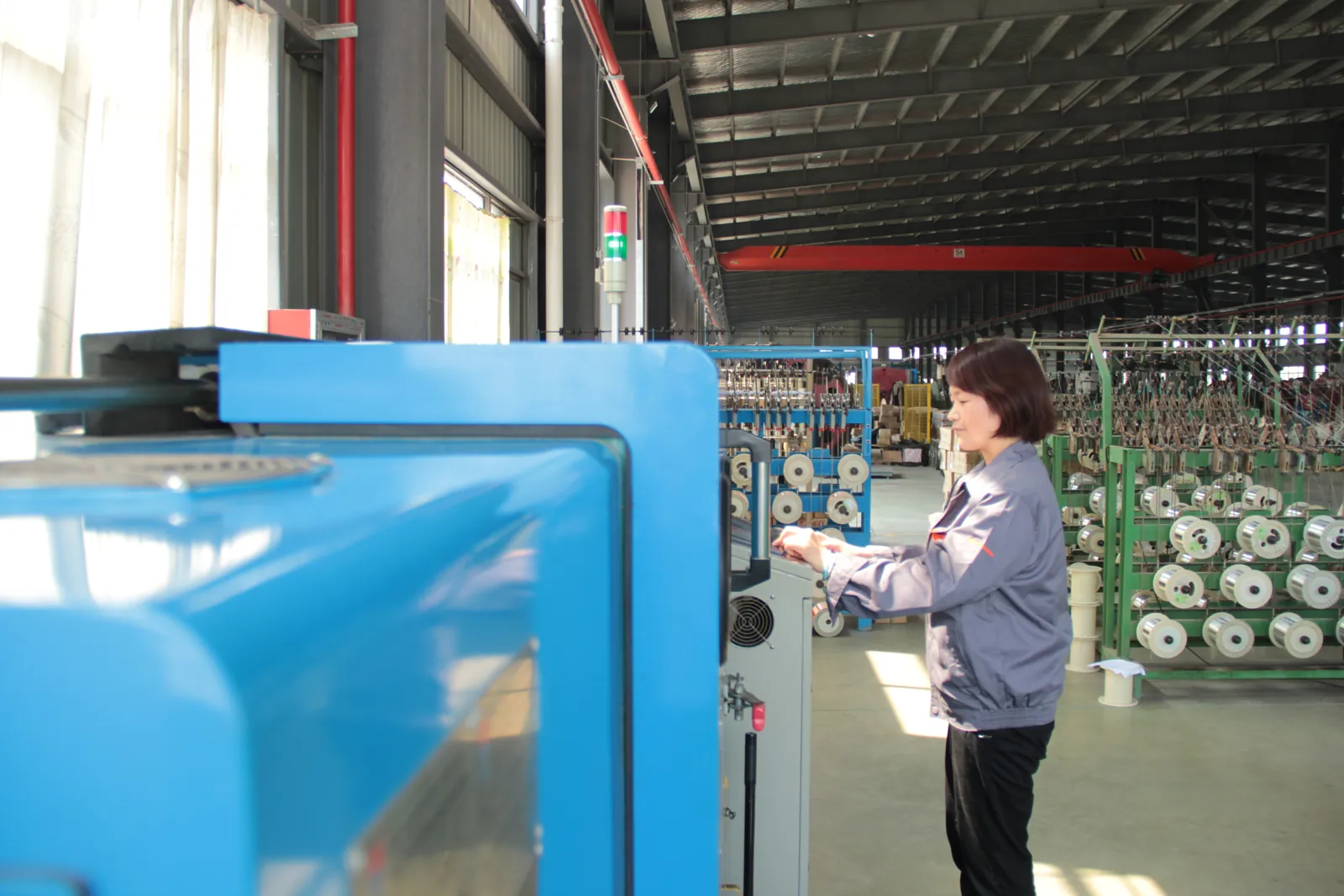
Manufacturing Process Control
Stranding, insulation extrusion, core assembly and sheathing run under recorded process parameters.
- Class 5/6 stranding with lay length and tension monitored for trailing and reeling flexibility
- Continuous-vulcanisation extrusion with wall thickness and spark tests logged on every length
- Operators sign off each stage before the cable moves to the next machine
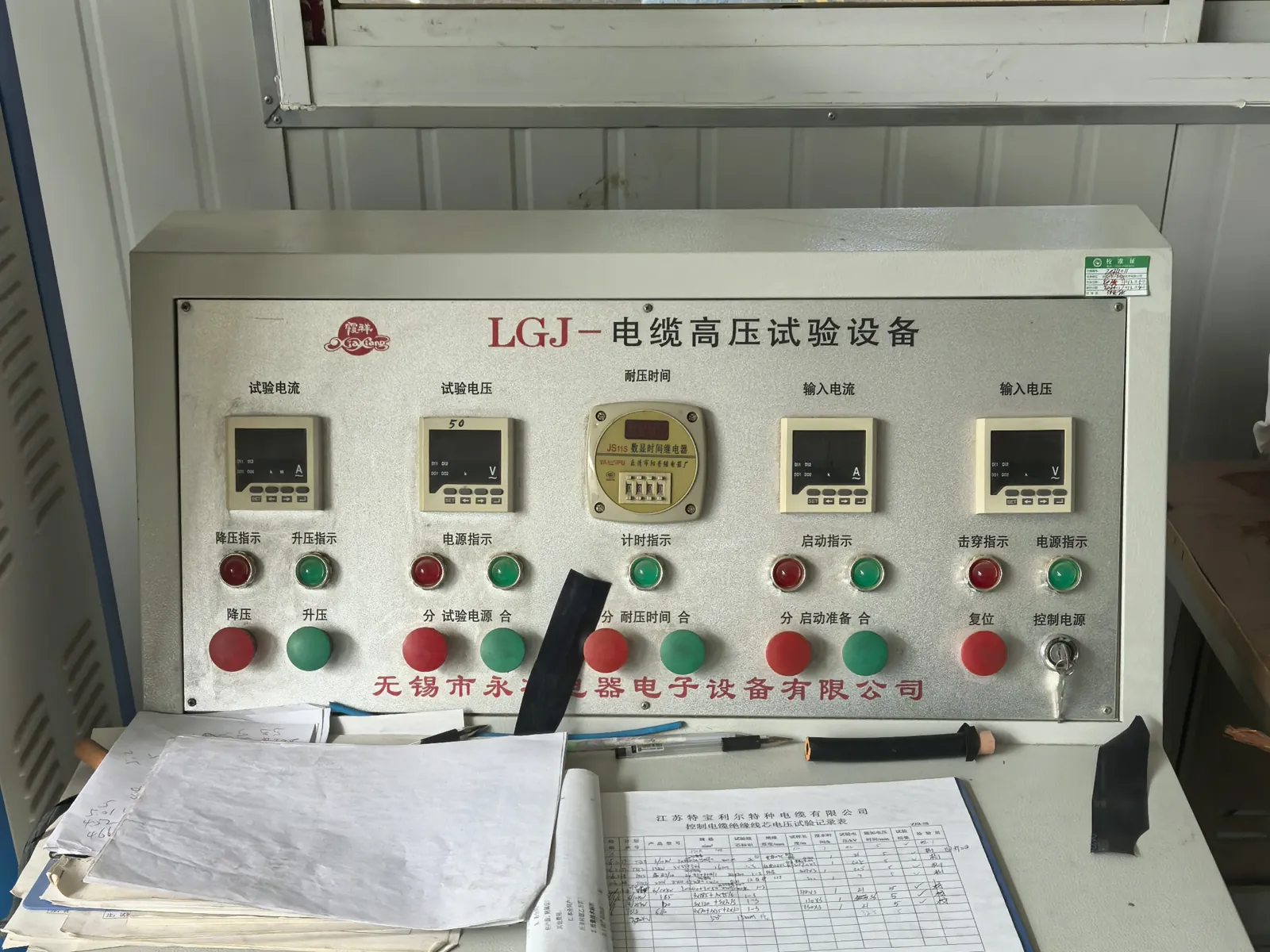
Electrical Testing
Finished lengths go through the routine tests required by the referenced VDE, ICEA, IEC or NEK standard.
- Conductor resistance and insulation resistance on every length
- Voltage withstand (3.5 kV and higher) and partial-discharge measurement in the shielded HV laboratory
- Screen and pilot-core continuity checks for mining and reeling constructions
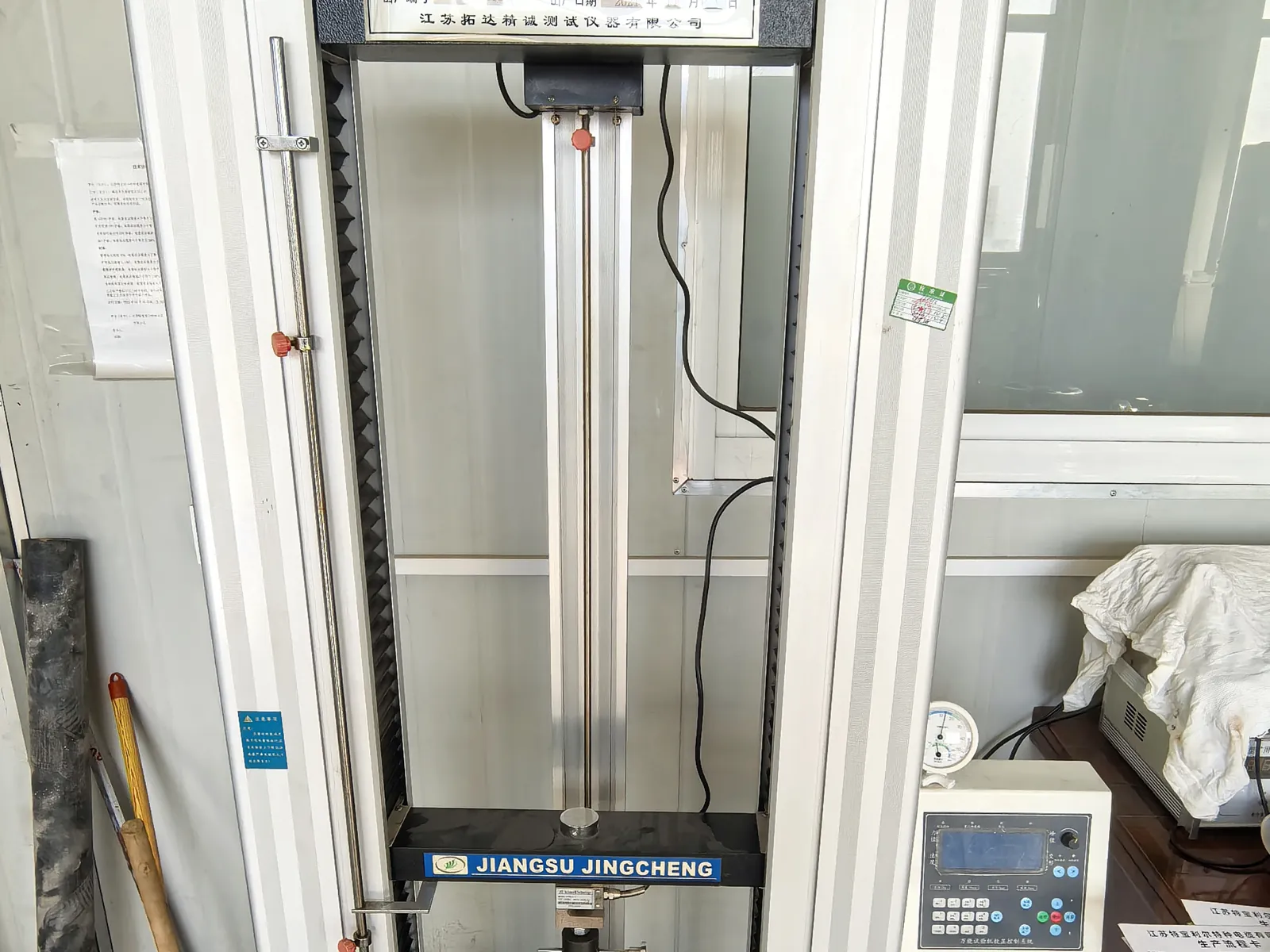
Mechanical and Ageing Tests
Samples from production are tested for the duty a mining, crane or submersible cable will actually see.
- Tensile strength and elongation of insulation and sheath before and after ageing
- Hot-set, ozone, oil-immersion and low-temperature bending tests
- Constant-temperature water bath for insulation resistance of submersible constructions
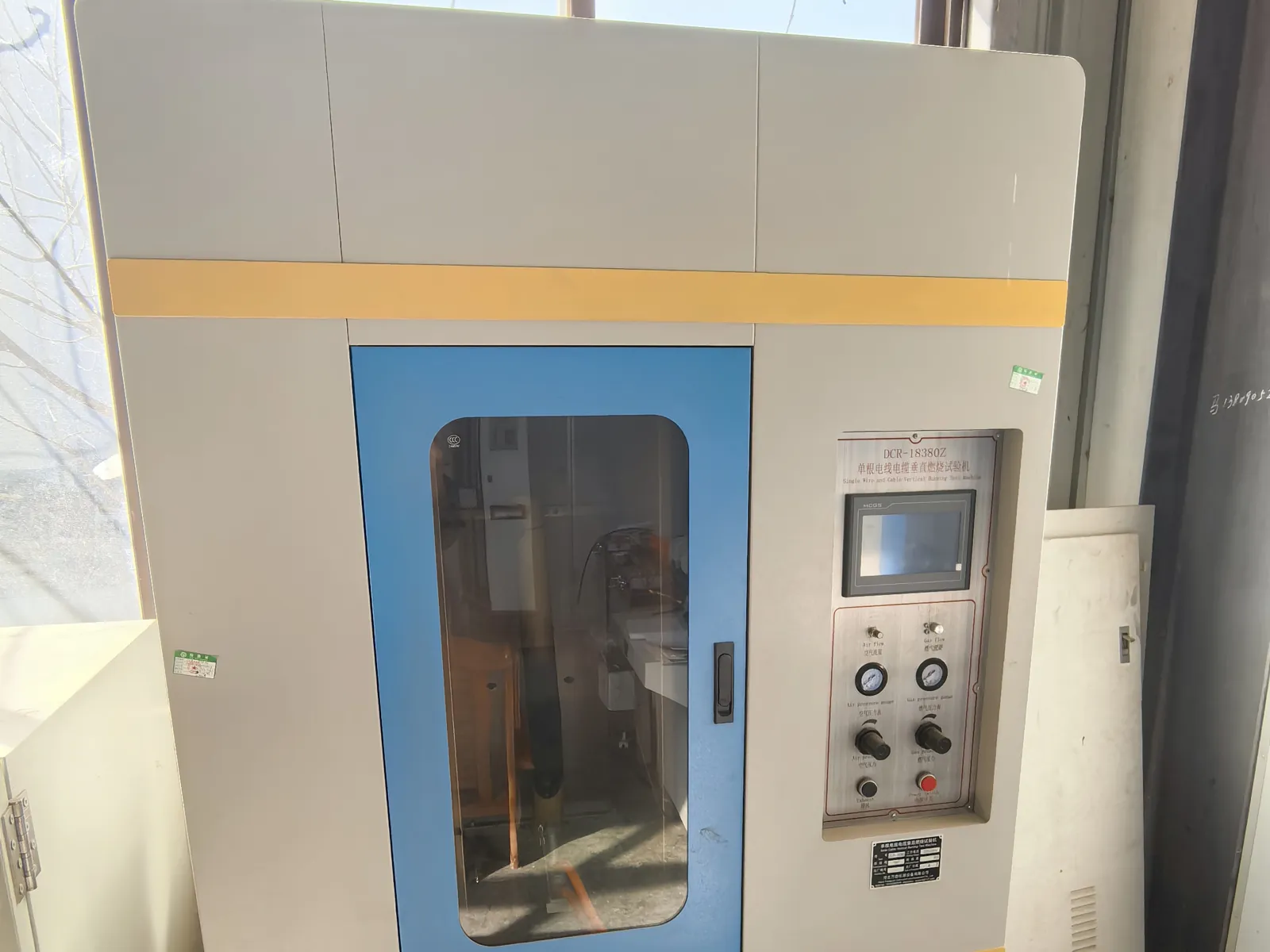
Flame Test and Final Inspection
Before packing, the cable is checked against the order and the flame-performance requirement of its standard.
- Single-cable vertical flame test to IEC 60332-1-2 where specified
- Metre marking, printing, drum length and appearance inspection
- Test report and packing list issued with every shipment
Related products
-
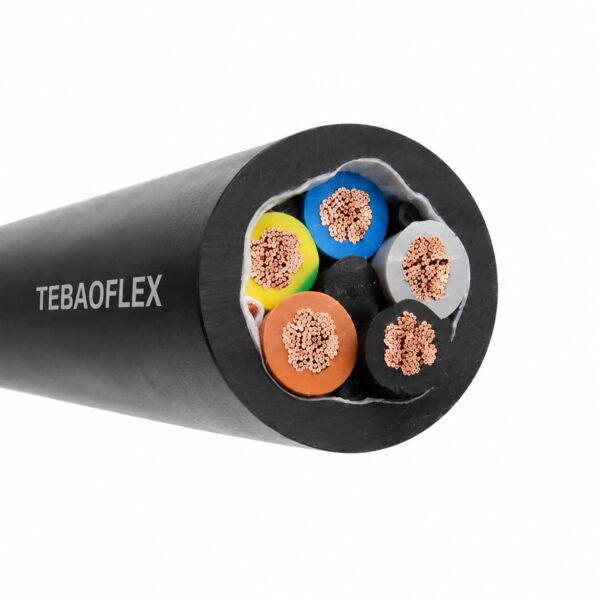
H05BZ5-F EV Charging Cable 300/500V, EN 50620, 3G1.5 and 3G2.5
-
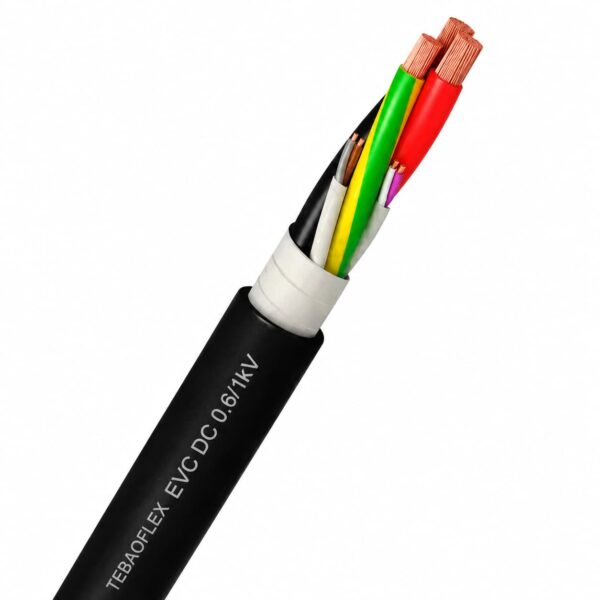
H07BZ5-F EV Charging Cable 450/750V with PUR-HF Sheath, 1.5-35mm²
-
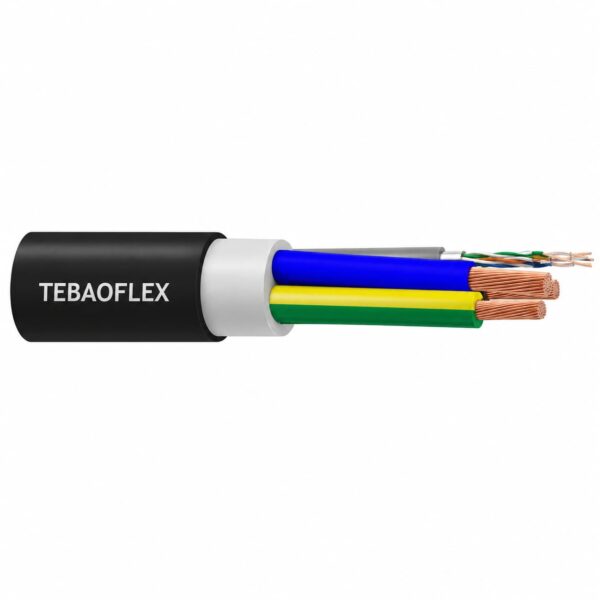
EV Charging Power + CAT5e Data Cable 0.6/1kV, 3 × 4mm² or 3 × 6mm²
-
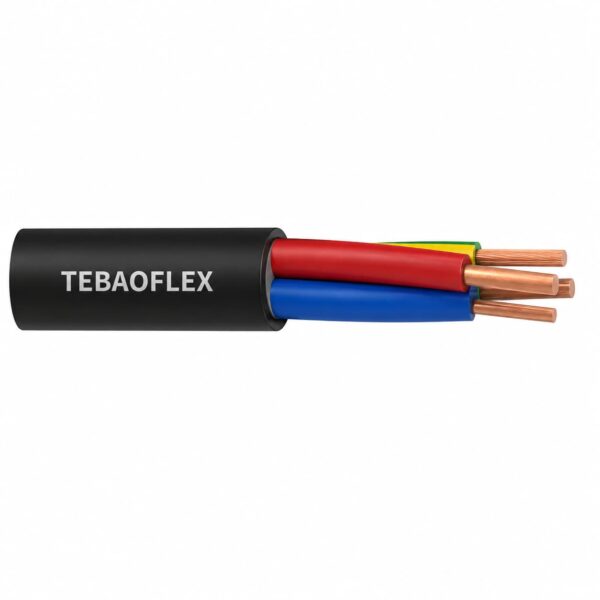
EV Charging Power + Cat6A Data SWA LSZH Cable 0.6/1kV, 3 or 5 × 6mm²
-
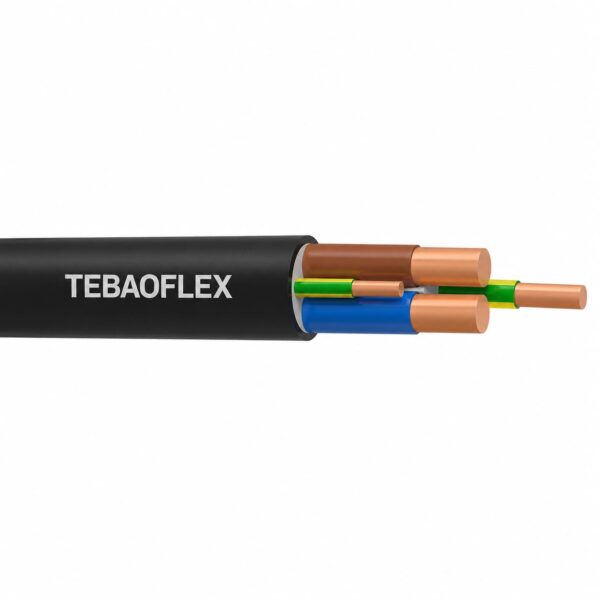
S1BZ5-F 1.5kV DC EV Charging Cable with CC/CP Control Cores, 16-95mm²
-
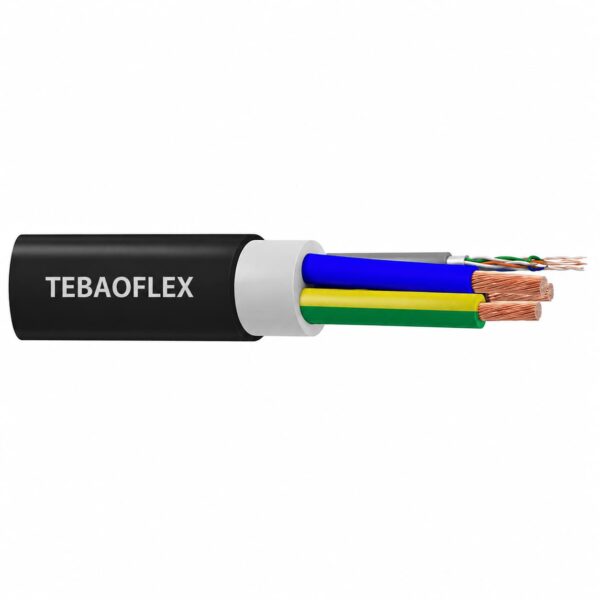
EV Charging Power + Cat6A Data LSZH Cable 0.6/1kV, 3 or 5 × 6mm²
-
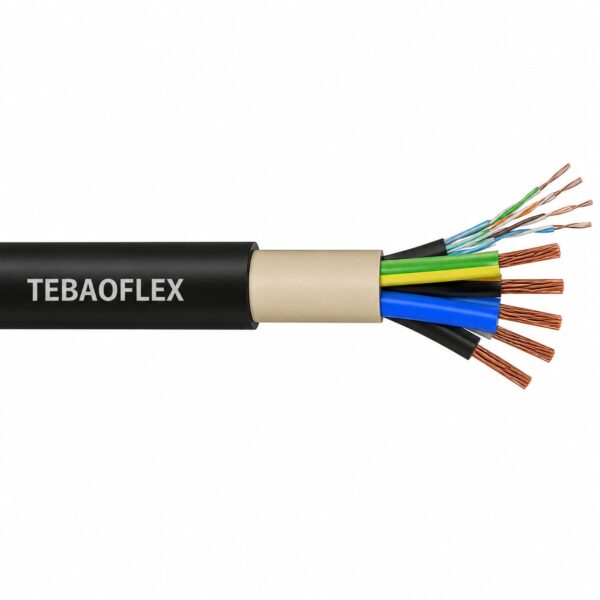
EV Charging SWA Cable with CAT5e Data, 3-Core 4mm² or 6mm², 600-1000V
Need Pricing for This Cable?
Tell us the length, cores, cross-section and delivery country and we will reply with a quotation and datasheet.