Types of Cables Explained: Power, Control, Data and EV Cables
Types of cables explained: power, control and signal, data and EV charging cables, plus the parts of a cable and how to choose by duty.

By function, the main types of cables are power, control and signal, data and communication, and EV charging cables. Within each group, cables are sorted by voltage rating, construction and whether they stay fixed or flex in service. This guide treats EV charging cables as a family of their own, because one flexible cable supplies power and, if needed, communication between charger and vehicle.
The cables covered are those installed in buildings, machines, industrial plants and EV chargers. For HDMI, USB and audio leads, see the device-leads row in the data table.
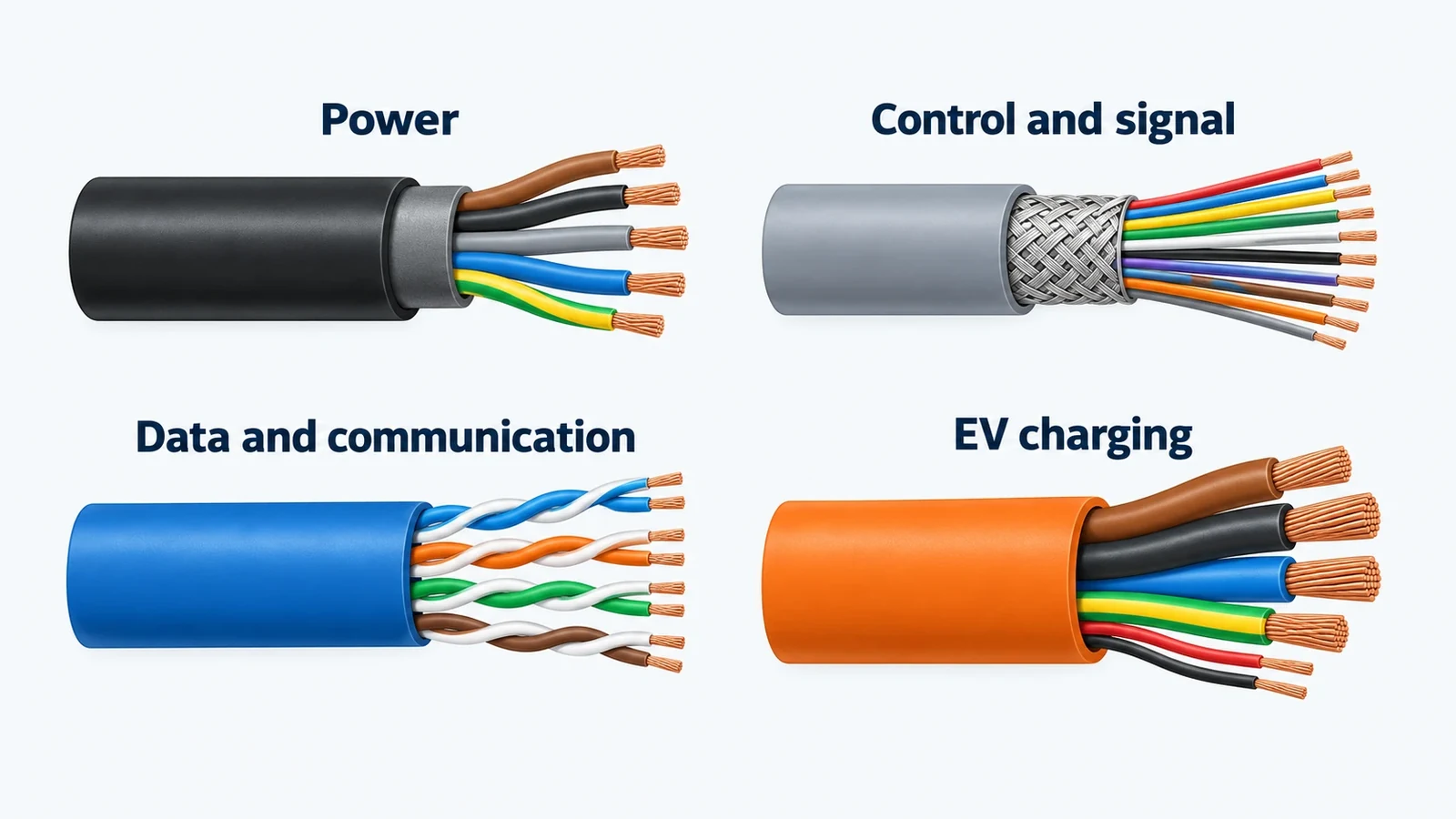
Main types of cables at a glance
| Type | What it carries | Typical use | Section |
|---|---|---|---|
| Low-voltage power cable | Power up to 1 kV AC | Building and plant distribution, machine feeds | Power cables |
| Medium- and high-voltage power cable | Power above 1 kV AC | Distribution and transmission networks, large plants | Power cables |
| Building wire (North America) | Power on single insulated conductors in conduit | Commercial and residential circuits | Power cables |
| Solar PV cable | DC power from PV modules | Module strings to the inverter | Power cables |
| Control cable | Switching and command signals | Panels, sensors and actuators | Control and measurement signals |
| Instrumentation cable | Low-level measurement signals in pairs or triads | Process plants | Control and measurement signals |
| Twisted-pair data cable | Ethernet, serial and fieldbus data | Networks and industrial communication | Data cables |
| Coaxial cable | RF and video signals | TV, CCTV and antennas | Data cables |
| Optical fiber cable | Data carried as light | Backbones and long links | Data cables |
| Device and AV leads (HDMI, USB, audio) | Data and AV signals between devices | Computers, displays and audio | Data cables |
| EV charging cable | Power and, if needed, communication between charger and vehicle | AC and DC charging | EV charging |
| Composite power and data cable | Power cores plus data pairs in one cable | Charger installation | Supply cables |
| Flexible and portable cable | Power to moving or portable equipment | Tools, machines, mines and cranes | Moving machines and harsh environments |
Sources: low voltage, IEV 601-01-26 (generally accepted upper limit 1,000 V AC) and IEC 60364-1:2025, 1.1.2 (installations up to 1,000 V AC or 1,500 V DC); EV charging cables, IEC 62893-1:2017+AMD1:2020 (scope); PV cable, BS EN 50618:2014, IEC 62930:2017 and UL 4703; voltage notation, IEC 60502-1:2021 and UL 83, Edition 16.
What is the difference between a wire, a cable and a cord?
In North American usage, a wire is one conductor, a cable groups insulated conductors under one covering, and a cord is a flexible cable for portable equipment. A wire may be bare or insulated, with or without a thin protective jacket such as the nylon layer on THHN. IEC terminology is broader: any insulated conductor is a core, and even a single non-sheathed core counts as a cable.
| Term | North American usage | IEC term | Flexibility | Typical use |
|---|---|---|---|---|
| Wire | One conductor, bare or insulated, with or without a thin protective jacket such as THHN’s nylon | Bare: not a core, because a core has its own insulation (IEV 461-04-04). Insulated: a “core”; sold alone for fixed wiring, a “non-sheathed cable” (IEC 60227-3) | Usually installed fixed | Building circuits in conduit |
| Cable | Insulated conductors under a common covering; single-conductor products may also be called cables | “Insulated cable”: one or more cores with their coverings, if any (IEV 461-06-01) | Fixed or flexible, depending on the design | Power distribution, control and data |
| Cord | A flexible cable for connecting portable equipment | “Flexible cables (cords)” (IEC 60227-5 title) | Built to flex in service | Appliances, portable tools and extension leads |
The rule that one conductor means a wire is only half right. In the IEC vocabulary, a core is an “assembly comprising a conductor with its own insulation (and screens if any)”. An insulated cable is one or more cores, plus any coverings and protection around them. So a single insulated core can already be a cable, and one IEC standard is titled “Non-sheathed cables for fixed wiring”.
North American usage is also loose at this boundary. UL 83, for example, covers single-conductor “wires and cables”.
Cords for portable equipment are covered under moving machines and harsh environments.
To tell a wire from a cable on site, count the conductors and look for a common outer covering. Then read the print legend, which normally names the type and standard.
Sources: IEV 461-04-04 and IEV 461-06-01 (IEC 60050-461, 2008); IEC 60227-3:2024 and IEC 60227-5:2024 (titles and scopes); UL 83, Edition 16 (title and scope); THHN construction, our THHN wire guide.
What are the main types of power cables?
The main types of power cables are low-voltage cables, up to 1 kV AC, and medium- and high-voltage cables above 1 kV AC. Low-voltage cables wire buildings, machines and chargers. Medium- and high-voltage cables carry power through distribution and transmission networks.
Low-voltage power cables for fixed installation have extruded insulation, such as PVC, in single-core and multicore designs. They run on cable trays, in ducts or clipped direct to structures, feeding distribution boards, motors and machines. Cables for buried or exposed runs often add armor, explained under parts of a cable.
North American buildings also use single insulated conductors in conduit and cable assemblies. For THHN, THWN-2, XHHW-2, MC and service-entrance cables, see our THHN wire guide.
Photovoltaic (PV) systems use dedicated DC cables made to EN 50618, IEC 62930 or UL 4703.
Most medium-voltage cables to IEC 60502-2 add a conductor shield and an insulation shield around the extruded insulation. For mobile mining machines at these voltages, see this guide to medium-voltage mining cable selection.
One standard power-system textbook, by Mehta and Mehta, classifies underground cables for three-phase service by construction. Its three types are belted, screened and pressure cables. Cables to the current IEC 60502 series use extruded insulation instead.
Overhead lines often use bare stranded conductors, such as ACSR (aluminum conductors, coated-steel reinforced) and AAAC (all-aluminum-alloy conductors). Strictly, these are wires rather than cables; see the wire, cable and cord comparison.
Sources: low voltage, IEV 601-01-26; PV cable, BS EN 50618:2014, IEC 62930:2017 and UL 4703; extruded and PVC insulation, IEC 60502-1:2021 and IEC 60227-1:2024 (titles); conductor and insulation screens, IEC 60502-2:2014, 7.2 and 7.3 (AMD1:2024 also published); textbook classification, V. K. Mehta and R. Mehta, Principles of Power System, S. Chand, 2022, ch. “Underground Cables”, §11.5, p. 268; overhead conductors, ASTM B232/B232M-24 and ASTM B399/B399M-23 (aluminum alloy 6201).
How is a cable’s voltage rating written?
IEC cables write voltage as a pair, U0/U, such as 300/500 V, 450/750 V or 0.6/1 kV. IEC 60502-1 adds a third value in brackets, as in 0.6/1 (1.2) kV. North American cables usually carry a single rating, for example 600 V.
| Marked rating | U0 | U | Where the rating appears |
|---|---|---|---|
| 300/500 V | 300 V | 500 V | Upper limit for PVC cords (IEC 60227-5) |
| 450/750 V | 450 V | 750 V | Upper limit for PVC fixed-wiring cables (IEC 60227-3); upper limit of the IEC 60245-4 scope for rubber cords and flexible cables |
| 0.6/1 kV | 0.6 kV | 1 kV | Low-voltage power cables with extruded insulation (IEC 60502-1) |
| 600 V (single rating) | Not split | Not split | Single-conductor thermoplastic-insulated wires and cables (UL 83) |
Sources: IEC 60227-1:2024, IEC 60227-3:2024, IEC 60227-5:2024 and IEC 60245-4:2026 (scopes); IEC 60502-1:2021 (title) and IEC 60502-1:2004+AMD1:2009, 7.2 (0,6/1 (1,2) kV); UL 83, Edition 16 (scope).
Which cables carry control and measurement signals?
Control cables carry low-power switching and command signals, and instrumentation cables carry low-level measurement signals. Most control cables are multicore low-voltage cables linking panels, sensors and actuators, with cores identified by numbers or colors.
A multicore cable, called a multi-conductor cable in North American usage, holds several insulated cores under one outer covering. One cable can then connect a panel to a row of contacts, sensors or valves. Our PVC control and data cable range includes the following designs.
YY control cable and YSLYSY cable serve control circuits. LiYY cable (unshielded) and LiYCY cable (shielded) carry data and control signals.
Instrumentation cables usually run their signals in pairs or triads. For their construction, see this guide to instrumentation cables.
When is a shield needed?
A shield helps when a signal cable runs near variable-speed drives, shares a long route with power cables or carries low-level analog signals. In each case, the shield reduces the interference that reaches the cores. Terminate the shield as the equipment maker instructs.
Sources: identification of conductors by colors and alphanumeric notations, IEC 60445:2021 with AMD1:2026; general EMC guidance on earthing and cabling, IEC TR 61000-5-2:1997.
What are data and communication cables?
Data and communication cables carry information rather than power. In networking, the four basic families usually named are unshielded twisted pair, shielded twisted pair, coaxial cable and optical fiber.
Data and communication cable families
| Family | How it carries the signal | Typical examples | Standard |
|---|---|---|---|
| Unshielded twisted pair | Twisted pairs of insulated conductors, with no shield | Ethernet Cat 5e, Cat 6 and Cat 6A cables | ANSI/TIA-568.2-E and ISO/IEC 11801-1 (network cabling) |
| Shielded twisted pair | Twisted pairs under a foil or braid shield | Shielded Ethernet cables; industrial serial and fieldbus pairs, such as RS-485 | Network cabling: ANSI/TIA-568.2-E and ISO/IEC 11801-1. Serial and fieldbus pairs: equipment or fieldbus specification |
| Coaxial cable | A center conductor inside a concentric outer conductor | TV, CCTV and RF links | IEC 61196-1 |
| Optical fiber | Light guided along optical fibers | Single-mode and multimode links | IEC 60794-1-1 |
| Multipair telephone cable | Many twisted pairs under one covering | Voice and signaling lines in buildings | Network or project specification |
| Device and AV leads (HDMI, USB, audio) | Depends on the interface | Computers, displays and audio equipment | Interface specifications |
Cables that carry power and data together are covered under supply cables in the EV charging section. For communication wire on industrial serial links, see our guide to RS-485 and fieldbus cable.
Sources: ANSI/TIA-568.2-E (TIA, 2024; revises TIA-568.2-D); ISO/IEC 11801-1:2017 with AMD1:2025; IEC 61196-1:2005; IEC 60794-1-1:2023.
Which cables are used in EV charging equipment?
EV charging equipment uses cables in three main roles: flexible AC charging cables between charger and vehicle, DC charging cables on fast chargers, and fixed supply cables feeding the station. IEC and EN markets use dedicated charging-cable standards, and North America uses UL 2263 for electric vehicle cable.
The charging modes named in the IEC and EN standards are those of IEC 61851-1 (EN 61851-1 in Europe).
| Cable role | Where it is used | Standard covering this role | Example from our range |
|---|---|---|---|
| AC charging cable | Between an AC charger and the vehicle | IEC 62893-3; EN 50620 | H07BZ5-F |
| DC charging cable | Between a DC fast charger and the vehicle | IEC 62893-4-1 (without a thermal management system); IEC TS 62893-4-2 (with one) | S1BZ5-F |
| Supply cable | Fixed feed from the distribution board to the charging station | Low-voltage power cable standards, such as IEC 60502-1 | SWA power and Cat 6A data cable |
Before ordering, ask our engineers to confirm the standard each cable is built to, and ask for the test report or certificate that matches your market. For EV cables in North American cord sets, specify UL 2263.
Sources: IEC 62893-1:2017+AMD1:2020, IEC 62893-3:2017, IEC 62893-4-1:2020 and IEC TS 62893-4-2:2021 (titles and scopes); BS EN 50620:2017+A2:2024 (scope); IEC 61851-1:2017; UL 2263, Edition 1 (scope); supply cable standard, IEC 60502-1:2021.
AC charging cables
IEC 62893-3 covers cables for AC charging in modes 1, 2 and 3, rated up to 450/750 V. EN 50620 covers halogen-free charging cables for modes 1–3 at up to 450/750 V, but its 300/500 V cables are permitted for mode 1 only. For mode 2 and mode 3 chargers, our example is the H07BZ5-F EV charging cable. H05BZ5-F is a 300/500 V cable, so it is for mode 1 connections only. A charging cable supplies power and, if needed, communication between the charging station and the vehicle.
DC charging cables
IEC 62893-4-1 covers mode 4 DC charging cables used without a thermal management system. IEC TS 62893-4-2, a Technical Specification, covers mode 4 cables intended for use with one. Our DC example is the S1BZ5-F DC charging cable. The two documents cover different cables, so before ordering, ask our engineers to confirm which one matches your charger.
Split high-power chargers also need a fixed DC link between the power cabinet and the dispenser. Our FG16(O)R16 EV DC cable, in its single-core version, is made for that link.
Supply cables to the charger
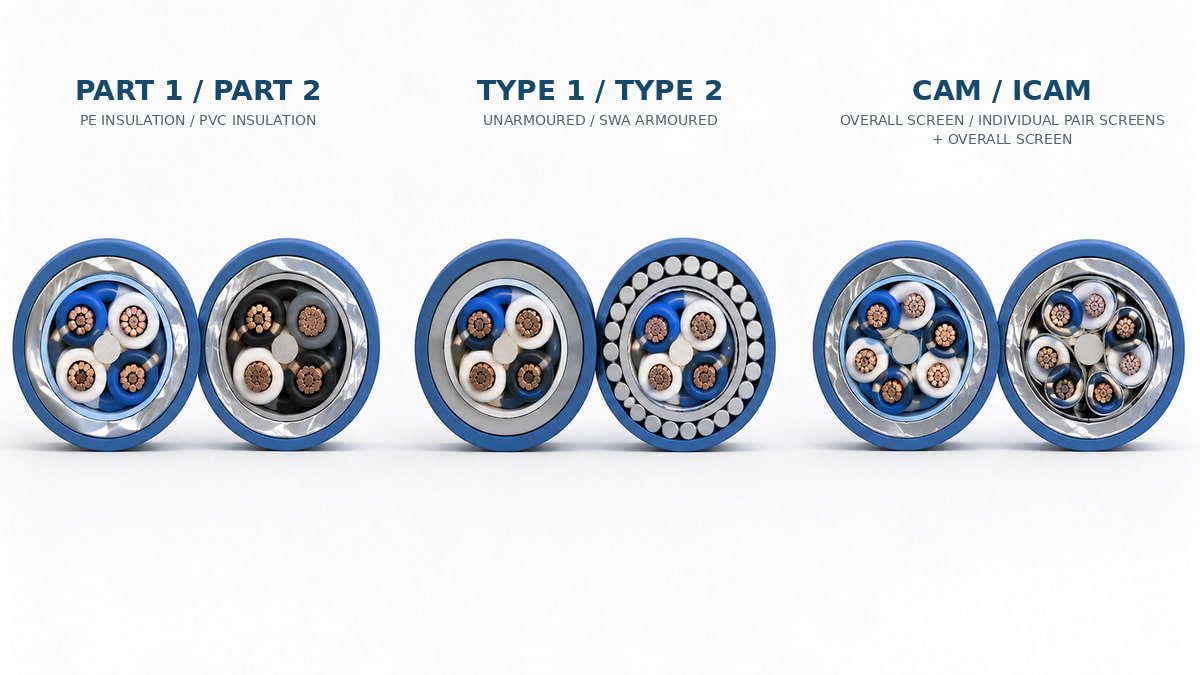
Fixed low-voltage cables feed the charging station from the distribution board. Our range includes composite cables that combine power cores with data pairs. One such cable powers the charger and connects it to the network. The unarmored versions are the EV charging power and Cat 5e data cable and the Cat 6A power and data cable for EV charging.
Where the route needs mechanical protection, choose a steel-wire-armored (SWA) version. The armored versions are the armored EV charging cable with Cat 6A data and the SWA EV charging cable with Cat 5e data. The Cat 6A versions use a low-smoke, zero-halogen (LSZH) outer covering.
Browse the full EV charging cable range. Before ordering, ask our engineers to confirm the rated voltage, core count and temperature rating for your charger.
Sources: modes and ratings, IEC 62893-3:2017 and BS EN 50620:2017+A2:2024 (scopes, including the mode 1 limit for 300/500 V cables); cable function, IEC 62893-1:2017+AMD1:2020 (scope); DC parts, IEC 62893-4-1:2020 and IEC TS 62893-4-2:2021 (scopes).
What cables are used on moving machines and in harsh environments?
Moving machines need flexible cables with fine-stranded Class 5 or Class 6 conductors, while harsh environments need suitable insulation and outer coverings, in fixed or flexible designs. The duty decides the cable.
A cable built for fixed installation is not designed for repeated bending, so it should not feed moving or portable equipment. UL 83 covers 600 V single-conductor thermoplastic-insulated wires and cables, while UL 62 covers flexible cords and cables. The THHN guide explains why THHN is not a flexible or portable cable.
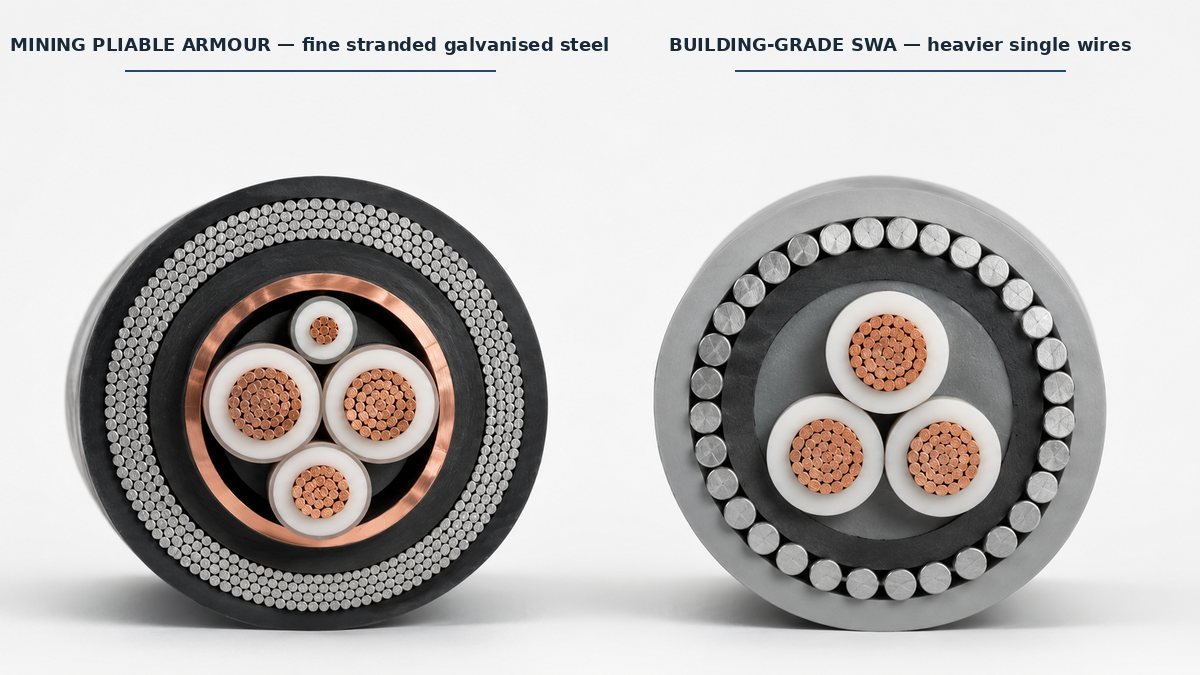
For moving duty, mining cables serve mobile mining machines and rough handling underground or in open pits. Reeling and trailing cables serve cranes and mobile machines that wind cable onto a drum or drag it behind them. Portable cords connect appliances and portable tools; see this guide to SO cord. European flexible rubber cable serves portable and temporary connections in IEC and EN markets. Welding cable carries current to the electrode holder.
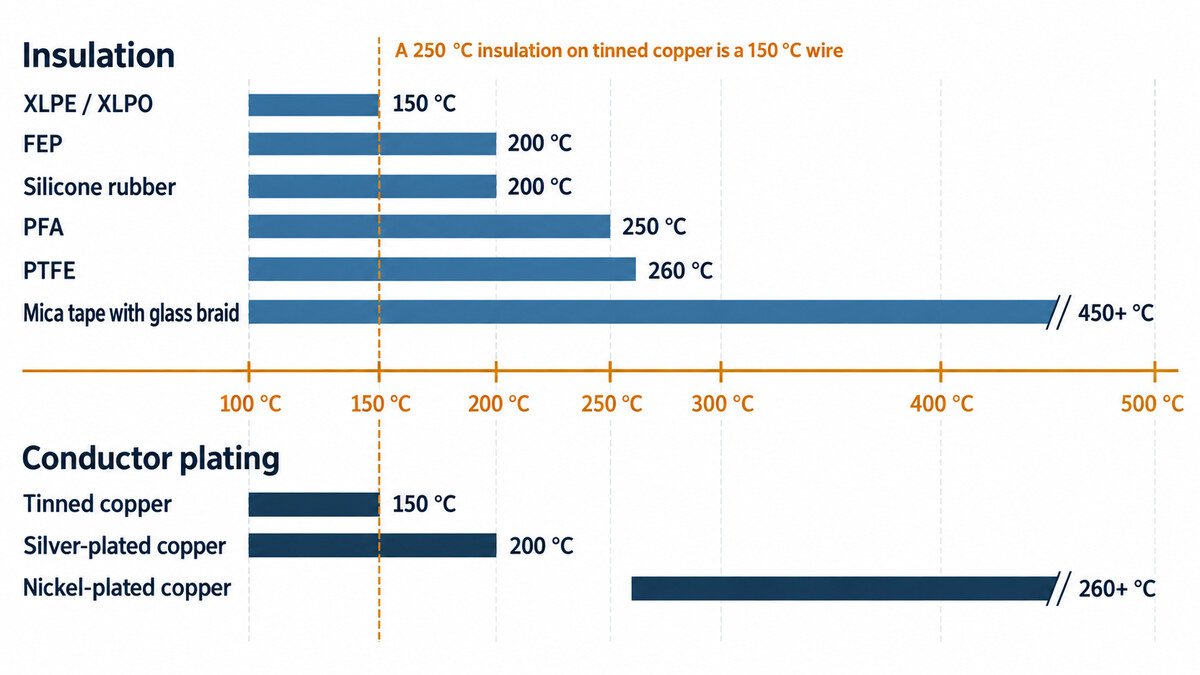
For harsh environments, marine cables are built for ships and offshore units. High-temperature wire is chosen by its insulation rating. Other specialized families follow the same duty logic.
Sources: conductor classes, IEC 60228:2023 (class designations unchanged; classification wording from IEC 60228:2004, clause 3); scopes, UL 83, Edition 16 and UL 62, Edition 21.
How are electrical cables classified?
Cables are classified along seven axes: function, voltage rating, conductor, number of cores, protection, installation duty, and environment and standard. There is no single list of cable types, because one cable can be described along every axis. That is why lists of the different types of electrical cables disagree: answers to “four types”, “three types” and “ten types” each count along a different axis.
Seven ways to classify a cable
| Axis | Main classes | What it tells a buyer | Covered in |
|---|---|---|---|
| Function | Power; control and signal; data and communication; EV charging | What the cable is for | Power, control, data and EV sections |
| Voltage rating | 300/500 V, 450/750 V or 0.6/1 kV; a single North American rating such as 600 V; medium and high voltage above 1 kV AC | Which circuits it may connect to | Voltage rating |
| Conductor | Copper or aluminum; solid or stranded; IEC 60228 Class 1 (solid), Class 2 (stranded), Class 5 (flexible), Class 6 (more flexible than Class 5) | What carries the current and how flexible the conductor is | Parts of a cable |
| Number of cores | Single-core or multicore; a 5-core three-phase cable carries L1, L2, L3, N and PE (protective earth, or equipment grounding conductor) | How many circuits or functions one cable serves | Multicore cables |
| Protection | Unshielded or shielded; unarmored or armored | Resistance to interference and mechanical damage | Parts of a cable |
| Installation duty | Fixed installation, or flexing and mobile service | Whether it may move in service | Moving machines |
| Environment and standard | Indoor, outdoor, wet or buried; flame performance; UL/CSA/NEC or IEC/EN | Where it may run and which market rules it is built to | Choosing a cable |
Take a shielded PVC control cable such as our LiYCY. By function it is a control cable, by rating it is low voltage, by core count it is multicore, and by protection it is shielded.
European harmonized names encode several of these axes; see how to read European cable designations.
Sources: conductor classes, IEC 60228:2023 (class designations unchanged; classification wording from IEC 60228:2004, clause 3); conductor notations, IEC 60445:2021 with AMD1:2026.
What are the parts of an electrical cable?
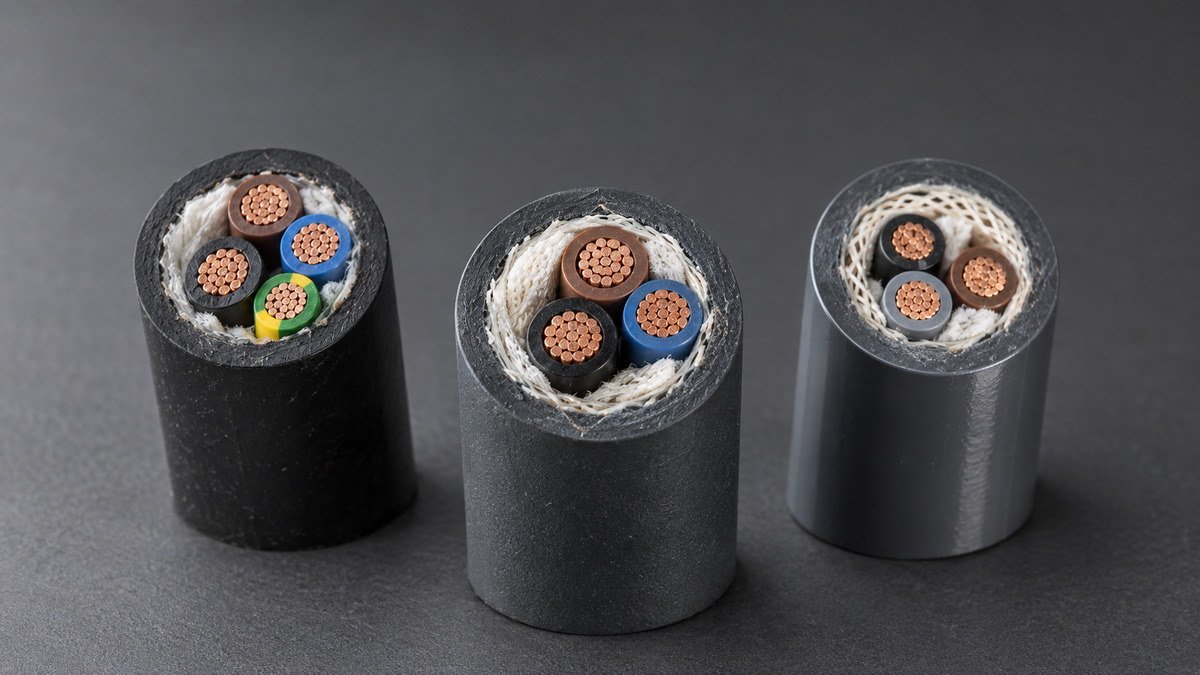
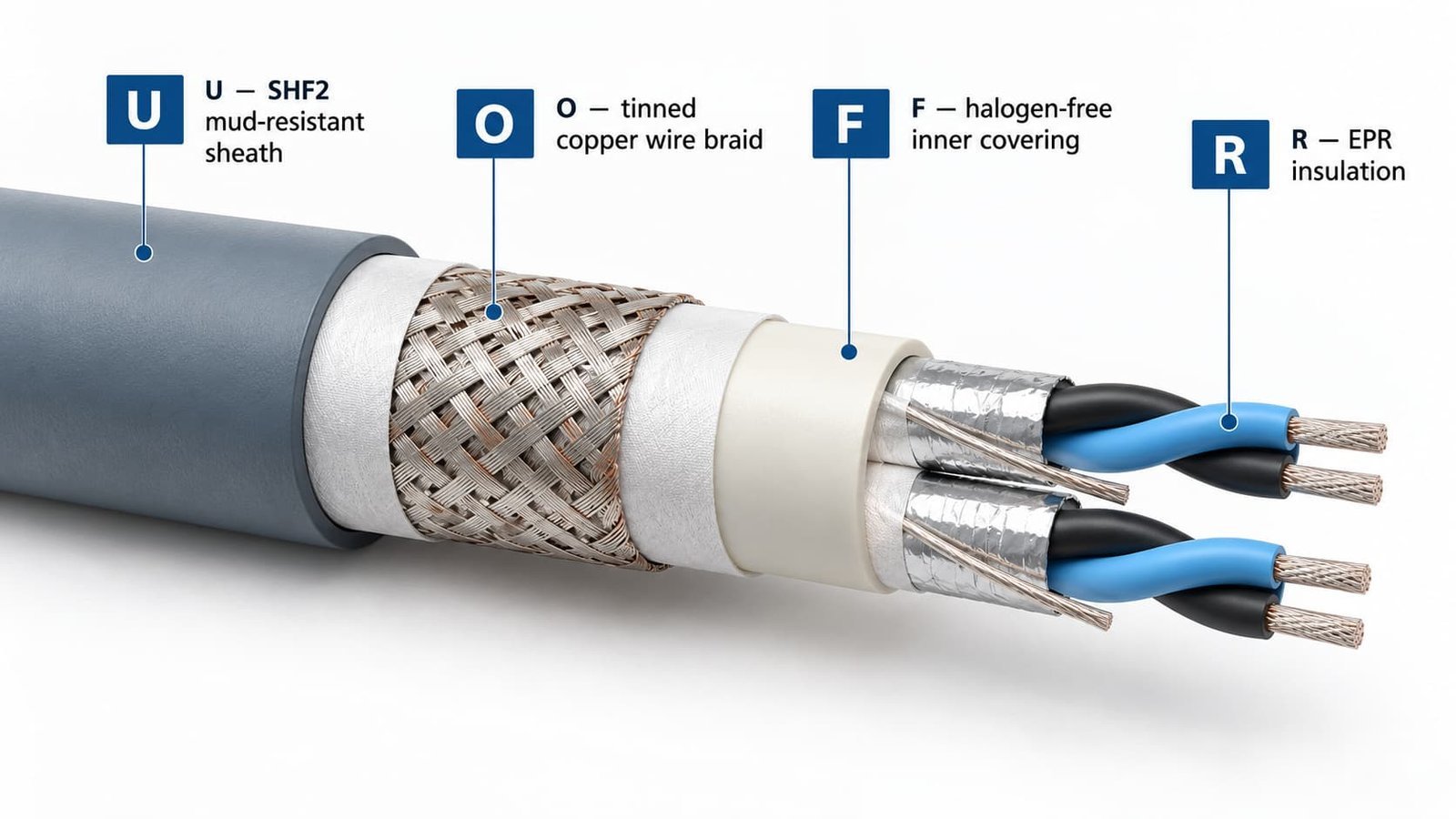
An electrical cable is built in layers around the conductor: insulation on each core, then, depending on the duty, fillers, an inner covering, a shield, armor and an outer covering.
| Part | What it does | Common materials |
|---|---|---|
| Conductor | Carries current; its class sets the conductor’s flexibility | Plain or tinned copper, or aluminum; solid or stranded |
| Insulation | Separates the conductors electrically | PVC, XLPE, EPR, rubber compounds, polyethylene, thermoplastic elastomers |
| Filler | Keeps the core assembly round | Polymer or textile fillers |
| Inner covering (bedding) | Covers the laid-up cores and gives a base for a shield or armor | Extruded or lapped polymer layer |
| Shield | Controls the electric field or reduces interference | Foil, copper braid, copper wires or tape |
| Armor | Protects against mechanical damage; our SWA EV charging cables are examples | Steel wire, steel tape or braid |
| Outer covering | Resists abrasion, moisture, sunlight and chemicals | PVC, rubber compounds, polyurethane, LSZH compounds |
The outer covering is called the jacket in North America and the sheath or oversheath in IEC standards. Most medium-voltage cables also add a conductor shield and an insulation shield, which IEC 60502-2 calls the conductor screen and insulation screen; see power cables.
For plain or tinned copper, ETP or oxygen-free grades and solid or stranded conductors, see our copper conductor guide.
North America states conductor size in AWG or kcmil, and IEC standards state it in mm². Current-carrying capacity depends on the installation method and the applicable code or standard table, so it is never read from size alone.
Sources: construction elements, IEC 60502-1:2021, clauses 7–13, and IEC 60502-2:2014, 7.2 and 7.3 (AMD1:2024 also published); conductor classes, IEC 60228:2023 with IEC 60228:2004, clause 3.
How do you choose the right type of cable?
Start from the duty, not the gauge: what the cable carries, its voltage, whether it moves, where it runs and which standard applies. The eight questions below set the main choices.
| Question | What it decides | Where to read more |
|---|---|---|
| What does it carry? | The function family | Main types at a glance |
| What voltage? | The rated voltage | Voltage rating |
| Fixed or moving? | The conductor class and cable family; moving service needs a Class 5 or Class 6 conductor | Moving machines |
| Where does it run? | The outer covering and its markings for dry, wet, buried, sunlit, oily or cold locations | Parts of a cable |
| Is there electrical interference? | Whether a shield is needed | When a shield is needed |
| Is there a risk of mechanical damage? | Whether armor is needed | Parts of a cable |
| Is fire performance required? | The flame test, for example IEC 60332-1-2 | Fire performance |
| Which market and standard? | UL/CSA/NEC or IEC/EN construction and marking | Market and standard |
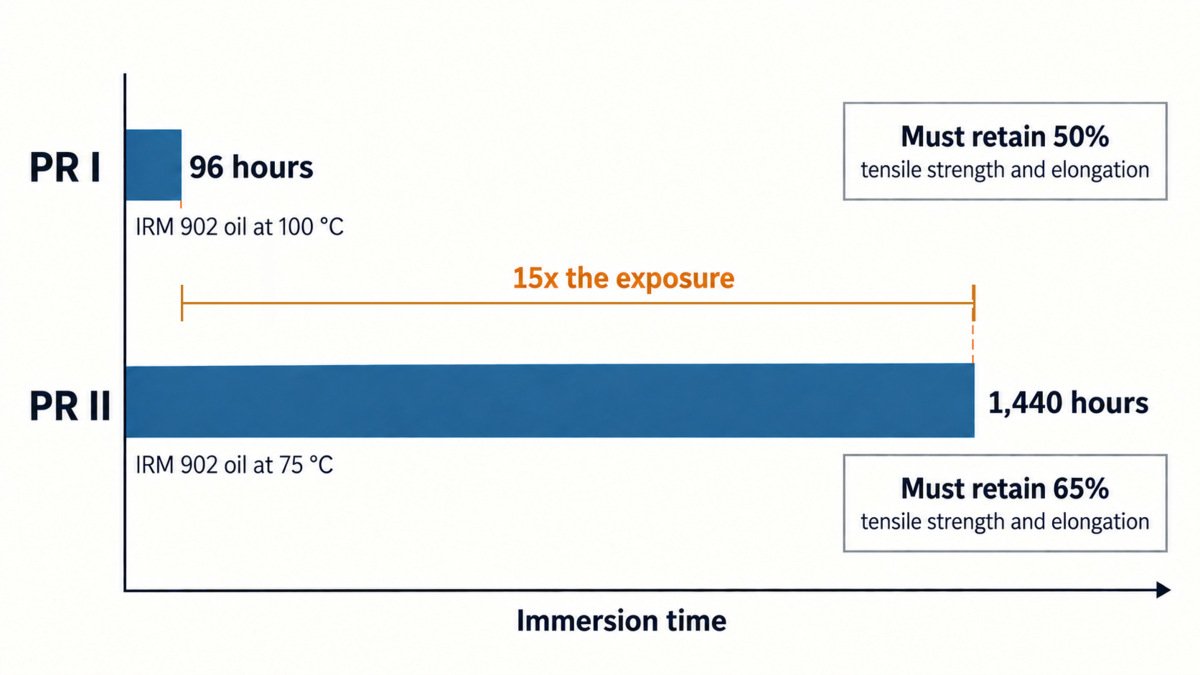
Outdoor and direct-burial runs need cables marked for that use. For oil exposure, ask for the oil-resistance marking and the test standard behind it.
IEC 60332-1-2 tests vertical flame propagation on a single insulated wire or cable. Passing it does not by itself meet fire-propagation requirements for cables installed in bunches. LSZH coverings are a separate requirement and need their own specification.
A standard named on a product page is not a certification. Ask for the certificate number and its scope.
Avoid three common mistakes:
- Using a fixed-installation cable on a moving machine; see moving machines and harsh environments.
- Assuming the same gauge gives the same flexibility; the conductor class is the main factor, along with the insulation and covering materials.
- Treating a named standard as an approval.
Sources: IEC 60332-1-2:2025, Edition 2.0 (scope and Note 2); conductor classes, IEC 60228:2023 with IEC 60228:2004, clause 3.
What should you send us for a quotation?
Send these details with your inquiry:
- Function: power, control and signal, data or EV charging
- Rated voltage
- Number of cores × cross-section
- Conductor class
- Shield, if any
- Armor, if any
- Environment: indoor, outdoor, wet, buried, oil or cold
- Standard and target market
- Length
- Quantity
Our minimum order quantity is 50 m for standard and custom cables alike. Lead time is 7–45 working days, depending on product type, stock and customization, and the written quotation confirms it.
Frequently asked questions
What are the four basic types of cable?
In networking, the four basic types usually named are unshielded twisted pair, shielded twisted pair, coaxial cable and optical fiber. Power cables have no fixed four, because they are classified by function, voltage, construction and duty. The classification table shows how those axes combine.
What are the three types of power cables?
Two answers are common. By voltage, power cables are low, medium or high voltage, with low voltage generally taken as up to 1 kV AC. By construction, one standard power-system textbook lists belted, screened and pressure cables for underground three-phase service. Today’s IEC 60502 cables have extruded insulation. See power cables.
What is the most common type of cable?
The most common type of cable depends on the setting. Buildings mostly use low-voltage copper power cable and building wire, networks add twisted-pair data cable, and plants rely on multicore power and control cables. For a specific job, choose by the duty rather than by what is common, using the selection table.
Which cables carry both power and data?
Composite power and data cables carry power cores and data pairs in one cable, so one cable can power a charger and connect it to the network. Our EV charging range includes unarmored and steel-wire-armored versions with Cat 5e or Cat 6A pairs. See supply cables to the charger.
Sources: low voltage, IEV 601-01-26; textbook classification, Mehta and Mehta, Principles of Power System, §11.5, p. 268; extruded insulation, IEC 60502-1:2021 (title).
What should you do next?
Start with the function family, then check the cable against the seven classification axes, with duty first. Match the layers to the route, keep fixed-installation cables off moving machines, and treat a named standard as a design reference until you see the certificate. When you are ready, send the function, voltage, cores and size, duty, environment and standard to our engineers through the contact page, or browse our products.