

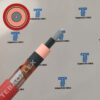
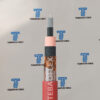
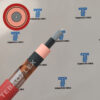
(SI) NTMCGCWOEUS Single-Core 6/10–12/20 kV Flexible Rubber Cable 1×95/16
(SI) NTMCGCWOEUS is a single-core flexible medium-voltage rubber cable for 6/10 kV to 12/20 kV, used in short lengths to connect circuit breakers, switchgear and mobile transformers on mining and construction sites, in sizes from 1×16/16 to 1×240/25 including 1×95/16.
- Rated voltage Uo/U6/10 kV to 12/20 kV
- Test voltage (AC)17 to 29 kV
- ConductorTinned Cu, IEC 60228 class 5
- InsulationEPDM rubber
- ScreenTinned copper wire spinning
- Outer sheath5GM5 rubber, red
- Conductor temperature+90 °C; +200 °C short circuit
- Sizes1×16/16 to 1×240/25 mm²
(SI) NTMCGCWOEUS is a single-core flexible medium-voltage cable with rubber insulation and a rubber sheath, built to DIN VDE 0250 part 813 for rated voltages from 6/10 kV to 12/20 kV. It is normally used in short lengths as a reliable power connection to mobile heavy machinery, mining gear and construction equipment, for example between a circuit breaker and a mobile transformer.
The construction combines tinned class 5 copper, semi-conductive layers on both sides of the EPDM insulation, a close spinning of tinned copper wires as the screen and a red 5GM5 rubber sheath that is abrasion- and notch-resistant, oil-resistant and flame-retardant. The S version is aimed at connections that move often and see high mechanical stress, while the standard NTMCGCWOEU suits fixed or occasionally moved equipment.
Browse the VDE mining cable category for related cables.
Application & Features
Selection overview
In open-cast and underground mines, tunnel sites and large construction projects, medium-voltage power is brought close to the machines through mobile transformers and switchgear that move as the work advances. The short links between circuit breaker, mobile transformer and machine are re-routed and reconnected many times, often outdoors in mud, oil and frost. A single-core rubber cable bends easily into terminal boxes and sealing ends, and each phase can be handled on its own, which is why (SI) NTMCGCWOEUS is used for these links and for temporary or mobile power installations.
The red 5GM5 sheath resists oil, moisture, UV and ozone and is flame-retardant to IEC 60 332 part 1, so the cable can be used indoors and outdoors. Current ratings follow DIN VDE 0298 part 4 for the actual installation, and bending radii follow DIN VDE 0298. On request the cable is supplied pre-assembled with sealing ends, in other cross-sections and voltages, with a special screen for festoon systems, or as the (N)TMCGWOEUS version with optimized wall thicknesses.
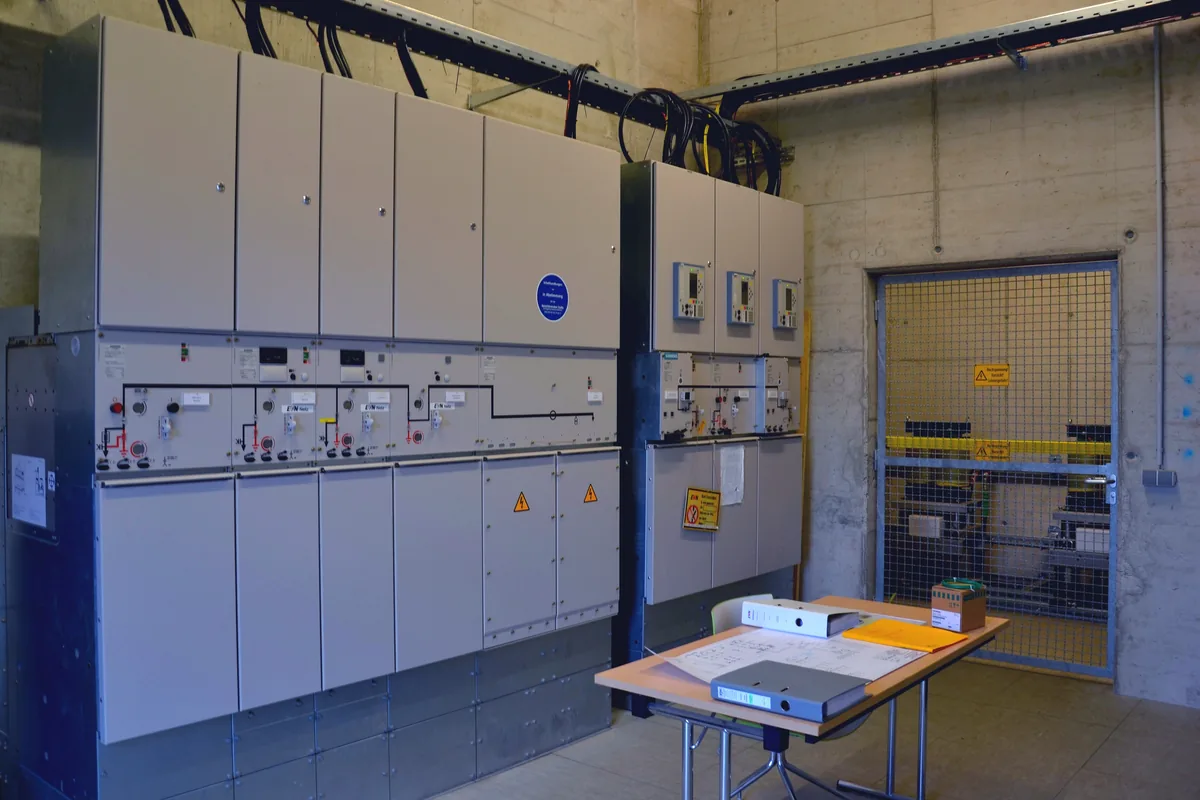
- Mobile transformer connectionsShort single-core links between circuit breakers and mobile transformers on moving sites.
- Mining and construction equipmentPower connection to mobile heavy machinery, mining gear and construction equipment.
- Temporary MV installationsTemporary or mobile 6/10 kV to 12/20 kV power where cables are laid and recovered often.
- Harsh outdoor dutyOil, moisture, UV and ozone resistant red rubber sheath for indoor and outdoor use.
Specifications
Technical data
Typical (SI) NTMCGCWOEUS values for the 6/10 kV and 12/20 kV classes. The final construction is confirmed on the TEBAOFLEX datasheet issued with your quotation.
Electrical, thermal and mechanical data
| Parameter | Value |
|---|---|
| Nominal voltage Uo/U | 6/10 kV to 12/20 kV |
| Test voltage (DIN VDE 0250 part 813) | 17 to 29 kV AC |
| Current rating | To DIN VDE 0298 part 4; values per cross-section available on request |
| Max. conductor temperature in service | +90 °C |
| Max. conductor temperature under short-circuit conditions | +200 °C |
| Max. surface temperature, fixed installation | -35 °C up to +80 °C |
| Tensile stress of conductor | Static 15 N/mm²; dynamic 30 N/mm² |
| Bending radius | To DIN VDE 0298 |
| Mechanical testing | Alternating and reversed bending tests |
| Flame retardance | IEC 60 332 part 1 |
| Chemical properties | Oil resistant; moisture, UV and ozone resistant; indoor and outdoor use |
| Conductor | Tinned annealed copper wires to VDE 0295 or IEC 60228 class 5 |
| Insulation | EPDM rubber, exceeding DIN VDE 0207 part 20 |
| Outer sheath | Rubber compound 5GM5 to DIN VDE 0207 part 21, red |
6/10 kV: outer diameter and weight
| Cross section (mm²) | Outer diameter min (mm) | Outer diameter max (mm) | Weight (kg/km) |
|---|---|---|---|
| 1 x 16/16 | 20 | 23 | 690 |
| 1 x 25/16 | 21 | 24 | 800 |
| 1 x 35/16 | 22 | 25 | 920 |
| 1 x 50/16 | 24 | 27 | 1,100 |
| 1 x 70/16 | 26 | 29 | 1,360 |
| 1 x 95/16 | 28 | 31 | 1,610 |
| 1 x 120/16 | 29 | 32 | 1,870 |
| 1 x 150/25 | 32 | 35 | 2,320 |
| 1 x 185/25 | 34 | 37 | 2,650 |
| 1 x 240/25 | 38 | 41 | 3,320 |
12/20 kV: outer diameter and weight
| Cross section (mm²) | Outer diameter min (mm) | Outer diameter max (mm) | Weight (kg/km) |
|---|---|---|---|
| 1 x 16/16 | 24 | 27 | 870 |
| 1 x 25/16 | 26 | 29 | 1,030 |
| 1 x 35/16 | 27 | 30 | 1,150 |
| 1 x 50/16 | 29 | 32 | 1,340 |
| 1 x 70/16 | 30 | 33 | 1,580 |
| 1 x 95/16 | 33 | 36 | 1,920 |
| 1 x 120/16 | 35 | 38 | 2,190 |
| 1 x 150/25 | 36 | 39 | 2,610 |
| 1 x 185/25 | 39 | 42 | 3,040 |
| 1 x 240/25 | 42 | 45 | 3,660 |
Selection note: current ratings follow DIN VDE 0298 part 4 and depend on the installation. Before ordering, ask our engineers to confirm the current rating for your cross-section and laying conditions, the minimum bending radius, and whether your duty (fixed link, frequent movement, reel or festoon) needs the standard or the reinforced construction.
Standards & References
Applicable standards and compliance
- Construction standardDIN VDE 0250 part 813 for flexible medium-voltage rubber cables; test voltage to the same standard.
- Installation and current ratingDIN VDE 0298 and DIN VDE 0298 part 4 for current ratings and bending radii.
- MaterialsConductor to VDE 0295 or IEC 60228 class 5; insulation exceeding DIN VDE 0207 part 20; sheath compound 5GM5 to DIN VDE 0207 part 21.
- Fire performanceFlame-retardant to IEC 60 332 part 1.
- ApprovalsMine approvals, test reports and marking requirements are confirmed and quoted per order.
Construction
Material and build-up
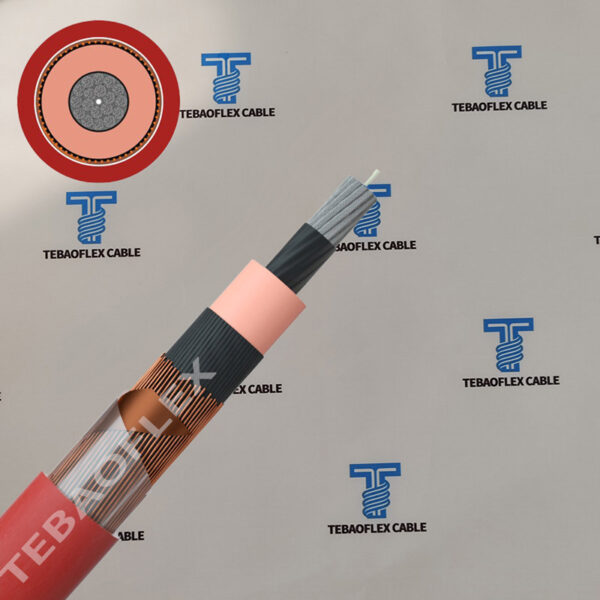
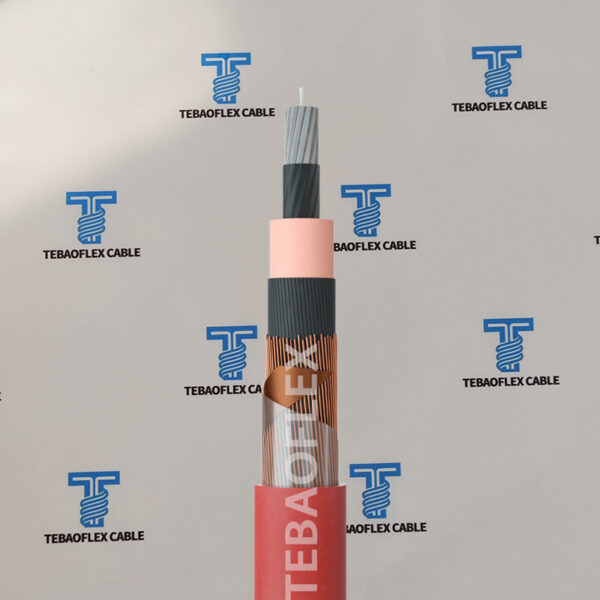
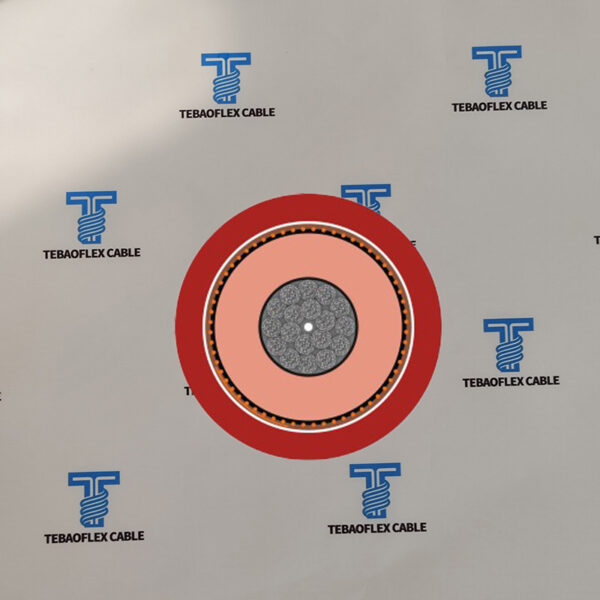
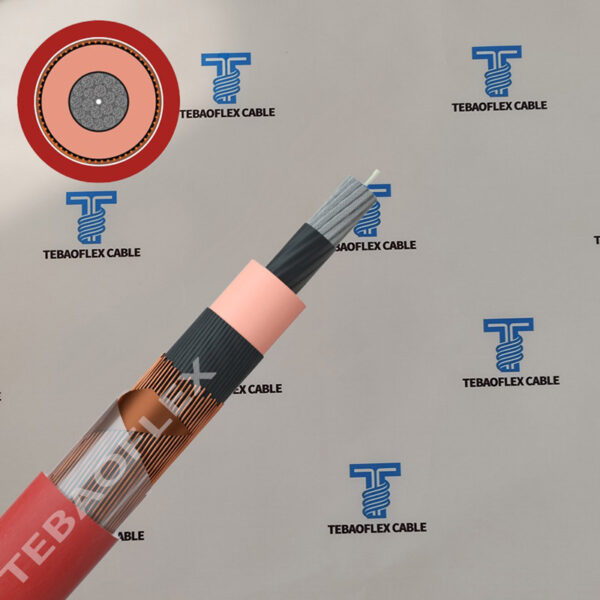
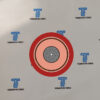
(SI) NTMCGCWOEUS is a round single-core cable with seven layers from the conductor outward. The semi-conductive layers on both sides of the insulation smooth the electric field, and the copper wire screen carries charging and fault current and keeps the cable surface at earth potential.
- Conductor: Tinned annealed copper wires to VDE 0295 or IEC 60228 class 5, finely stranded for flexibility.
- Inner semi-conductive layer: Semi-conductive tape plus a thermosetting compound over the conductor.
- Insulation: EPDM rubber, exceeding the requirements of DIN VDE 0207 part 20.
- Outer semi-conductive layer: Thermosetting semi-conductive compound over the insulation.
- Semi-conductive tape: Tape between the outer semi-conductive layer and the screen.
- Screen: Close spinning of tinned copper wires or tinned stranded wires; in a size such as 1×95/16 the second figure is the screen cross-section in mm².
- Outer sheath: Rubber compound 5GM5 to DIN VDE 0207 part 21: heavy duty, abrasion and notch resistant, oil resistant and flame retardant, red.
FAQ
Selection questions
What does 1×95/16 mean?
The first figure is the number of cores (one), 95 is the phase conductor cross-section in mm² and 16 is the cross-section of the concentric copper wire screen in mm². Sizes from 16 to 120 mm² carry a 16 mm² screen and sizes from 150 to 240 mm² carry a 25 mm² screen.
What is the difference between NTMCGCWOEUS and NTMCGCWOEU?
Both are single-core VDE-type medium-voltage rubber cables with the same basic electrical data. The standard NTMCGCWOEU is used for fixed connections or equipment that is moved only occasionally, for example in distribution rooms and workshops. The S version is intended for connections that move often and see higher mechanical stress, such as on mobile mining machinery. For the standard type in more voltage classes, see NTMCGCWOEU and (N)TMCGCWOEU.
Where is (SI) NTMCGCWOEUS used?
Typical uses are the short connection between a circuit breaker and a mobile transformer, connections to mobile heavy machinery in mines and on construction sites, and temporary or mobile medium-voltage installations. Other flexible mining cables are listed in the VDE mining cable category.
Should I choose the 6/10 kV or the 12/20 kV version?
Match the rated voltage Uo/U to the system: 6/10 kV cable for networks up to 10 kV and 12/20 kV cable for networks up to 20 kV. The 12/20 kV cable has thicker insulation, so it is larger and heavier: 1×95/16 measures 28 to 31 mm and 1,610 kg/km at 6/10 kV, against 33 to 36 mm and 1,920 kg/km at 12/20 kV.
What should I send for a quotation?
Send the voltage class, cross-section and screen (for example 1×95/16 at 12/20 kV), the length of each connection, whether sealing ends should be fitted, the type of movement (fixed, occasional, reel or festoon) and any mine approval or marking requirement.
Request this cable.
Send the voltage class, cross-section, connection lengths, sealing-end needs, type of movement and any approval requirement.
Quality Assurance
Testing at every stage in our own workshop and laboratory, from incoming copper to the packed drum.
Raw Material Inspection
Every batch of copper rod, rubber compound and reinforcing material is checked before it reaches the line.
- Copper: conductor resistance, elongation and surface condition on incoming rod and drawn wire
- EPR, CPE, PUR and silicone compounds: hardness, tensile strength, elongation and ageing samples from each mix
- Suppliers and batch numbers are recorded so every drum can be traced back to its materials
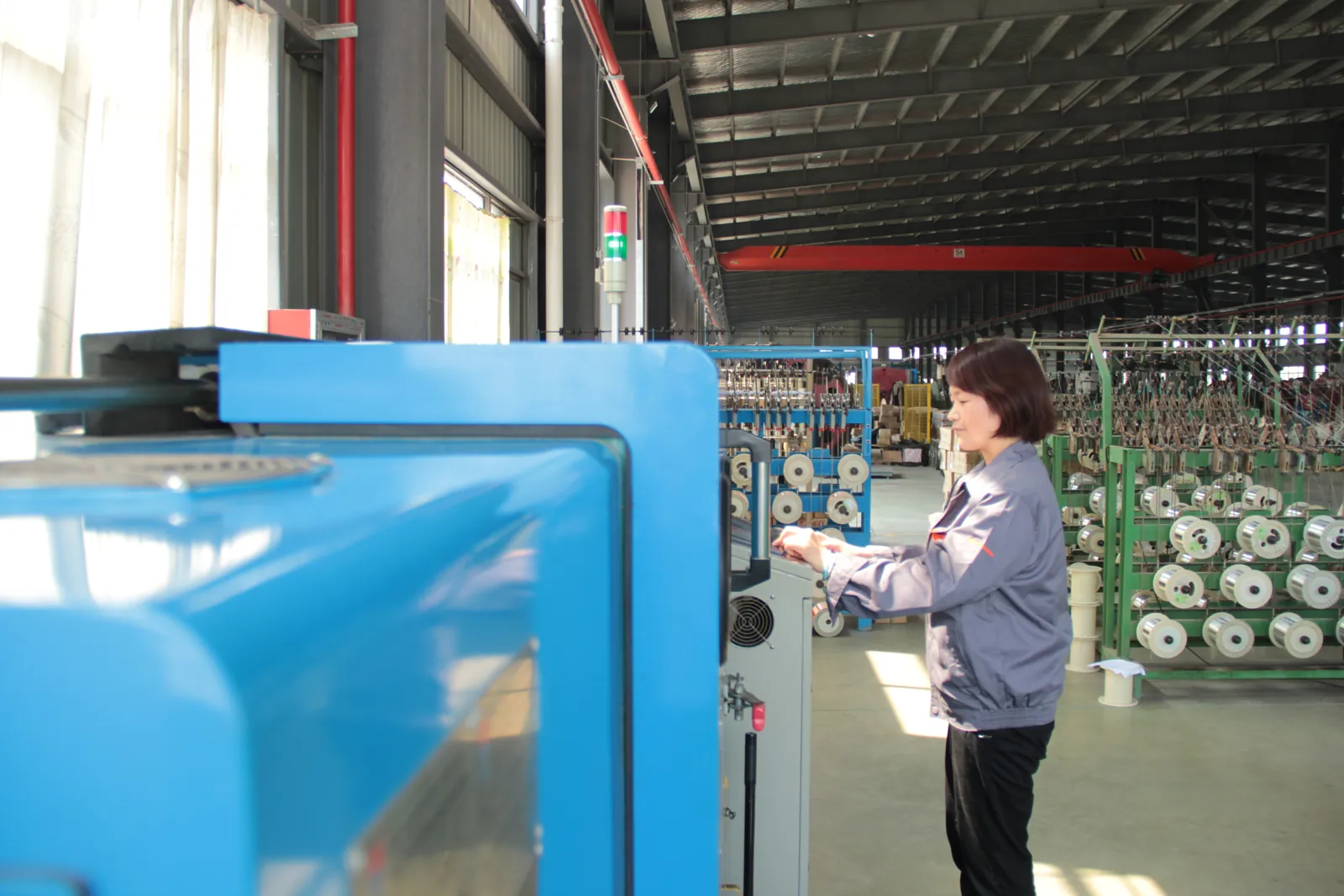
Manufacturing Process Control
Stranding, insulation extrusion, core assembly and sheathing run under recorded process parameters.
- Class 5/6 stranding with lay length and tension monitored for trailing and reeling flexibility
- Continuous-vulcanisation extrusion with wall thickness and spark tests logged on every length
- Operators sign off each stage before the cable moves to the next machine
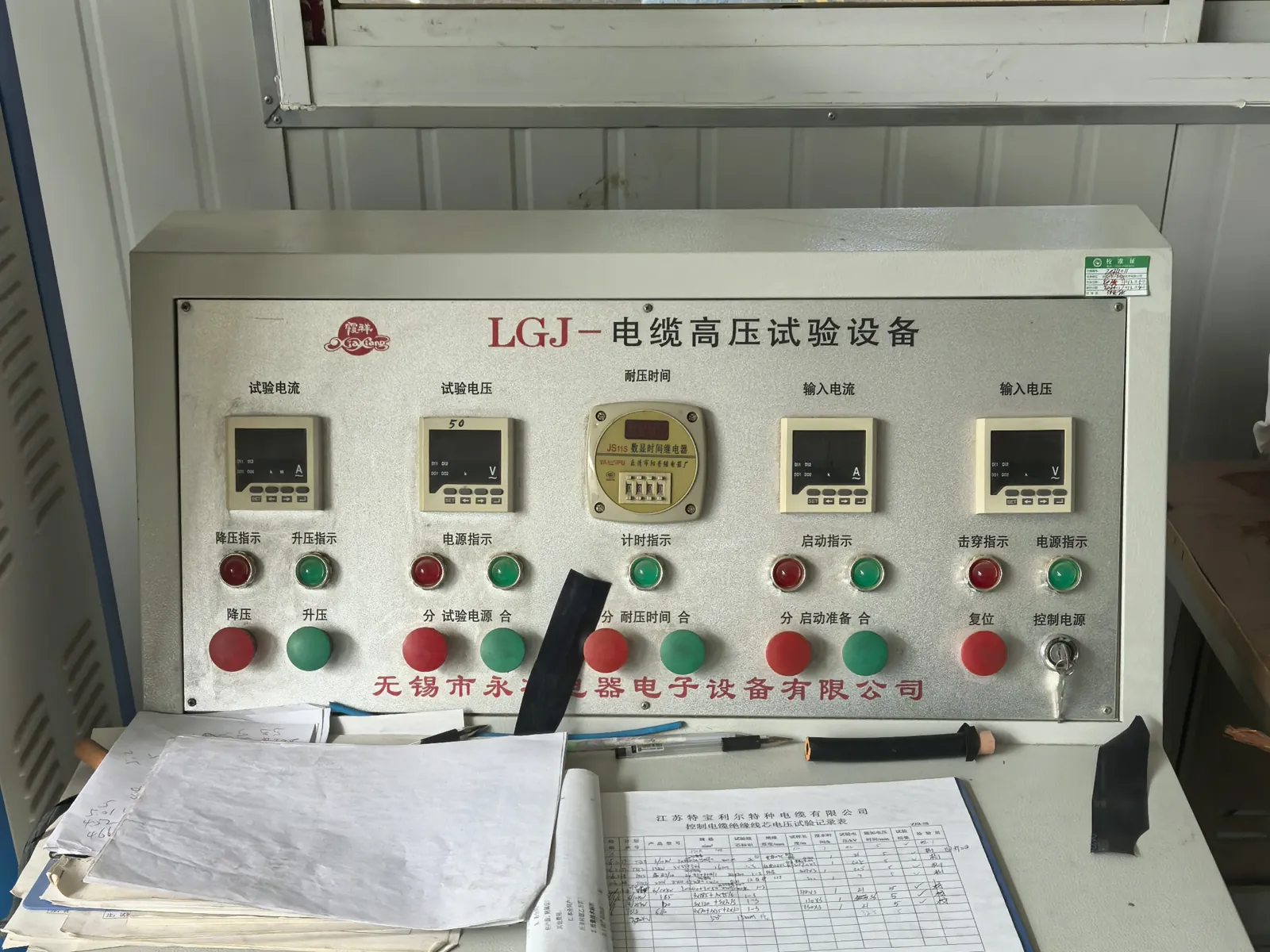
Electrical Testing
Finished lengths go through the routine tests required by the referenced VDE, ICEA, IEC or NEK standard.
- Conductor resistance and insulation resistance on every length
- Voltage withstand (3.5 kV and higher) and partial-discharge measurement in the shielded HV laboratory
- Screen and pilot-core continuity checks for mining and reeling constructions
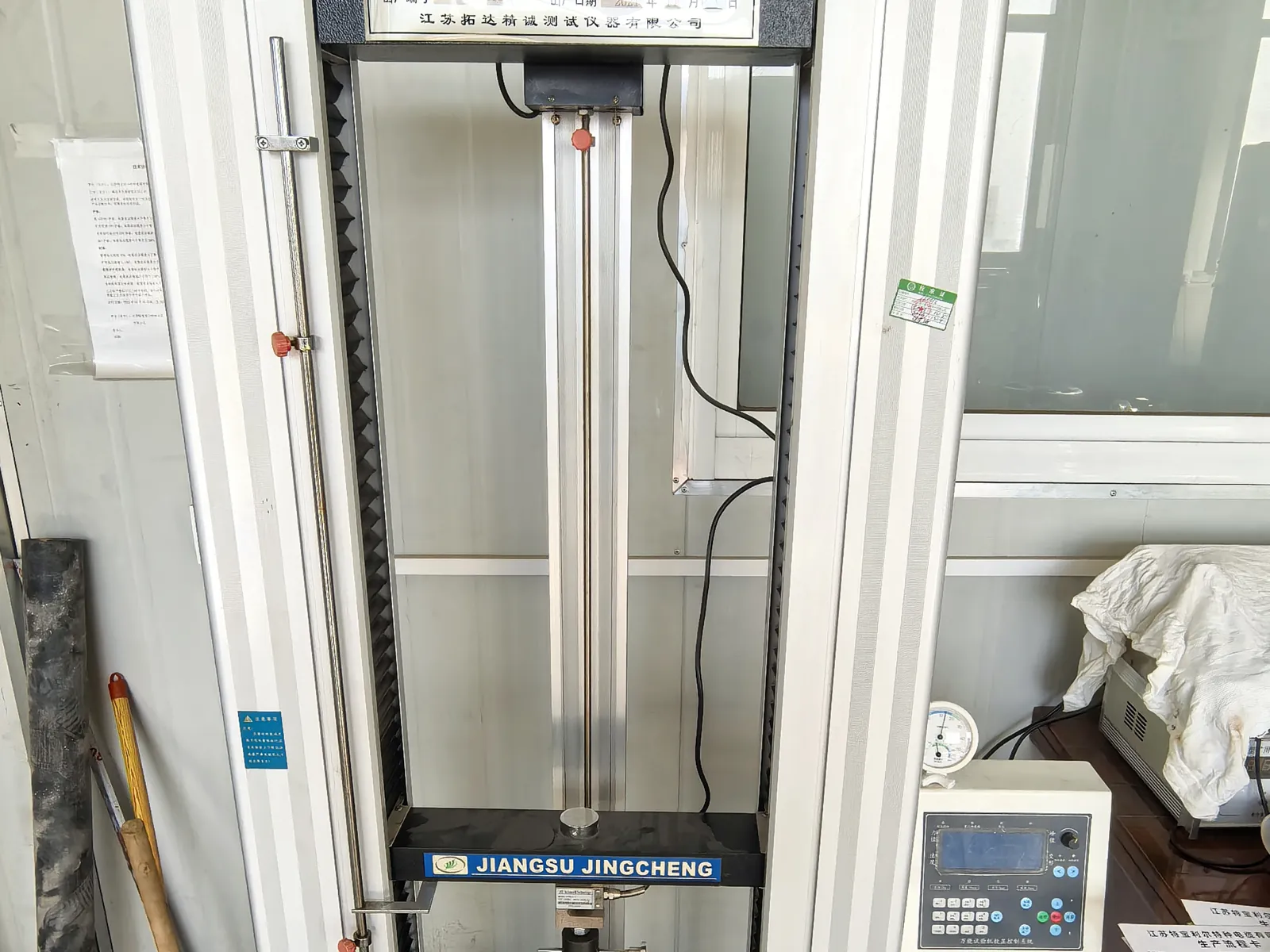
Mechanical and Ageing Tests
Samples from production are tested for the duty a mining, crane or submersible cable will actually see.
- Tensile strength and elongation of insulation and sheath before and after ageing
- Hot-set, ozone, oil-immersion and low-temperature bending tests
- Constant-temperature water bath for insulation resistance of submersible constructions
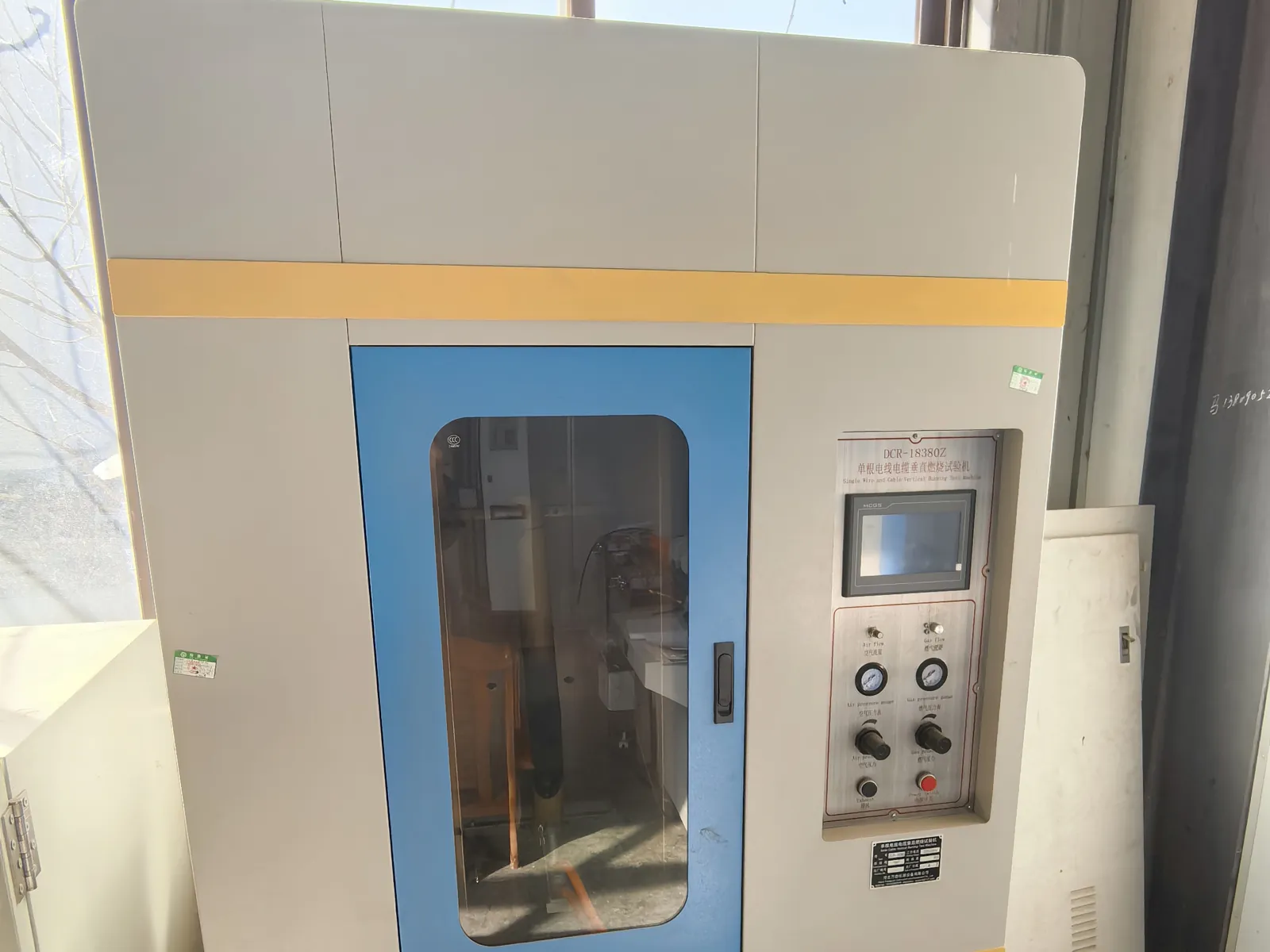
Flame Test and Final Inspection
Before packing, the cable is checked against the order and the flame-performance requirement of its standard.
- Single-cable vertical flame test to IEC 60332-1-2 where specified
- Metre marking, printing, drum length and appearance inspection
- Test report and packing list issued with every shipment
Related products
-
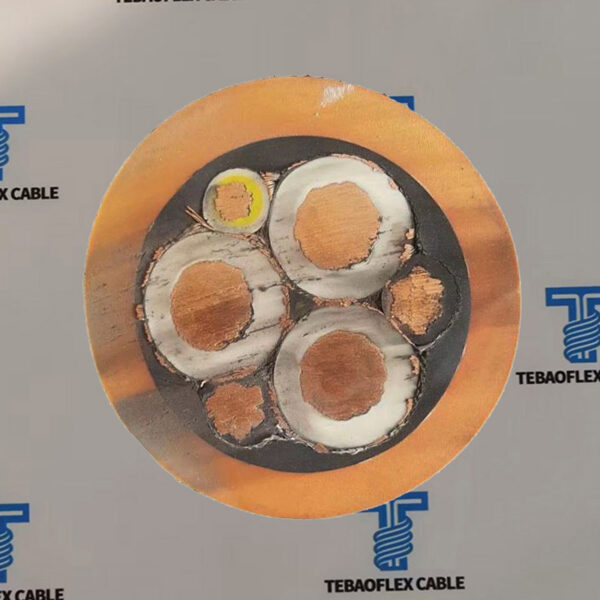
(N)TMCGETMPU vs RIT-(N)TMCGETMPU Portable Trailing Cable
-
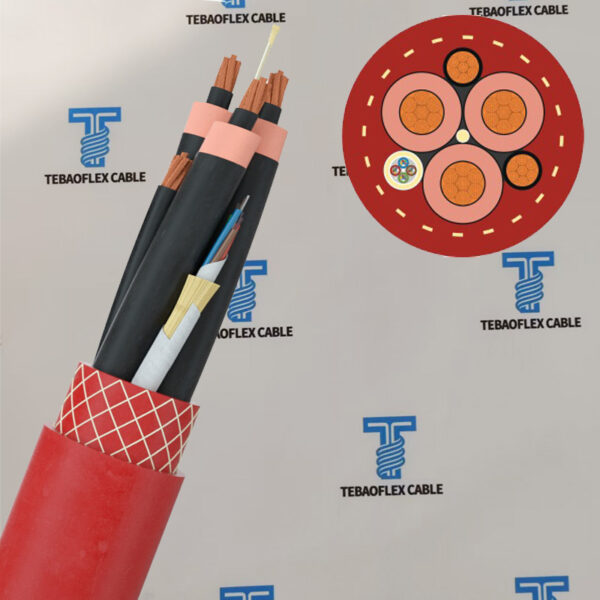
(N)TSCGEWÖU Submersible ABT FO(LWL) Mining Trailing Cable
-
(N)3GHSSYCY Cable for Tunnel and Underground Mining
-
Open-Cast Mining NTSCGEWOEU W 3E Cable in Water & Trailing
-
Heavy-Duty NSSHCGEÖU(Z) Reinforced Version Mining Cable
-
TRM-J & TRMC-J Highly Flexible Mining Rubber Cable
-
Olflex SMK NSHTOU J Rubber Crane Reeling Cable
-
MV Motor RTS (N)TSCGEWTOEUS OFE Reeling Cable 3×70 + 3×35/3 + (20×2.5)C + 24FO (9/125)
Need Pricing for This Cable?
Tell us the length, cores, cross-section and delivery country and we will reply with a quotation and datasheet.