

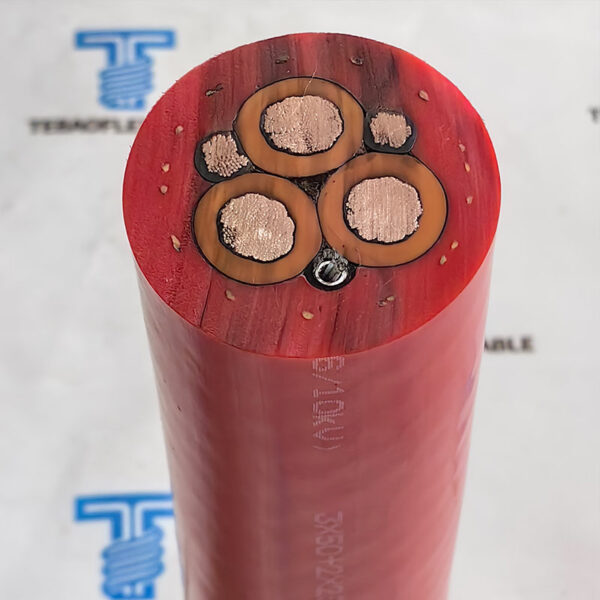
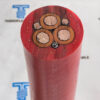
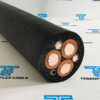
3.6-30kV R-(N)TSCGEWÖU for open-cast mines cable
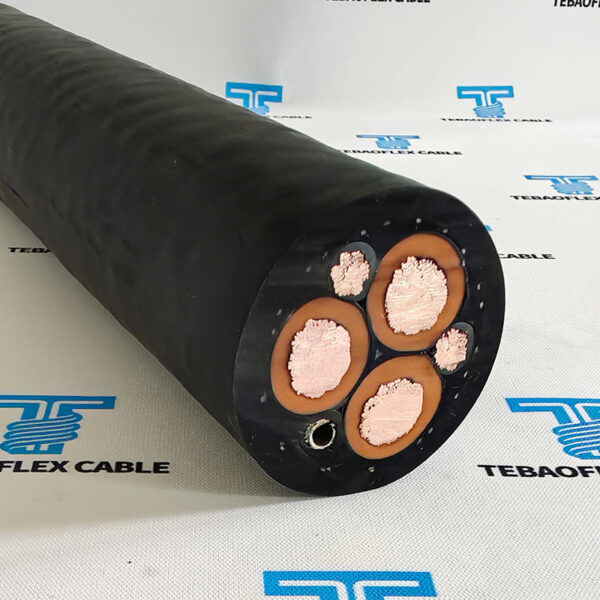
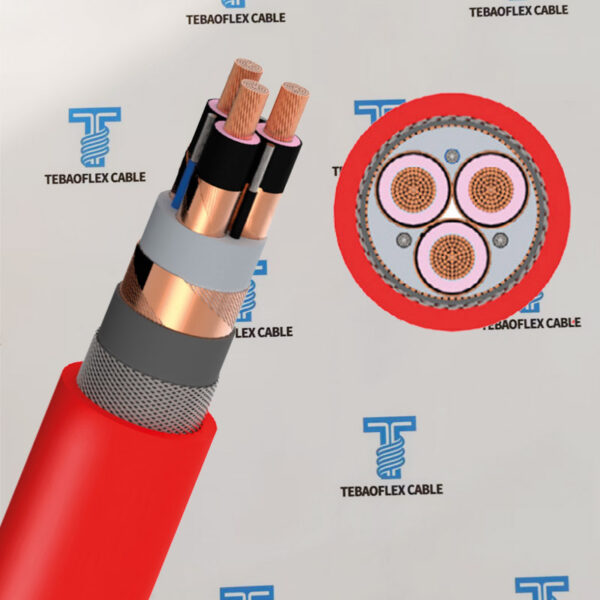
R-(N)TSCGEWÖU is a medium-voltage reeling cable designed for continuous winding, unwinding, tensile loading and torsional stress on mobile mining equipment, while F-(N)TSCGEWÖU is a medium-voltage semi-flexible installation cable intended for fixed or occasionally movable power distribution systems.
- StandardVDE 0250 Part 812, VDE 0295, EN 60228
- Rated voltage3.6/6 KV – 18/30kV
- ConductorTin coated or bare copper, class 5
- InsulationEPR type 3GI3
- Outer sheath5GM5 or 5GM3
- Size range3×25+3×16/3 – 3×300+3×150/3 mm²
- Overall diameter39.9 – 84.1 mm
- Weight (approx.)2414 – 15031 kg/km
The reeling version incorporates an anti-torsion braid and a heavy-duty 5GM5 sheath for dynamic applications, whereas the F-version uses a simpler construction optimized for stationary service with lower mechanical stress.
How to Choose R-(N)TSCGEWÖU or F-(N)TSCGEWÖU Cable?
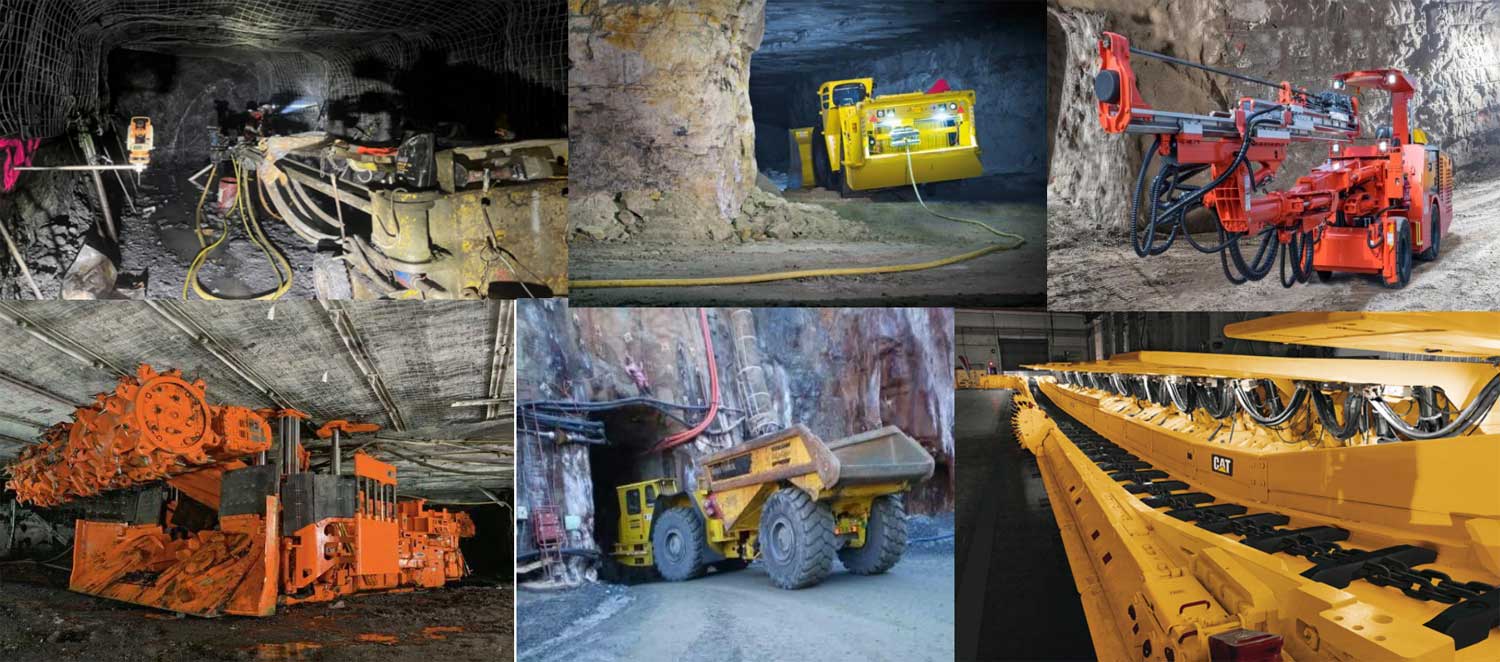
- If your application involves draglines, shovels, excavators, cable reels, or continuously moving mining machinery, choose R-(N)TSCGEWÖU
- If your application involves conveyors, substations, pump stations, transfer stations, or fixed mining infrastructure, choose F-(N)TSCGEWÖU.
What’s F-(N)TSCGEWÖU Mining Reeling Cable?
- F-(N)TSCGEWÖU is a medium-voltage flexible mining power cable for fixed installation, developed in accordance with DIN VDE 0250-813 for demanding mining, tunnelling, and bulk material handling applications.
- Unlike the standard (N)TSCGEWÖU trailing cable, which is designed for continuous cable reeling and mobile equipment, the F-(N)TSCGEWÖU version is optimized for fixed or semi-fixed power distribution where high electrical reliability is required but continuous trailing movement is not.
- The prefix “F” stands for Fixed Installation, indicating that the cable is intended for stationary installation alongside conveyor systems, transfer stations, shiftable mining equipment, substations, cable booms, and submersible pump installations. Although the cable remains highly flexible, its primary purpose is to provide a durable medium-voltage power connection rather than repeated trailing or high-speed reeling.
Application & Features
Selection overview
Characteristics of (N)TSCGEWÖU
- resistant to: oil, ozone, solvents, petrol, acids, chemicals, greases
- abrasion-resistant
- Excellent tear, impact and abrasion resistant
- Flame retardant
- UV, sunlight, ozone and oil resistant
- Embossing marking for easy identication
- Temperature range Temperature range -25℃ to +90℃.For fixed installation lowest temperature is -40℃
The prefix “F” stands for Fixed Installation it is intended for:
- Stationary power distribution
- Shiftable conveyor systems
- Mine substations
- Underground pump stations
- Transfer stations
- Cable boom installations
Specifications
Technical data
Technical Data Of R-(N)TSCGEWÖU
| Type designation: | R-(N)TSCGEWÖU /R-(N)TSCGEWÖU FO |
|---|---|
| Standard: | VDE 0250 Part 812, VDE 0295, EN 60228 Flame Retardant according to IEC/EN 60332-1-2 |
| Min. Distance With S-Type Directional Changes | 20×D |
| Temperature range: | Fixed: -40°C to +80°C Flexed: -25°C to +80°C |
| Operating Voltage AC: | 4,2/7,2 kV 6,9/12 kV 10,4/18 kV 13,9/24 kV 20,8/36 kV Acc. to DIN VDE 0298 part 3 |
| Operating Voltage DC: | 5,4/10,8 kV 9/18 kV 13,5/27 kV 18/36 kV 27/54 kV Acc. to DIN VDE 0298 part 3 |
| Max. operating temperature of the conductor : | 90°C |
| Maximum Short Circuit Temperature: | +250°C |
| Min Bending Radius Current Carrying | Acc. to DIN VDE 0298 part 3 |
| Capacity: | According to DIN VDE0298, Part 4 |
| Max.Tensile Load Of cable: | 15N/mm² |
| Torsional stress +/- : | 25 °/m |
| Travel Speed for tunnelling app.: | max. 30 m/min. |
| Travel speed: | Max. speed on rewinding with drum car: 60 m/min |
| Rated Voltage: | 3.6/6 KV, 6/10kV, 8.7/15kV, 12/20kV,18/30kV |
| AC Test Voltage: | 11kV, 17kV, 24kV, 29kV,43kV |
Thermal Parameters of (N)TSCGEWÖU
- Ambient temperature for fixed installation +80℃/-40℃
- for mobile application +60℃/-25℃
- Maximum permissible operating temperature of conductor 90℃
- Short-circuit temperature of conductor 250℃
Technical and Electrical Characteristic of R-(N)TSCGEWÖU
| Number of cores Cross-section |
Conductor diameter | Approximate overall diameter | Approximate weight | Conductor resistance at 20℃ | Current-currying capacity at 300C |
|---|---|---|---|---|---|
| mm2 | mm | mm | kg/km | Ω/km | A |
| 3.6/6 kV R-(N)TSCGEWÖU Reeling Cable | |||||
| 3×25+3×16/3 | 6.60 | 39.9 | 2414 | 0.795 | 132 |
| 3×25+3×25/3 | 6.60 | 39.9 | 2486 | 0.795 | 132 |
| 3×25+3×50/3 | 6.60 | 39.9 | 2666 | 0.795 | 132 |
| 3×35+3×25/3 | 7.30 | 41.5 | 2860 | 0.565 | 161 |
| 3×35+3×50/3 | 7.30 | 41.5 | 3042 | 0.565 | 161 |
| 3×50+3×25/3 | 9.30 | 45.8 | 3561 | 0.393 | 202 |
| 3×50+3×50/3 | 9.30 | 45.8 | 3747 | 0.393 | 202 |
| 3×70+3×35/3 | 11.10 | 49.1 | 4420 | 0.277 | 251 |
| 3×70+3×50/3 | 11.10 | 49.1 | 4688 | 0.277 | 251 |
| 3×95+3×50/3 | 13.30 | 56.2 | 5780 | 0.210 | 301 |
| 3×120+3×70/3 | 14.40 | 58.4 | 6800 | 0.164 | 351 |
| 3×150+3×70/3 | 16.30 | 64.5 | 8231 | 0.132 | 405 |
| 3×185+3×95/3 | 18.50 | 69.3 | 9711 | 0.108 | 462 |
| 3×240+3×120/3 | 19.80 | 72.6 | 11733 | 0.0817 | 540 |
| 6/10 kV R-(N)TSCGEWÖU Reeling Cable | |||||
| 3×25+3×25/3 | 6.60 | 41.6 | 2640 | 0.795 | 132 |
| 3×25+3×50/3 | 6.60 | 41.6 | 2821 | 0.795 | 132 |
| 3×35+3×25/3 | 7.30 | 43.2 | 3018 | 0.565 | 161 |
| 3×35+3×50/3 | 7.30 | 43.2 | 3200 | 0.565 | 161 |
| 3×50+3×25/3 | 9.30 | 47.5 | 3735 | 0.393 | 202 |
| 3×50+3×50/3 | 9.30 | 47.5 | 3922 | 0.393 | 202 |
| 3×70+3×35/3 | 11.10 | 52.6 | 4839 | 0.277 | 251 |
| 3×70+3×50/3 | 11.10 | 52.6 | 4943 | 0.277 | 251 |
| 3×95+3×50/3 | 13.30 | 58.0 | 5995 | 0.210 | 301 |
| 3×120+3×70/3 | 14.40 | 60.1 | 7023 | 0.164 | 351 |
| 3×150+3×70/3 | 16.30 | 66.2 | 8478 | 0.132 | 405 |
| 3×185+3×95/3 | 18.50 | 71.0 | 9975 | 0.108 | 462 |
| 3×240+3×120/3 | 19.80 | 76.1 | 12339 | 0.0817 | 540 |
| 3×300+3×150/3 | 23.80 | 84.1 | 15031 | 0.0654 | 620 |
| 8.7/15 kV R-(N)TSCGEWÖU Reeling Cable | |||||
| 3×25+3×25/3 | 6.60 | 45.1 | 2972 | 0.795 | 138 |
| 3×25+3×50/3 | 6.60 | 45.1 | 3153 | 0.795 | 138 |
| 3×35+3×25/3 | 7.30 | 46.7 | 3363 | 0.565 | 173 |
| 3×35+3×50/3 | 7.30 | 46.7 | 3544 | 0.565 | 173 |
| 3×50+3×25/3 | 9.30 | 52.8 | 4338 | 0.393 | 216 |
| 3×50+3×50/3 | 9.30 | 52.8 | 4525 | 0.393 | 216 |
| 3×70+3×35/3 | 11.10 | 56.0 | 5249 | 0.277 | 265 |
| 3×70+3×50/3 | 11.10 | 56.0 | 5359 | 0.277 | 265 |
| 3×95+3×50/3 | 13.30 | 63.2 | 6723 | 0.210 | 320 |
| 3×120+3×70/3 | 14.40 | 65.4 | 7777 | 0.164 | 370 |
| 3×150+3×70/3 | 16.30 | 69.7 | 8997 | 0.132 | 428 |
| 3×185+3×95/3 | 18.50 | 76.2 | 10860 | 0.108 | 489 |
Construction
Material and build-up
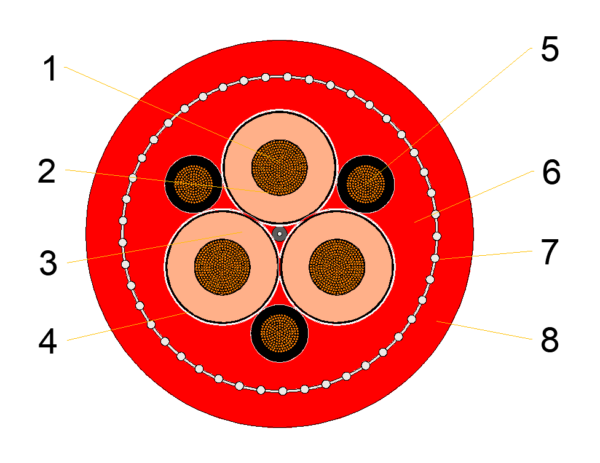
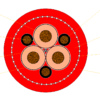
R-(N)TSCGEWÖU Reeling Cable Construction
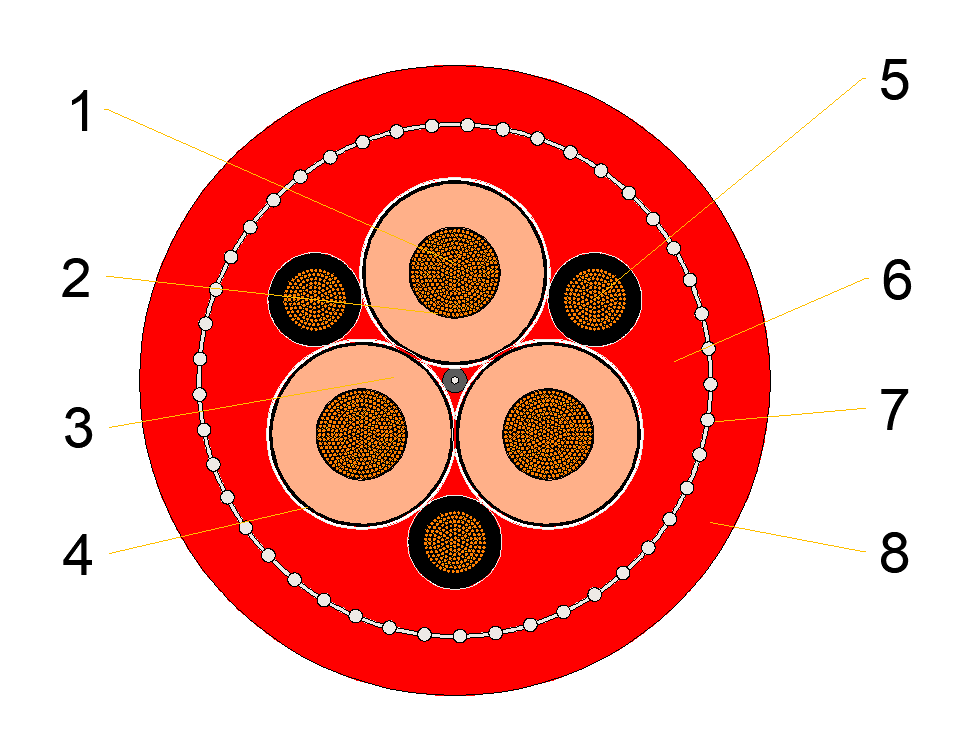
- 1. Conductors: Annealed flexible stranded tin coated or bare copper class 5 to IEC 60228, HD 383
- 2. Conductor screen: Semi-conductive layer
- 3. Insulation: Ethylene-propylene rubber (EPR) type 3GI3 to DIN VDE 0207 part 20
- 4. Insulation screen: Semi-conductive layer max. resistivity of semi-conductive layers – 200 Ω x m
- 5. Grounding conductor: (Earth) Tinned copper conductor, flexible, finely stranded
- 6. Internal layer of sheath: A synthetic thermosetting compound type 5GM3 in accordance to DIN VDE 0207 part 21
- 7. Antitorsion braid: Braid of polyamide threads between internal and outer layer of sheath
- 8.Outer layer of sheath: A synthetic thermosetting compound type 5GM5 or 5GM3 to DIN VDE 0207 part 21
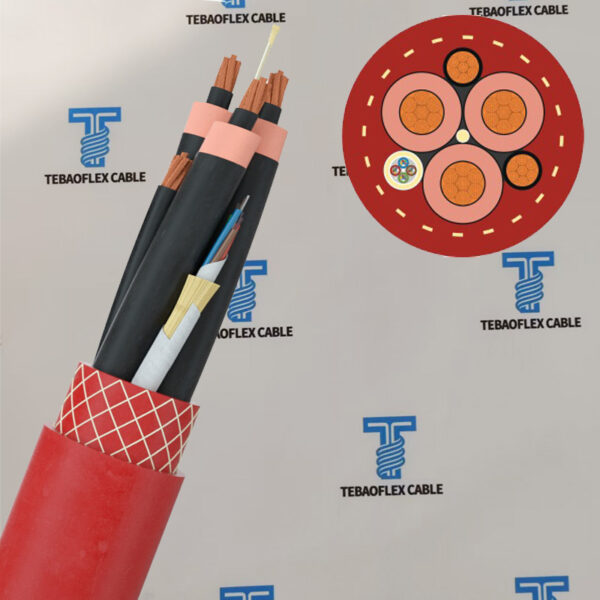
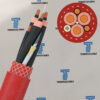
R-(N)TSCGEWÖU With FO (Fiber Core) Reeling Cable Construction
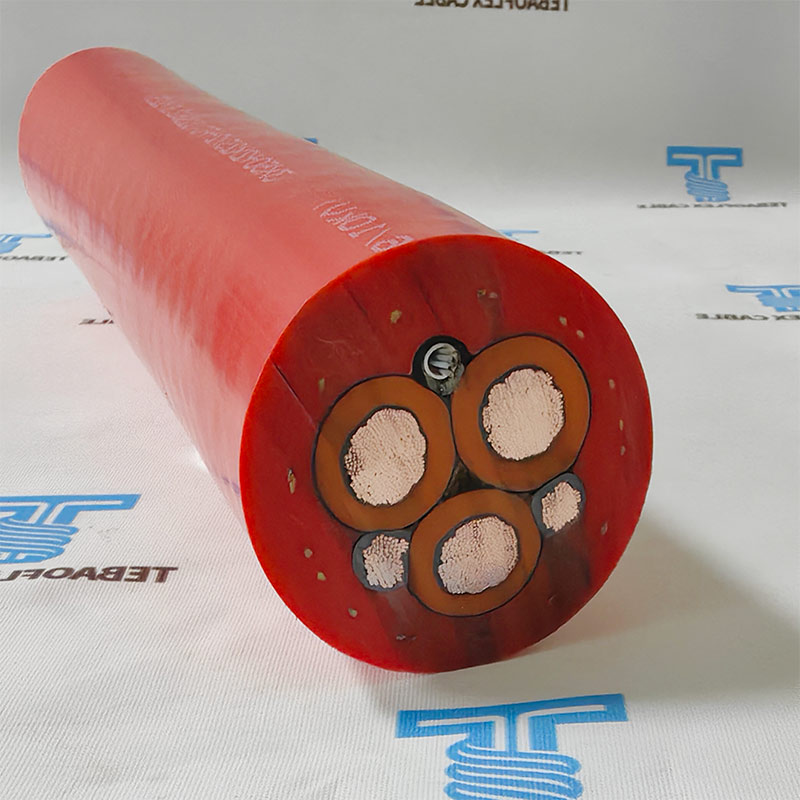
- 1. Cable Conductor: Annealed flexible stranded tin coated or bare copper class 5
- 2. Conductor Screen : Semi-conductive layer
- 3. Insulation: rubber (EPR) type 3GI3
- 4. Insulation screen: Semi-conductive layer max. resistivity of semi-conductive layers
- 5. Ground Conductor: (Earth) Tinned copper conductor, flexible, finely stranded
- 6. Internal layer of sheath: A synthetic thermosetting compound type 5GM3
- 7. Antitorsion braid: Braid of polyamide threads between internal and outer sheath
- 8. Fiber Optic Module: lA-D(ZN)13Y 6, 12, 18 or 24 fibers G50/125, G62,5/125 or E9/125
- 9.Outer Sheath: A synthetic thermosetting compound type 5GM5 or 5GM3.
More Details
Comparison and references
Difference Between F-(N)TSCGEWÖU and (N)TSCGEWÖU
The main difference between R-(N)TSCGEWÖU and F-(N)TSCGEWÖU is their installation method and mechanical design purpose. Both are medium-voltage mining power cables manufactured according to DIN VDE 0250-813, but they are optimized for different operating conditions:
Structural Differences
| Component | R-(N)TSCGEWÖU (Dynamic duty) | F-(N)TSCGEWÖU (Fixed duty) |
|---|---|---|
| Conductors | Flexible tinned copper conductors | Flexible tinned copper conductors |
| Conductor screen | Semi-conductive conductor screen | Semi-conductive conductor screen |
| Insulation | EPR insulation | EPR insulation |
| Insulation screen | Semi-conductive insulation screen | Semi-conductive insulation screen |
| Earth conductors | Split earth conductors | Split earth conductors |
| Anti-torsion braid | Included | — |
| Fillers & bedding | Reinforced fillers and bedding | Standard fillers and bedding |
| Outer sheath | Heavy-duty PCP outer sheath | PCP outer sheath |
| Key advantage | Superior resistance to twisting and repeated reeling. | Reliable medium-voltage power distribution with easier installation. |
Application Difference of R-(N)TSCGEWÖU and F-(N)TSCGEWÖU
R-(N)TSCGEWÖU Applications
- Electric mining shovels
- Draglines
- Bucket-wheel excavators
- Continuous miners
- Mobile crushers
- Drilling rigs
- High-speed cable reel systems
- Movement: Continuous
- Torsion: High
F-(N)TSCGEWÖU Applications
- Conveyor belt systems
- Transfer stations
- Mine substations
- Pump stations
- Shiftable conveyors
- Material handling facilities
- Fixed mining infrastructure
- Movement: Occasional
- Torsion: Low
R-(N)TSCGEWÖU Packaging
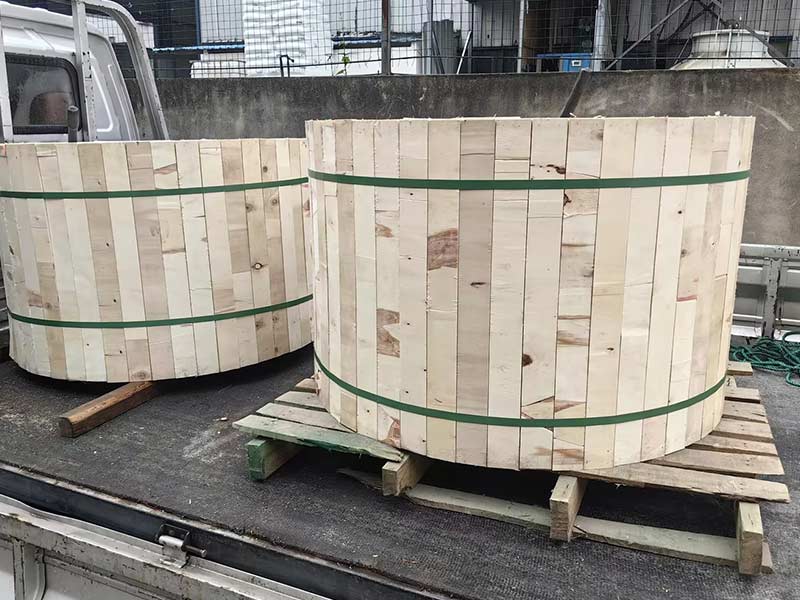
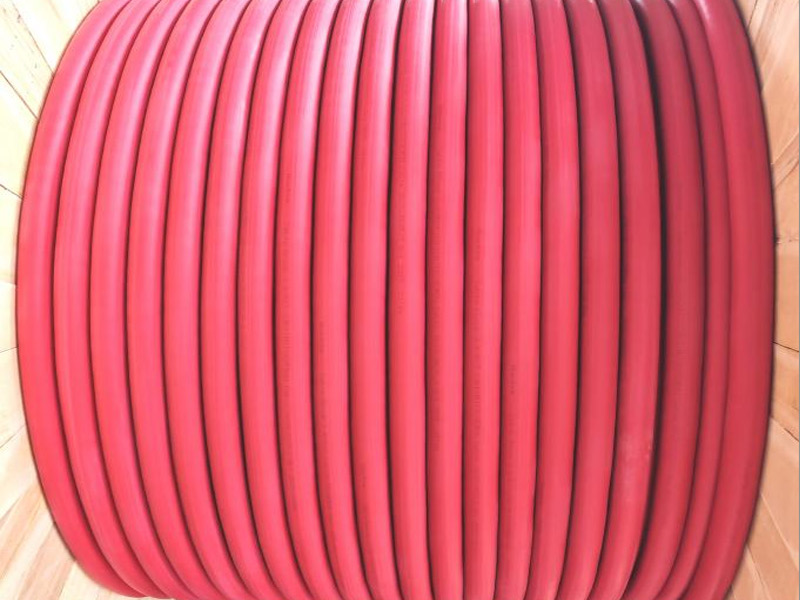
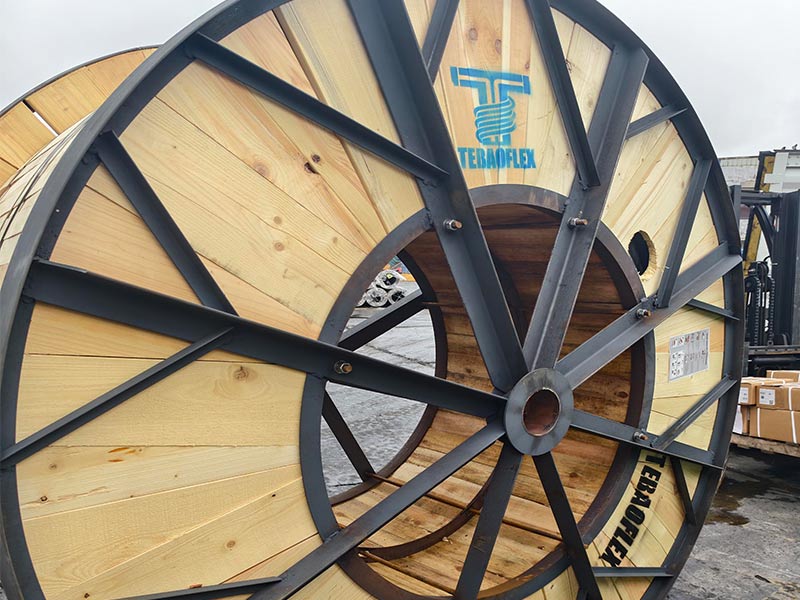
TEBAOFLEX provides professional export packaging solutions for R-(N)TSCGEWÖU Medium Voltage Reeling Cables to ensure maximum protection during storage, transportation, and international shipment. As medium-voltage mining cables are heavy-duty products with large outer diameters and significant reel weights, each package is customized according to the cable specification, delivery length, transportation method, and customer requirements.
1. Steel-Wood Composite Drum
Designed for extra-heavy mining cables with long delivery lengths.
- Higher mechanical strength
- Greater load capacity
- Better impact resistance
- Suitable for oversized cable reels
- Ideal for long-distance transportation
2. Steel Drum (Returnable)
Available upon customer request for reusable logistics systems.
- Extremely durable
- Multiple reuse cycles
- Ideal for cable reeling applications
- Reduced long-term packaging costs
- Suitable for mining fleet maintenance
3. Protective Packaging
Before shipment, every cable drum is protected using multiple packaging measures:
- Waterproof PE wrapping
- UV-resistant protective film
- Moisture barrier
- Cable end sealing caps
- Impact-resistant edge protection
- Heavy-duty steel straps
- Drum locking system
- Corrosion-resistant fastening hardware
4. Drum Marking
Each drum is clearly marked with durable identification labels including:
- TEBAOFLEX Cable Logo
- Cable Type and Size
- Manufacturing Date
- Drum Number
- Cable Length: 500m/Per Drum
- Gross Weight
- Net Weight
- Direction of Unreeling
- Customer PO Number (Optional)
Request this cable.
Send the core configuration, length and application details.
Quality Assurance
Testing at every stage in our own workshop and laboratory, from incoming copper to the packed drum.
Raw Material Inspection
Every batch of copper rod, rubber compound and reinforcing material is checked before it reaches the line.
- Copper: conductor resistance, elongation and surface condition on incoming rod and drawn wire
- EPR, CPE, PUR and silicone compounds: hardness, tensile strength, elongation and ageing samples from each mix
- Suppliers and batch numbers are recorded so every drum can be traced back to its materials
Manufacturing Process Control
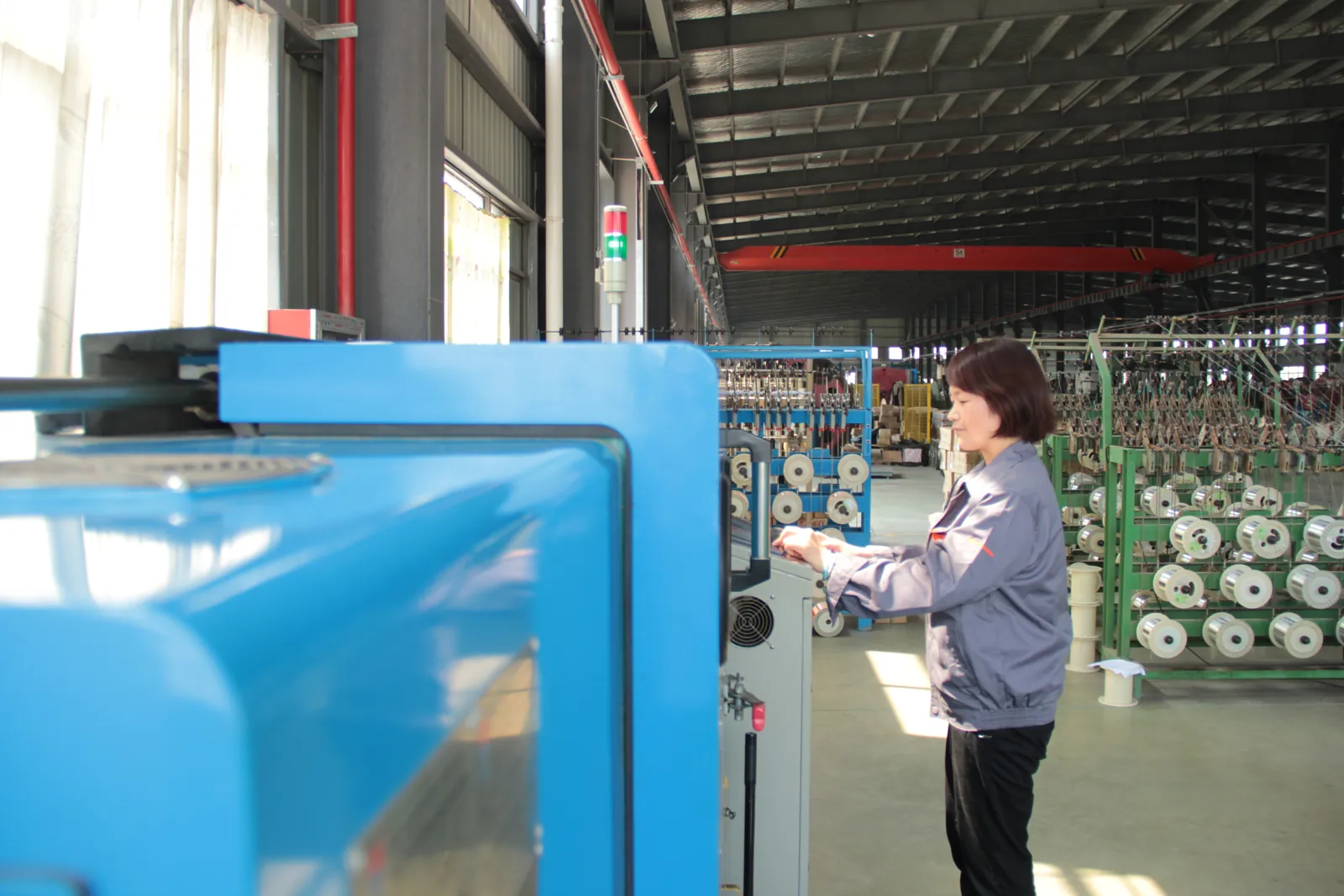
Stranding, insulation extrusion, core assembly and sheathing run under recorded process parameters.
- Class 5/6 stranding with lay length and tension monitored for trailing and reeling flexibility
- Continuous-vulcanisation extrusion with wall thickness and spark tests logged on every length
- Operators sign off each stage before the cable moves to the next machine
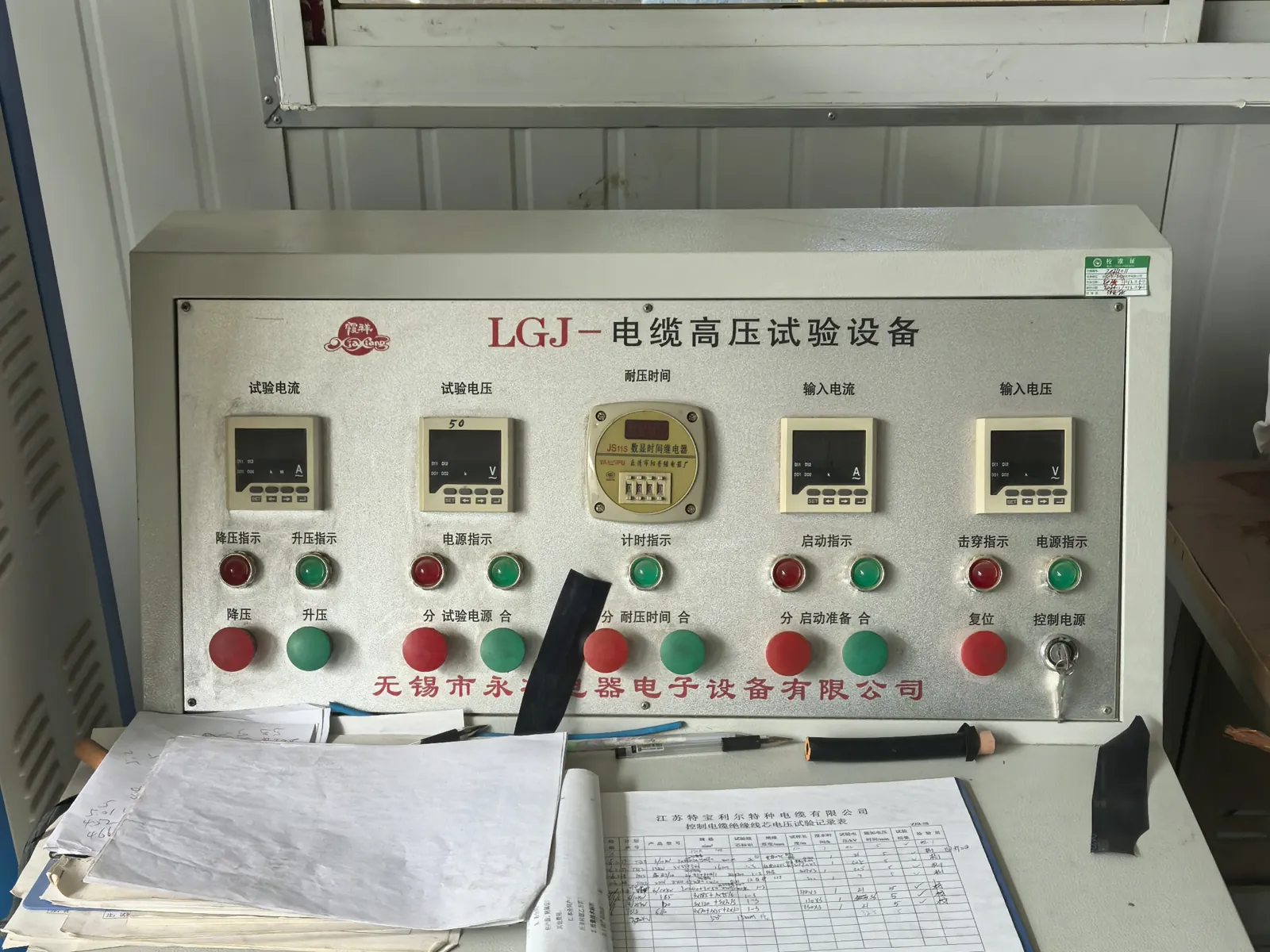
Electrical Testing
Finished lengths go through the routine tests required by the referenced VDE, ICEA, IEC or NEK standard.
- Conductor resistance and insulation resistance on every length
- Voltage withstand (3.5 kV and higher) and partial-discharge measurement in the shielded HV laboratory
- Screen and pilot-core continuity checks for mining and reeling constructions
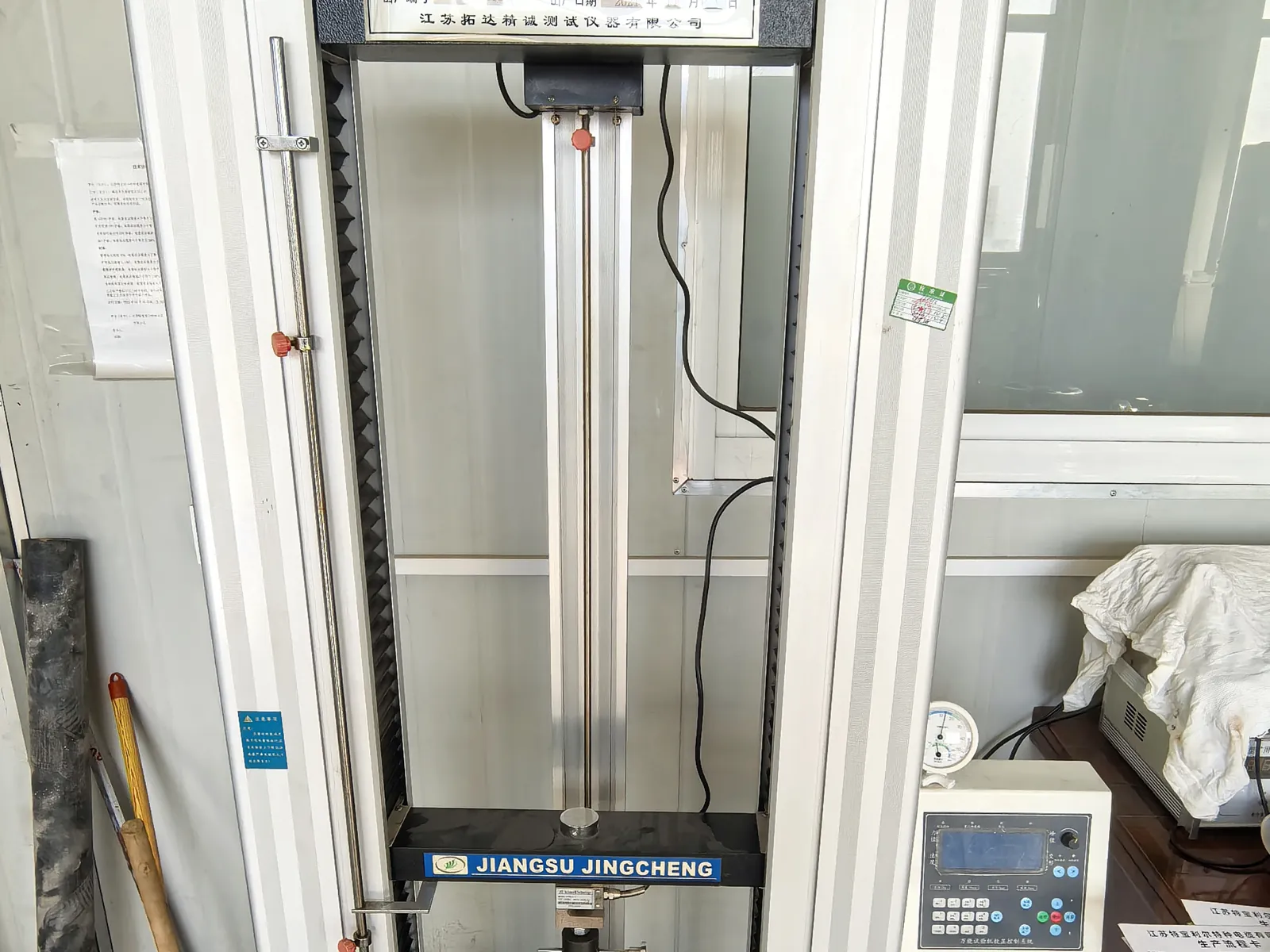
Mechanical and Ageing Tests
Samples from production are tested for the duty a mining, crane or submersible cable will actually see.
- Tensile strength and elongation of insulation and sheath before and after ageing
- Hot-set, ozone, oil-immersion and low-temperature bending tests
- Constant-temperature water bath for insulation resistance of submersible constructions
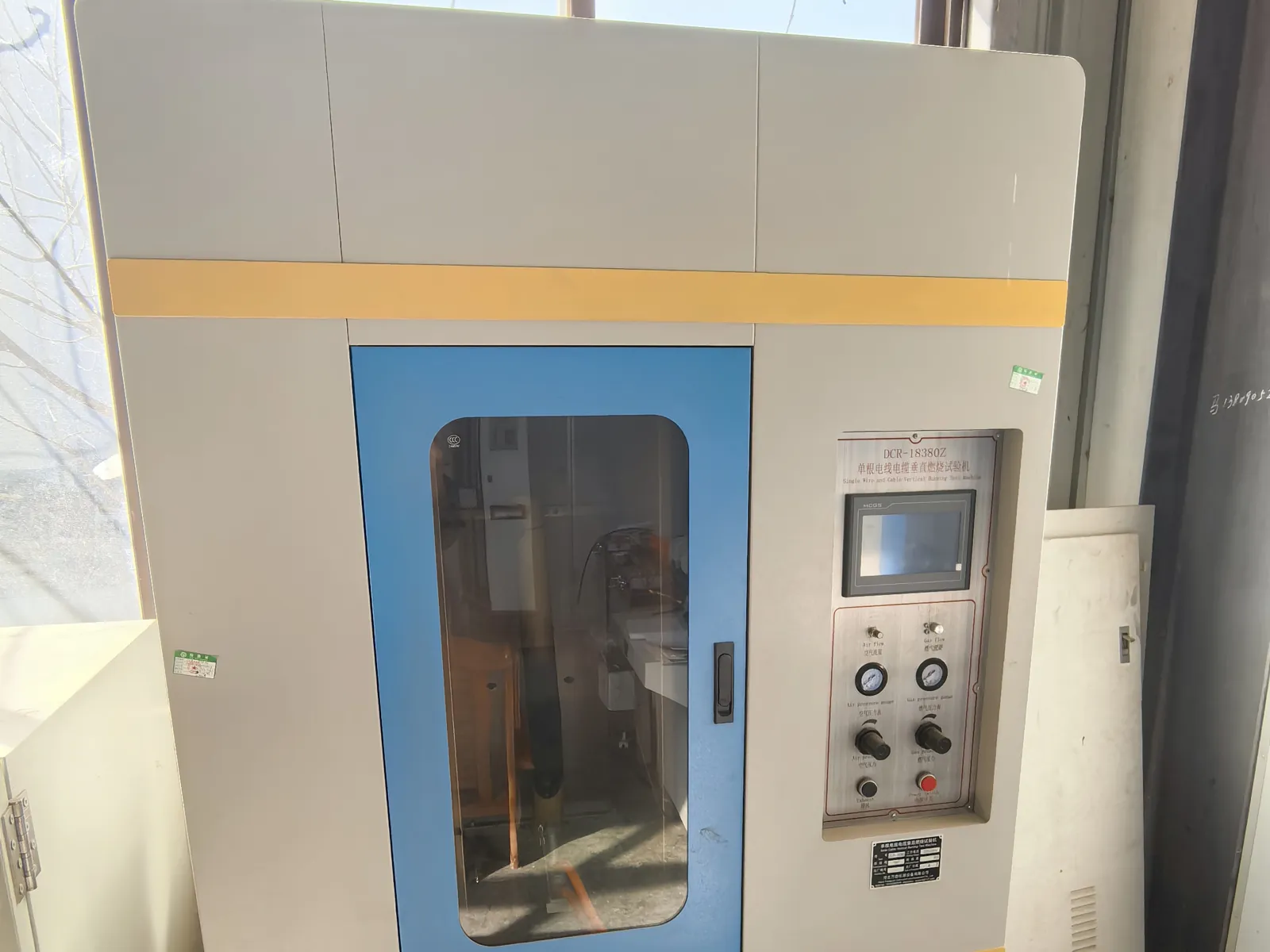
Flame Test and Final Inspection
Before packing, the cable is checked against the order and the flame-performance requirement of its standard.
- Single-cable vertical flame test to IEC 60332-1-2 where specified
- Metre marking, printing, drum length and appearance inspection
- Test report and packing list issued with every shipment
Related products
-
(N)TSCGEWÖU Submersible ABT FO(LWL) Mining Trailing Cable
-
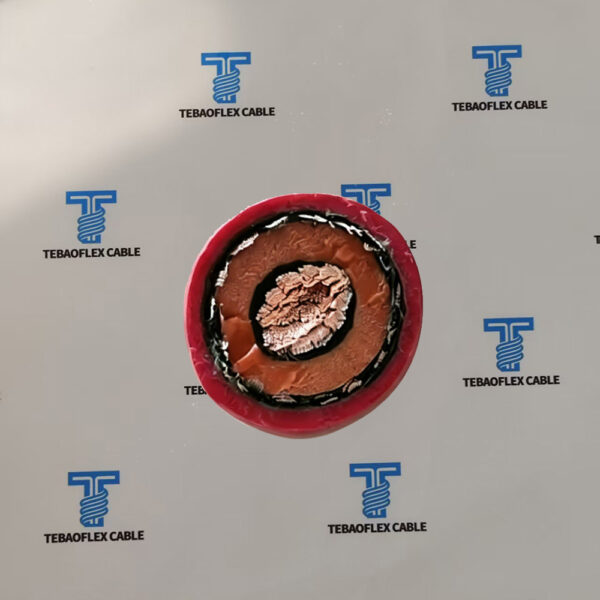
NTMCGCWOEU / (N)TMCGCWOEU 6-30kV Single-Core EPR Heavy-Duty Rubber Cable
-

1kV NSHTOEU Scoops LHDs Underground Mining Reeling Cable
-
TRM-J & TRMC-J Highly Flexible Mining Rubber Cable
-
6kV-35kV R-(N)TSCGEWOEU FO LWL Reeling Mines Cable
-
Heavy-Duty NSSHCGEÖU(Z) Reinforced Version Mining Cable
-
NTSCGECWOEU Coal Cutter Cable VDE 0250 Mining Cable
-
(N)3GHSSHCH LSZH Tunnelling & Underground Mining Cable
Need Pricing for This Cable?
Tell us the length, cores, cross-section and delivery country and we will reply with a quotation and datasheet.