VDE Mining
VDE Mining Cable
DIN VDE 0250 trailing and reeling cables for coal cutters, LHD loaders, shovels, draglines and dredgers, from 0.6/1 kV to 20/35 kV.

Heavy-duty rubber cables for mining, port cranes, submersible pumps, EV charging, elevators and marine duty. Pick a family to filter the range.
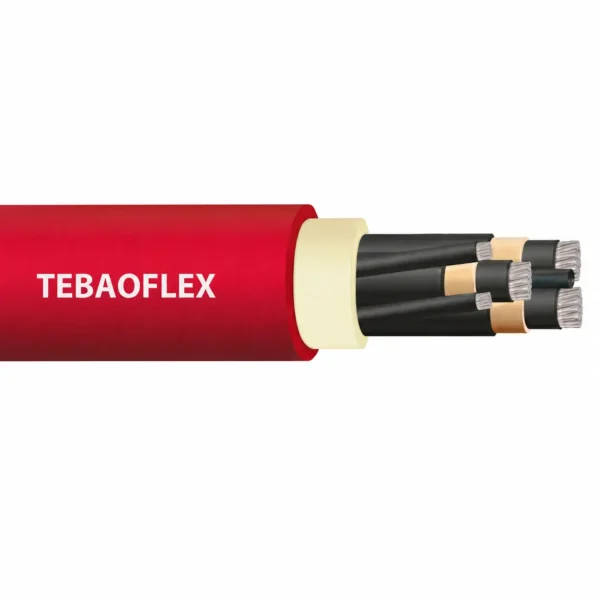
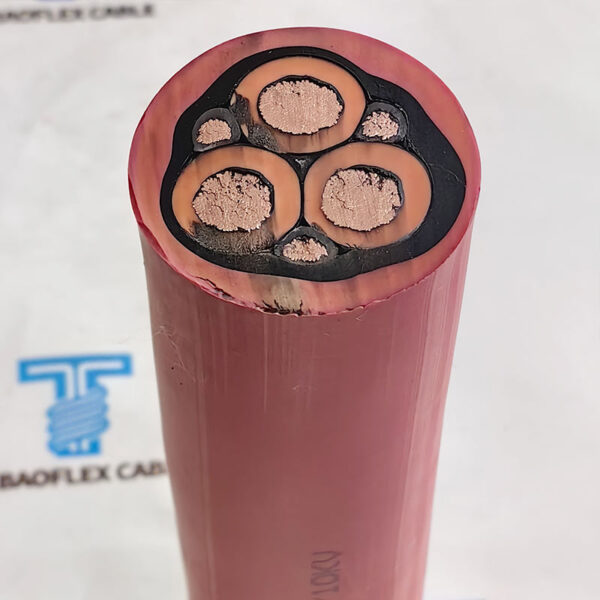
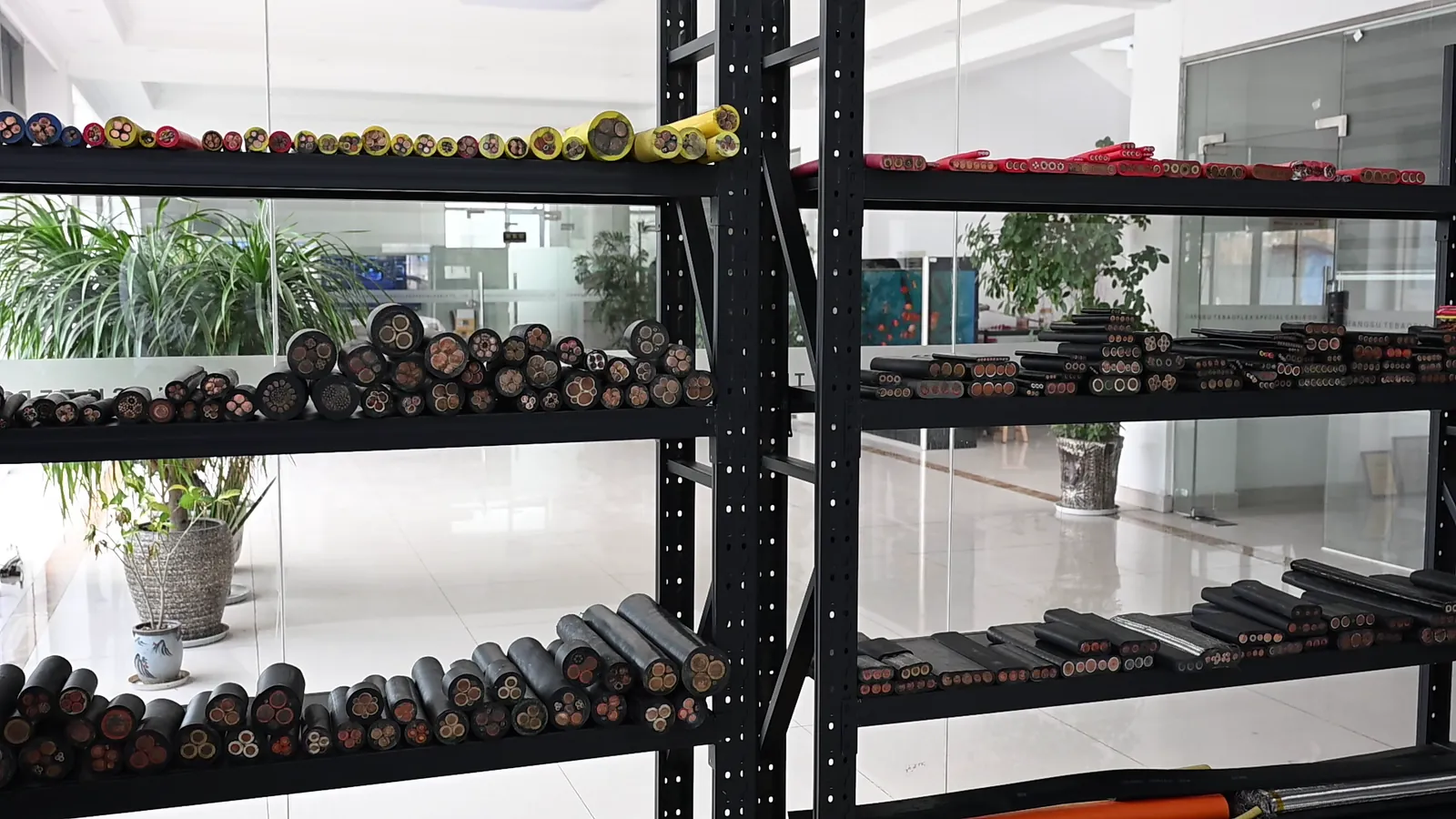
TEBAOFLEX VDE mining cables carry DIN VDE 0250 type designations and feed coal cutters, LHD loaders, shovels, draglines, tunnel boring machines and mobile transformers. The range runs from 0.6/1 kV NSSHCGEÖU and NSHTOEU trailing and reeling cables to 3.6/6–20/35 kV (N)TSCGEWÖU, NTMCGCWOEU and (N)TMCGETMPU medium-voltage types. Power types use Class 5 copper with EPR or EPDM insulation, and anti-torsion, fibre-optic and submersible versions are listed.
Showing 17–20 of 20 results
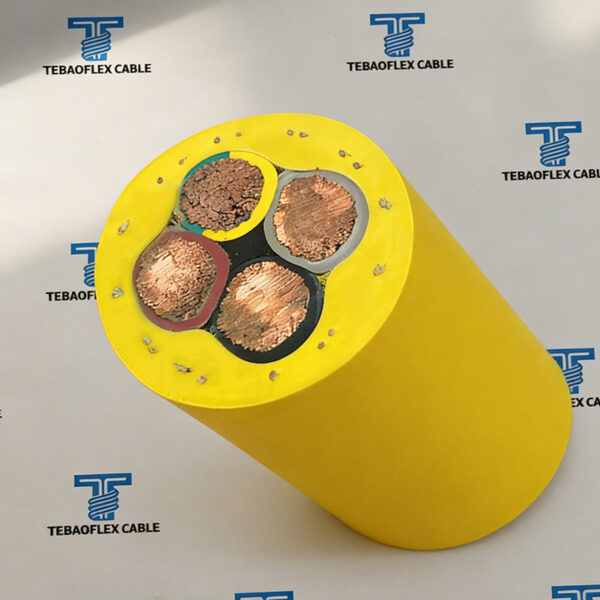
Model comparison, operating conditions and RFQ checklist.
What sets TEBAOFLEX VDE Mining Cable apart in service.
NSSHCGEÖU(V) references Part 812, NSHTOEU Part 814 and most medium-voltage types Part 813, so the type code on an existing cable points to a matching construction.
Polyester or polyamide braids between inner and outer sheath on NSHTOEU, NSHTOU-J and R-(N)TSCGEWÖU; an aramid braid on (N)TSCGEWTOEUS OFE for torsion and high reeling speed.
Low-voltage NSSH.. and NSHT.. types at 0.6/1 kV, and screened medium-voltage (N)TSCGEWÖU and NTM.. types from 3.6/6 kV up to 20/35 kV.
FO builds carry 6, 12, 18 or 24 fibres of G50/125, G62.5/125 or E9/125 in a protective tube, so power and data share one reel.
(N)TSCGEWÖU and (N)TSCGECEWÖU submersible versions for permanent use in salty or brackish water up to 300 m; NTSCGEWOEU W 3E with waterproof GM1b and 5GM3 sheaths.
Product pages list tensile load, torsion and travel speed, for example 30 N/mm² and 160 m/min for NSHTOEU, and 15 N/mm² and ±25°/m for R-(N)TSCGEWÖU.
Capabilities across the VDE Mining Cable range; each product page lists the exact construction, rating and reference standard.
| Specification | Available options |
|---|---|
| Product types | 0.6/1 kV trailing and reeling (NSSHCGEÖU(V), NSSHCGEÖU(Z), NSHTOEU, NSHTOU-J); medium-voltage reeling and trailing ((N)TSCGEWÖU family, NTSCGECWOEU, (N)TSCGECEWÖU, NTSCGEWOEU W 3E); NTM.. single-core and hoist types; tunnel feeders ((N)3GHSSYCY, (N)3GHSSHCH); also TRM-J, TRMC-J and LiYCY |
| Rated voltage (U0/U) | 0.6/1 kV (NSSHCGEÖU, NSHTOEU, NSHTOU-J); 0.69/1.15 kV (TRM-J, TRMC-J); 1.8/3 to 8.7/15 kV (NTSCGEWOEU W 3E); 3.6/6 to 18/30 kV (R-(N)TSCGEWÖU, (N)TMCGETMPU, (N)TMCGCW11Y); up to 20/35 kV (R-(N)TSCGEWOEU FO, (N)TSCGEWTOEUS OFE, (N)TMCGCWOEU) |
| Conductor | Class 5 flexible copper, tinned or bare, to IEC 60228 / DIN VDE 0295; extra-fine stranded on NSSHCGEÖU(Z) |
| Cross-section | 3×25/16 to 3×150/70 mm² plus pilot cores (NSSHCGEÖU(V)); 4×16 to 4×95 mm² (NSHTOEU); 1.5 and 2.5 mm² multicore (NSHTOU-J); 1×95/16 ((SI) NTMCGCWOEUS) |
| Insulation | EPR type 3GI3 on most types; EPDM on R-(N)TSCGEWOEU FO and (SI) NTMCGCWOEUS; PVC on LiYCY |
| Sheath | PCP 5GM5 (NSSHCGEÖU, NSHTOEU, NTMTWOEU); 5GM3 inner and 5GM5 or 5GM3 outer ((N)TSCGEWÖU reeling types); waterproof CM or 5GM3 (submersible and W 3E builds); TPU ((N)TMCGCW11Y, (N)TMCGETMPU); halogen-free HFFR ((N)3GHSSHCH); PVC DMV6 ((N)3GHSSYCY) |
| Screening / elements | Concentric copper/steel earth with monitoring conductors (NSSHCGEÖU); earth split in three (R-(N)TSCGEWÖU types); tinned copper wire screen (NTM.. single-core); ground-check conductor ((N)TMCGETMPU); A-D(ZN)13Y module with 6–24 fibres (FO builds) |
| Reinforcement | Polyester or polyamide anti-torsion braid (NSHTOEU, NSHTOU-J, R-(N)TSCGEWÖU, ABT builds); aramid braid ((N)TSCGEWTOEUS OFE); double-layer copper–steel braid (NSSHCGEÖU(Z)); central steel support (NTMTWOEU); galvanised steel wire braid, min. 75 % (tunnel feeders) |
| Temperature | Fixed -40 to +80 °C on most types; flexible -25 to +60 °C or +80 °C by model; (N)TMCGCW11Y fixed -50 to +90 °C; tunnel feeders flexed from +5 °C; 90 °C maximum conductor temperature |
| Minimum bending radius | 10 × OD (NSSHCGEÖU(V)); 6 × OD fixed, 8 × OD moving ((N)TMCGCW11Y); 6 × OD fixed, 10 × OD flexed ((N)TSCGECEWÖU); 20 × D between S-type direction changes (NSHTOEU, R-(N)TSCGEWÖU); others to DIN VDE 0298-3 |
| Reference standards | DIN VDE 0250 Parts 812, 813 and 814; DIN VDE 0298-3 and -4; IEC 60228 / DIN VDE 0295; IEC 60332-1-2; IEC 60502 ((N)TMCGETMPU) |
| Documents | Datasheet, test report and certification documents for the exact model on request at RFQ stage |
Where VDE Mining Cable from TEBAOFLEX is installed.
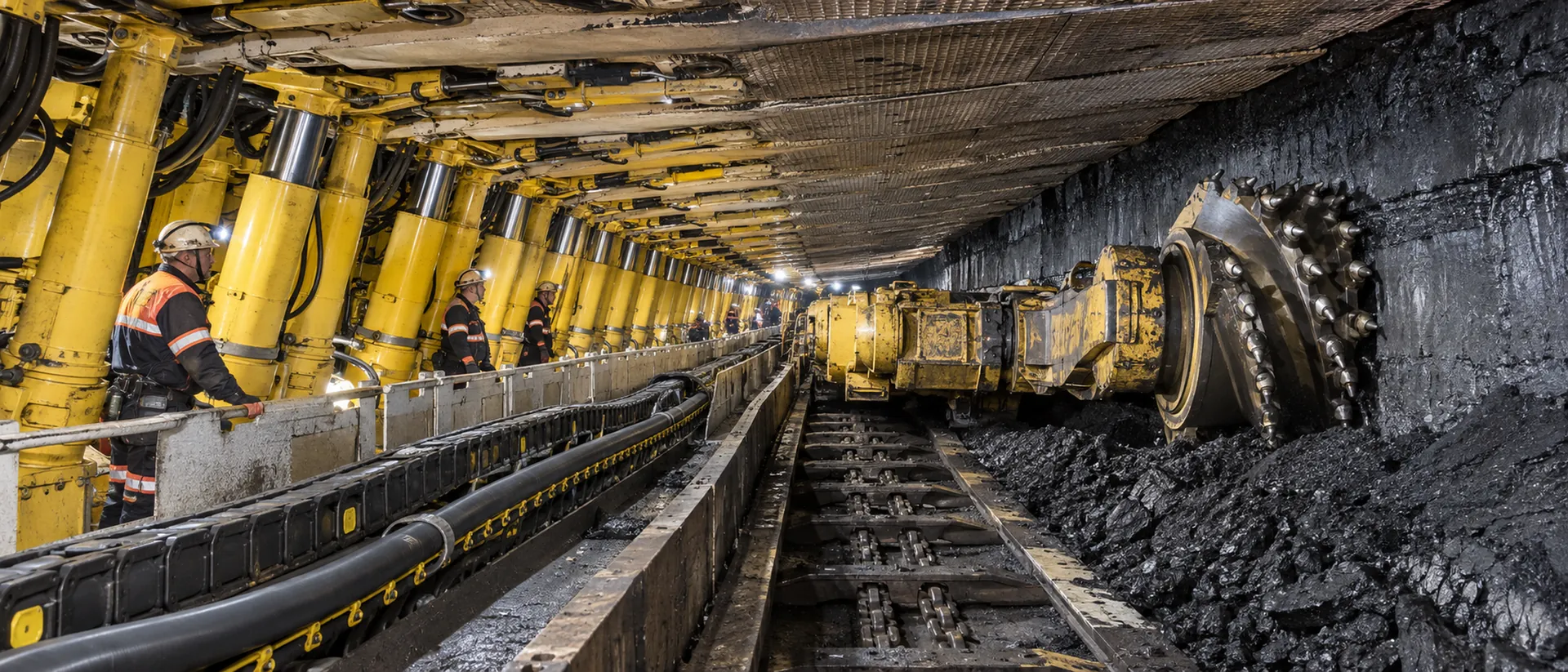
0.6/1 kV NSSHCGEÖU(V) with pilot cores and concentric copper/steel earth for coal cutters, roadheaders and LHD loaders, including use in cable chains.
02NSHTOEU for mono-spiral and cylindrical reels on underground scoops, listed at up to 160 m/min travel speed and 30 N/mm² tensile load.
03R-(N)TSCGEWOEU FO reeling cable for excavators, dumpers and mobile crushers, carrying power and a fibre-optic module on the same reel.
04F-(N)TSCGEWÖU LWL TBM with the earth conductor split in three and an optional fibre element for TBM and tunnel supply routes.
05Single-core (SI) NTMCGCWOEUS at 6/10–12/20 kV for short links between short-circuit breakers and mobile transformers; (N)3GHSSYCY feeds shiftable MV equipment.
06NTMTWOEU with a central galvanised steel support element and shielded telephone-type pilot conductors for suspended mine hoist and shaft-lift runs.
Four decisions specify the right cable the first time; send them with your RFQ and our engineers confirm the type designation.
0.6/1 kV for NSSH.. and NSHT.. types, or a medium-voltage U0/U class from 3.6/6 kV to 20/35 kV matched to the machine supply.
Fixed, trailing or reeling; for reels, the drum type, travel speed and tensile load, and an anti-torsion build where the cable twists or changes plane.
Power cross-sections plus the earth arrangement and any pilot, ground-check, control or fibre-optic cores the machine protection system needs.
Submersible builds for permanent immersion, waterproof sheaths for dredgers, and flame-retardant or halogen-free sheathing where tunnels specify it.
Cable packages engineered around the application, not just the cable.
DIN VDE 0250 trailing and reeling cables for coal cutters, LHD loaders, shovels, draglines and dredgers, from 0.6/1 kV to 20/35 kV.
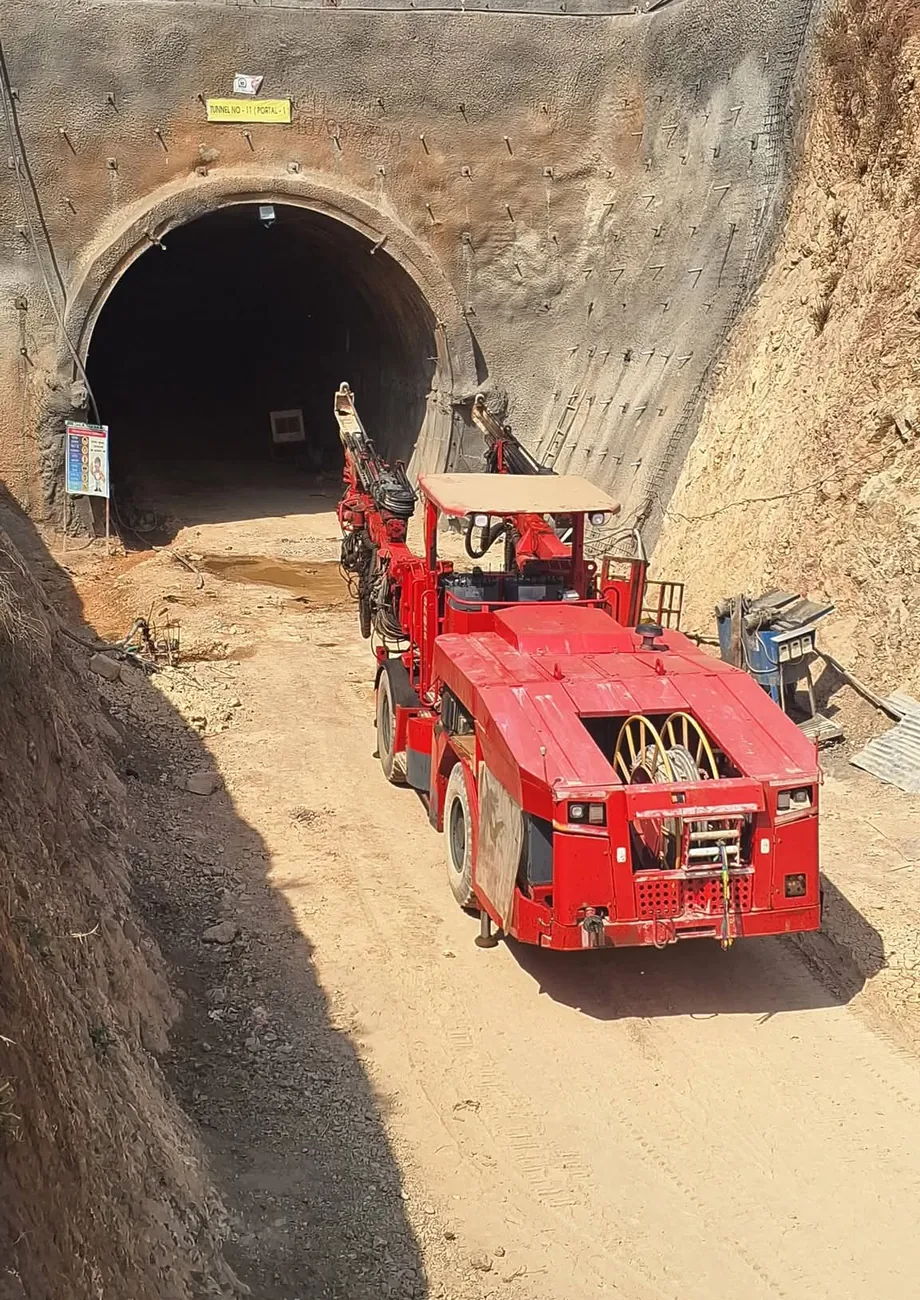
Tunnel feeders with halogen-free or PVC sheaths, a TBM reeling cable and a reinforced trailing cable for TBMs and heavy LHDs.
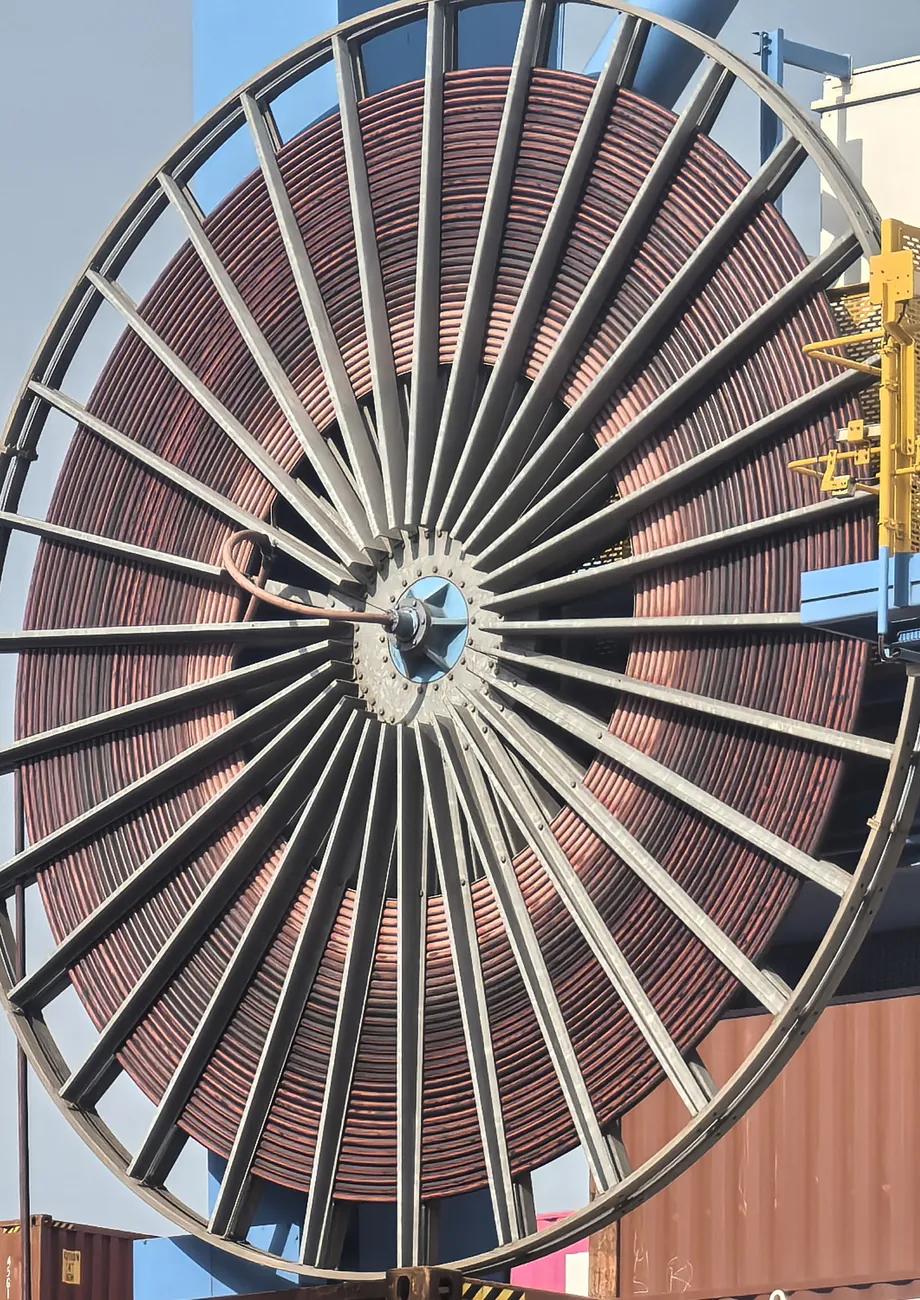
(N)TSCGEWTOEUS OFE with 24 single-mode fibres, (N)TMCGCW11Y and NSHTOU-J also serve crane reels, festoon systems and shore power.
Recent deliveries from the TEBAOFLEX project team.
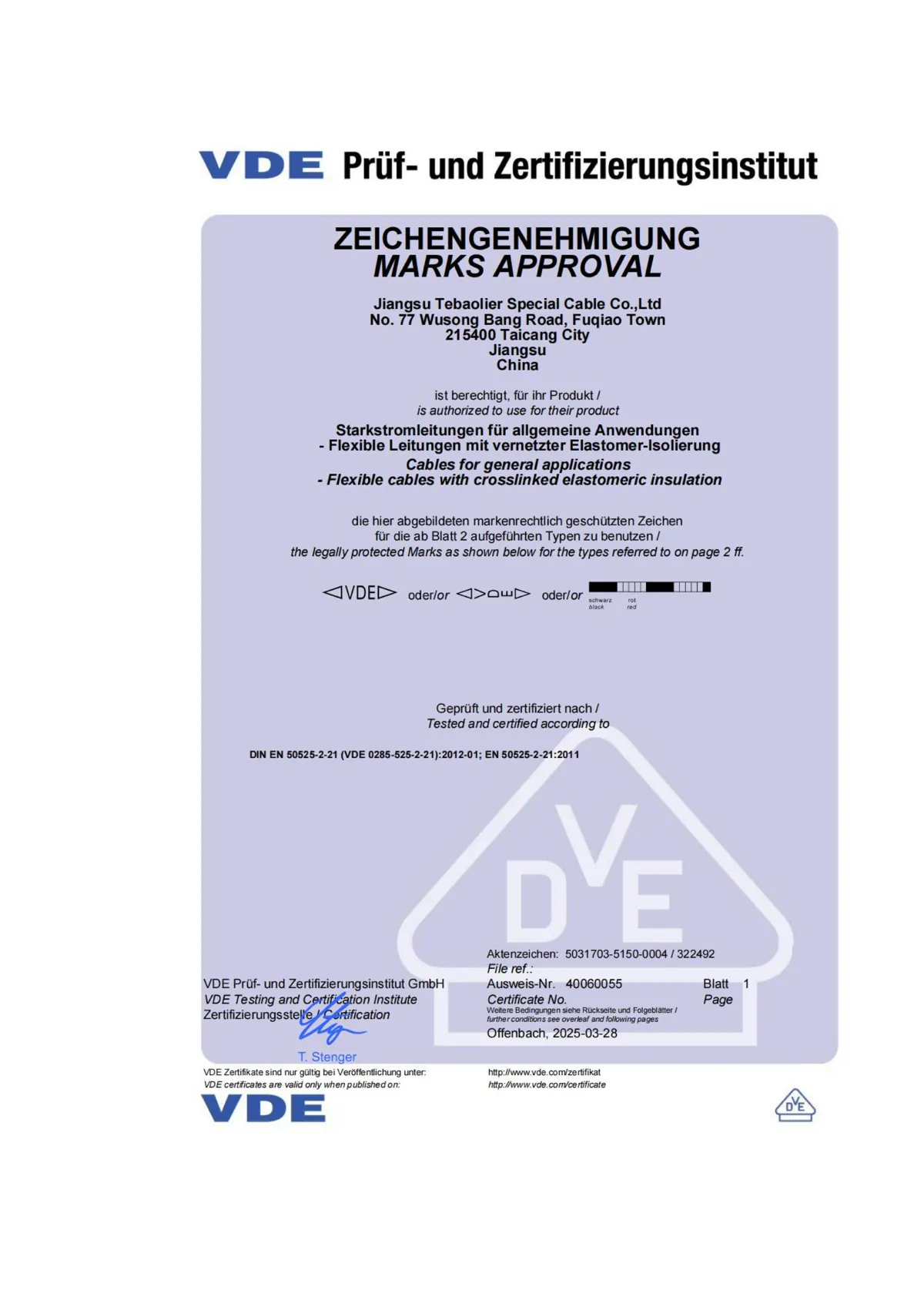
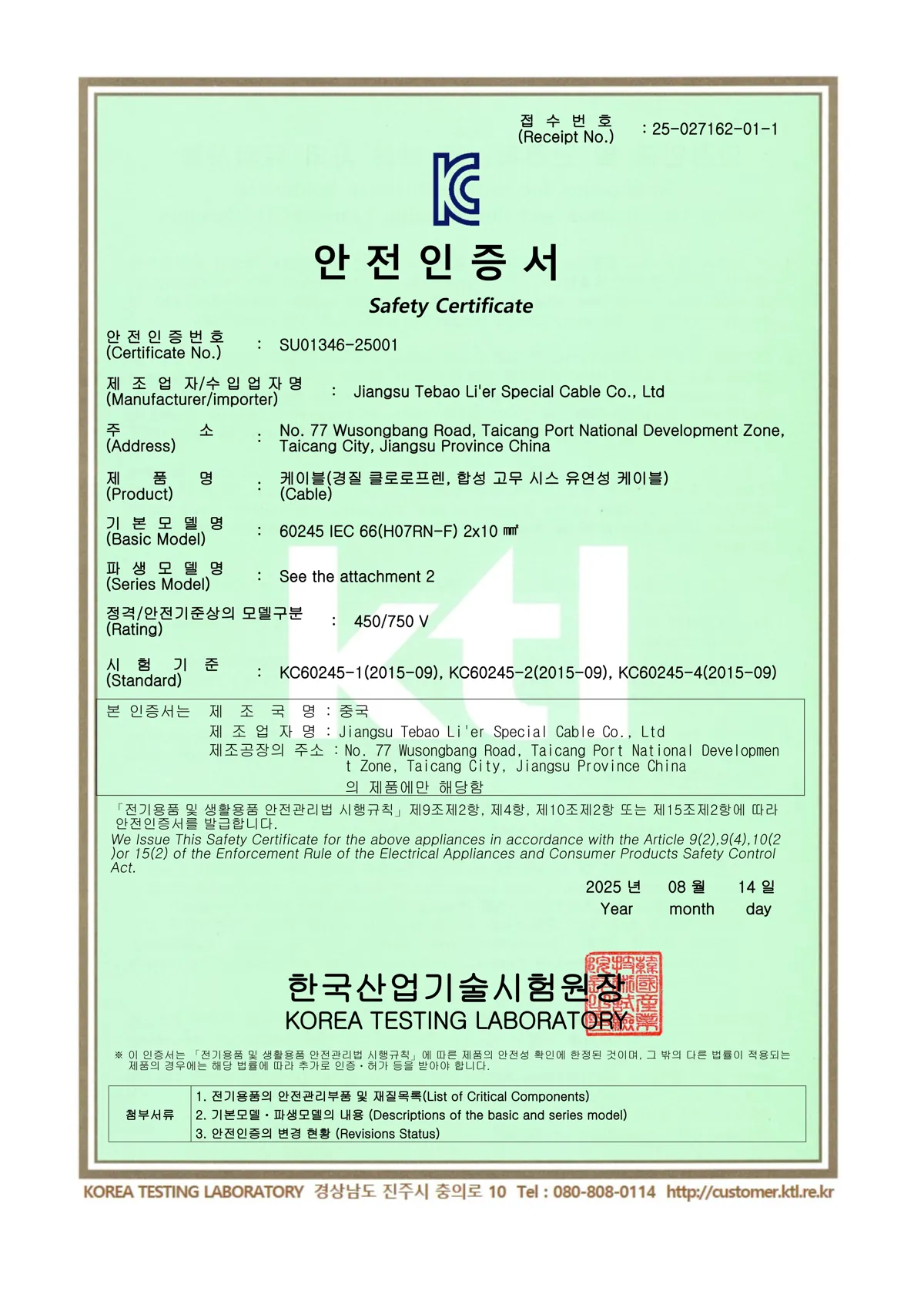
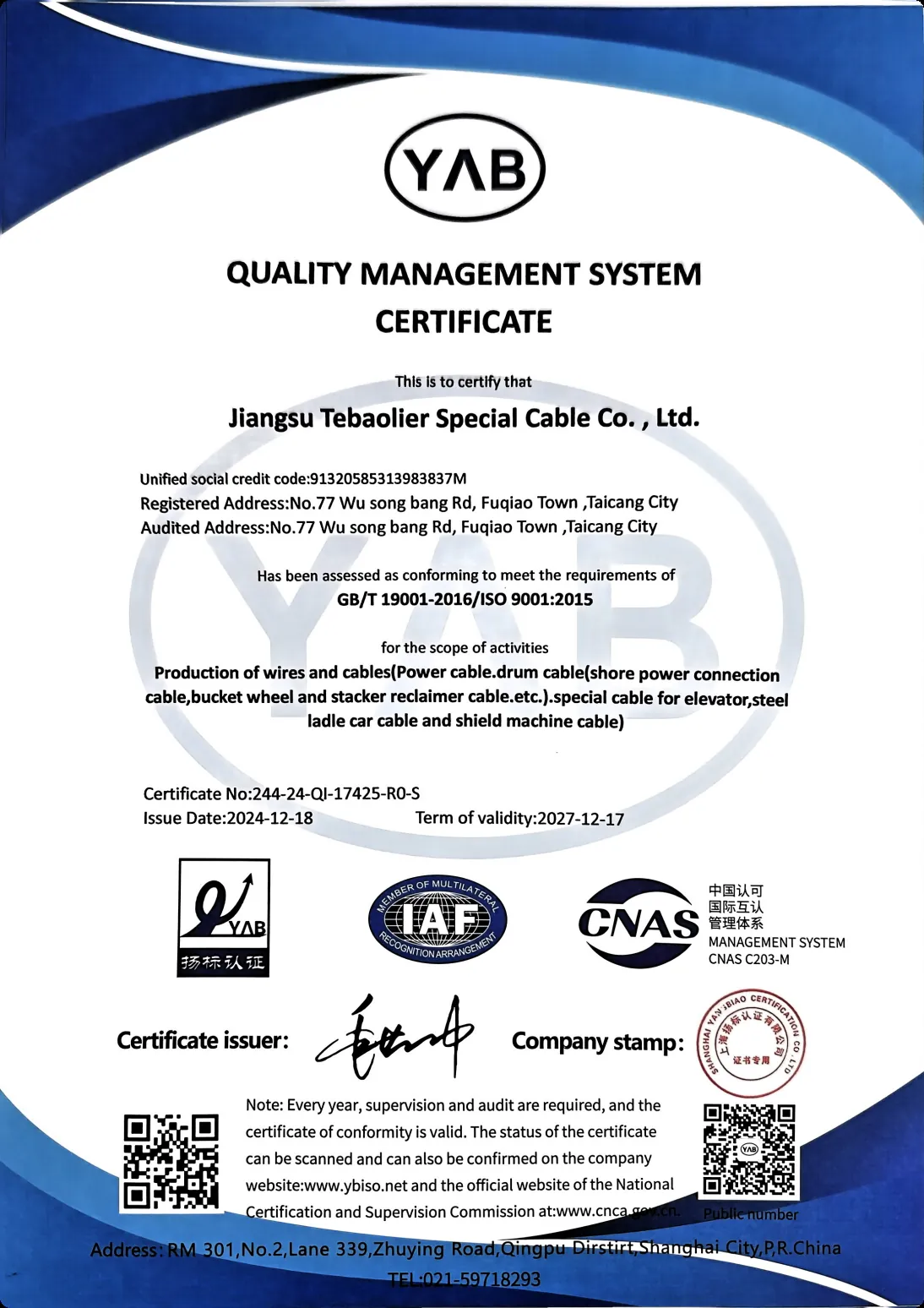
ISO 9001 quality management for cable production; ISO 14001 and ISO 45001 for sales and related management. UL and cUL (flexible cord), VDE (EN 50525-2-21), Korea KC, China MA and US MSHA approvals cover the certified types; CE is a third-party verification of conformity (VoC).
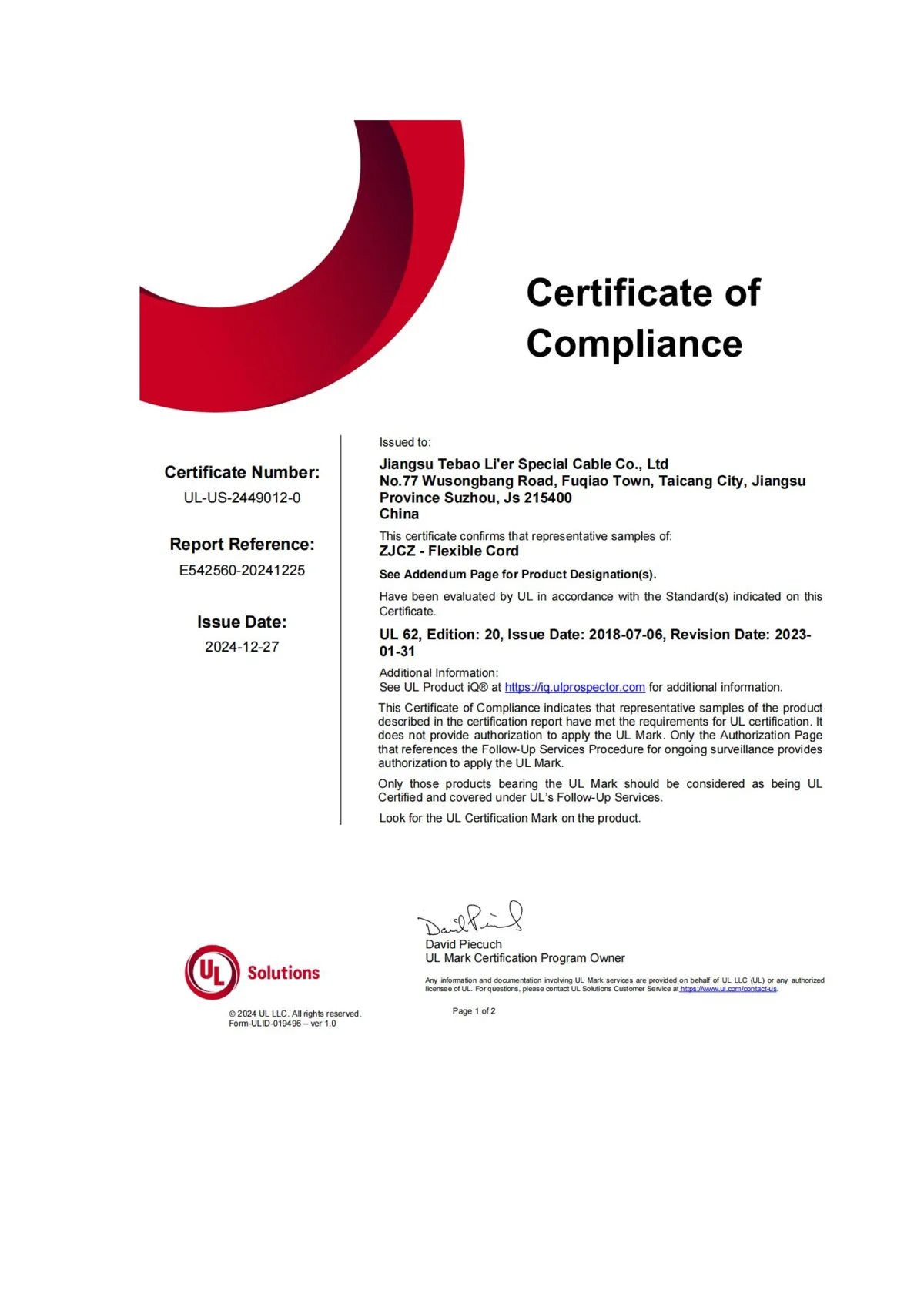
From compound to shipment, the production steps and routine tests behind each cable length.
EPR, CPE, PUR and silicone compounds are mixed and tested for hardness, tensile strength and elongation before use.
Tinned or bare copper is bunched and rope-stranded to Class 5/6 flexibility for trailing and reeling duty.
Cores are extruded and continuously vulcanised; wall thickness and spark tests are recorded on every length.
Cores, earth conductors, pilot and fibre-optic elements are laid up with the fillers and screens the type designation requires.
Reinforced double-sheath constructions are extruded and cured for abrasion, oil and tear resistance.
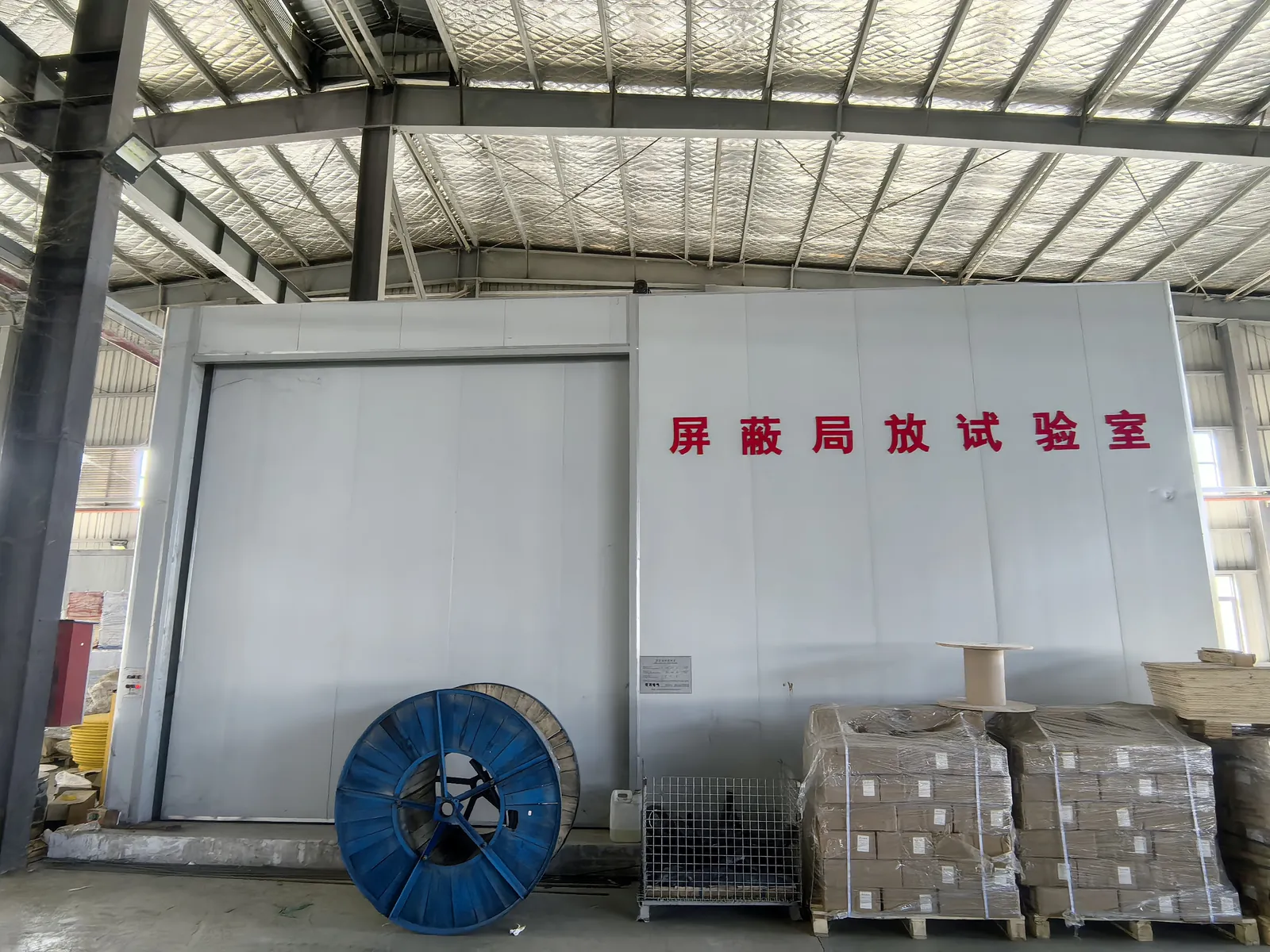
Conductor resistance, voltage withstand and insulation resistance tests at the levels set by the referenced standard.
Bending, tensile, hot-set, ozone and flame tests according to the referenced standard.
Metre marking, drum packing and documentation for worldwide project delivery.
Five-stage quality assurance from incoming copper to the packed drum.
Every batch of copper rod, rubber compound and reinforcing material is checked before it reaches the line.
Stranding, insulation extrusion, core assembly and sheathing run under recorded process parameters.
Finished lengths go through the routine tests required by the referenced VDE, ICEA, IEC or NEK standard.
Samples from production are tested for the duty a mining, crane or submersible cable will actually see.
Before packing, the cable is checked against the order and the flame-performance requirement of its standard.
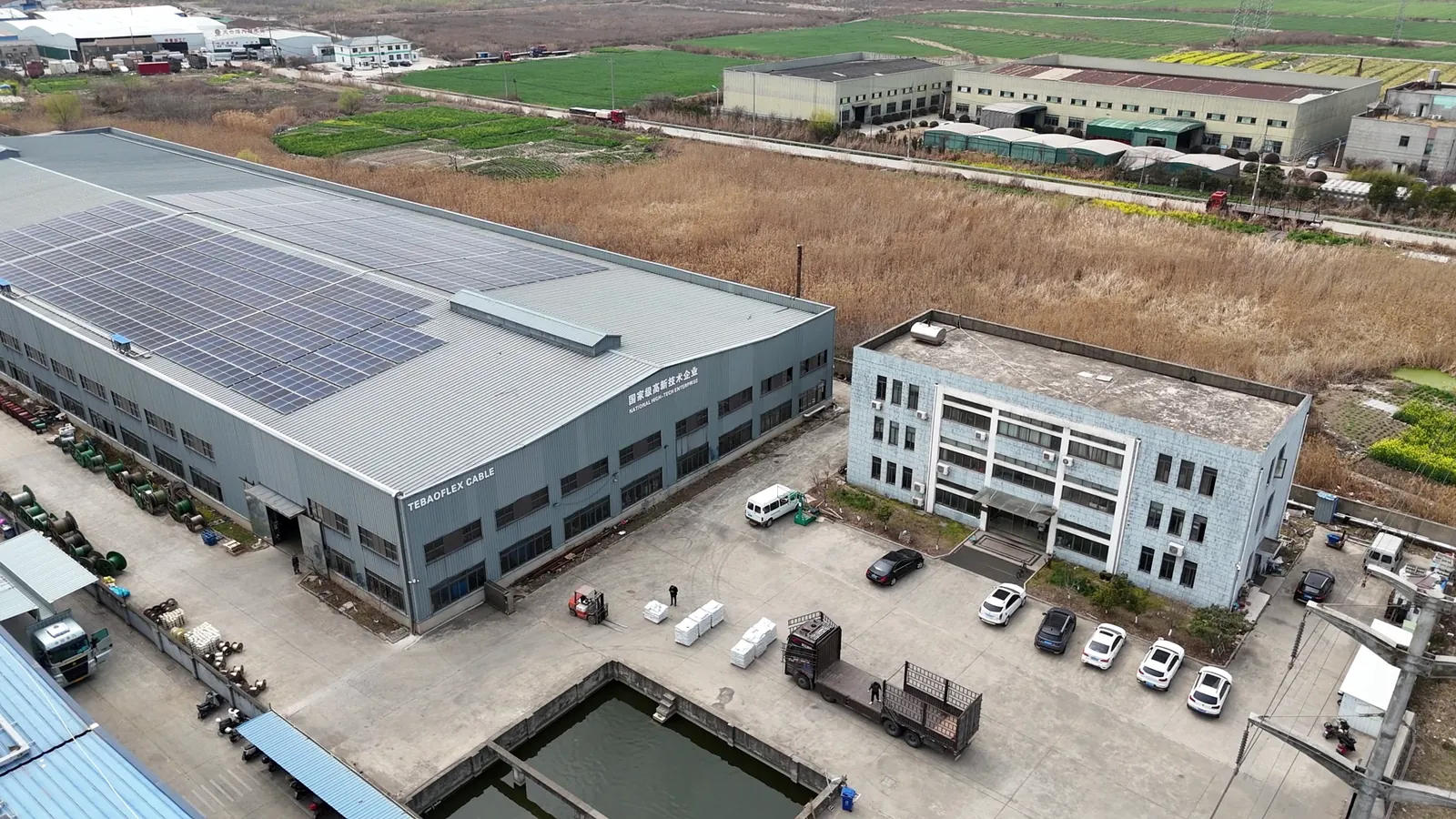
TEBAOFLEX CABLE, No.77 Wusongbang Road, Taicang, Suzhou.
Selection and application guides from the TEBAOFLEX engineering team.
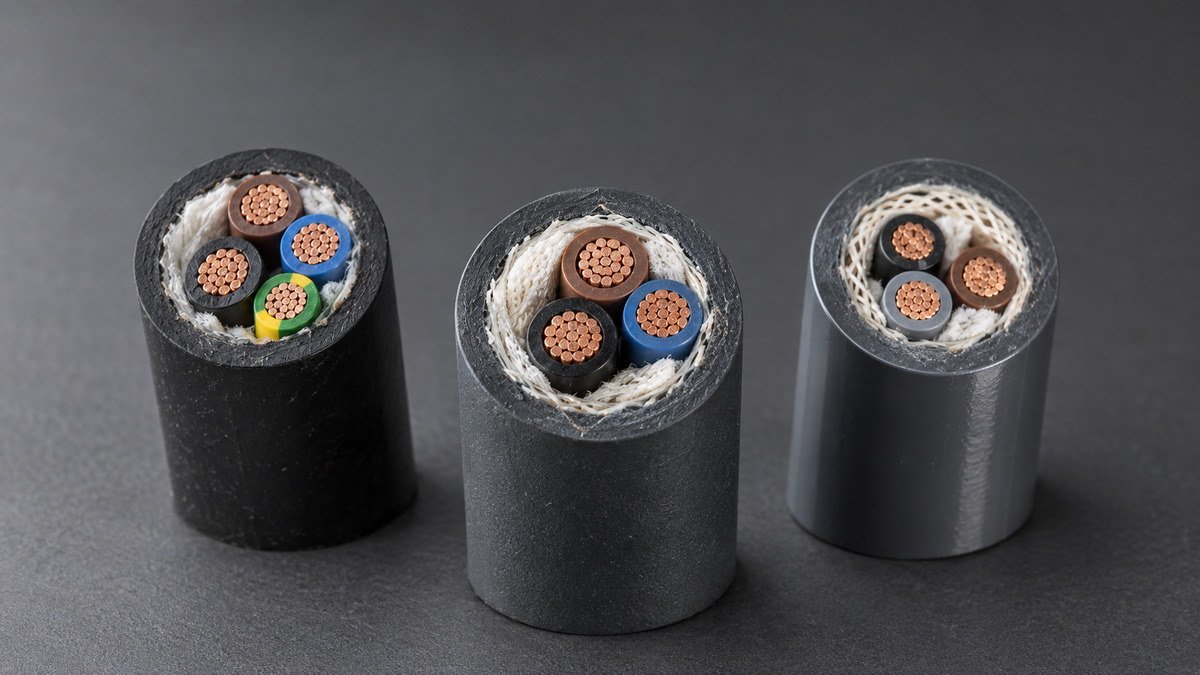
Why mining cable jackets wear out on mobile equipment, how CPE, TPU/PUR and PVC compare, and how to match the jacket to trailing or reeling duty.
Read more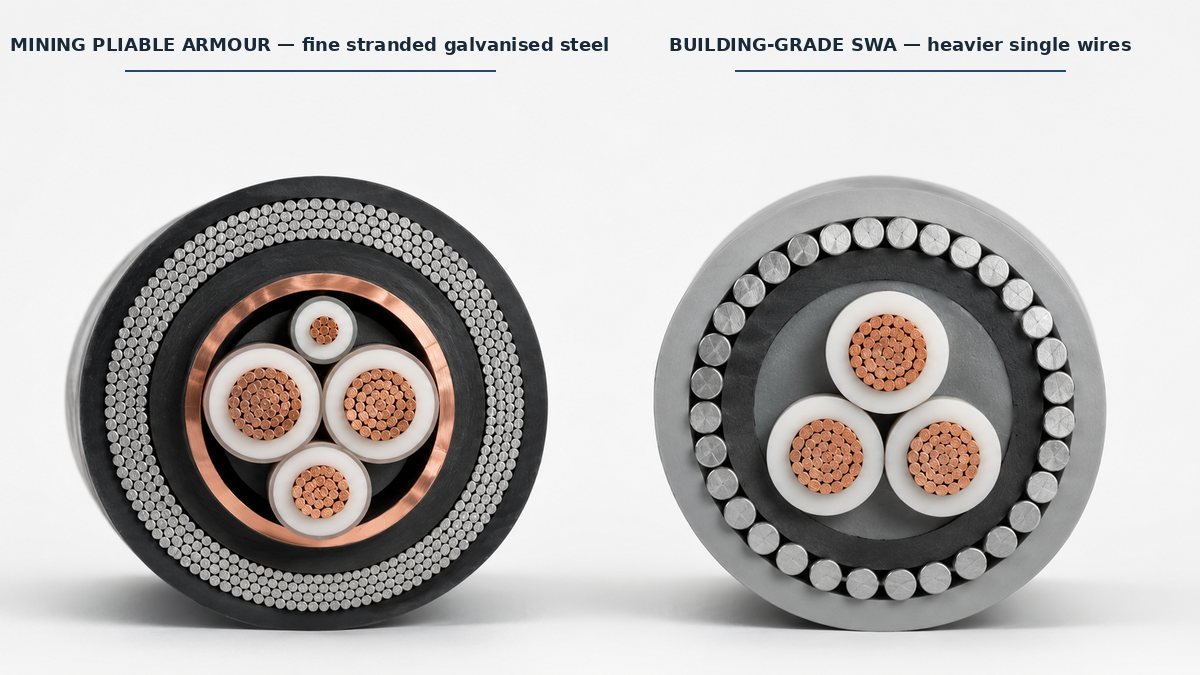
Armoured mining cable suits static routes, not trailing duty, and its armour is pliable not rigid SWA. Compare fixed routes, pilot cores and standards.
Read more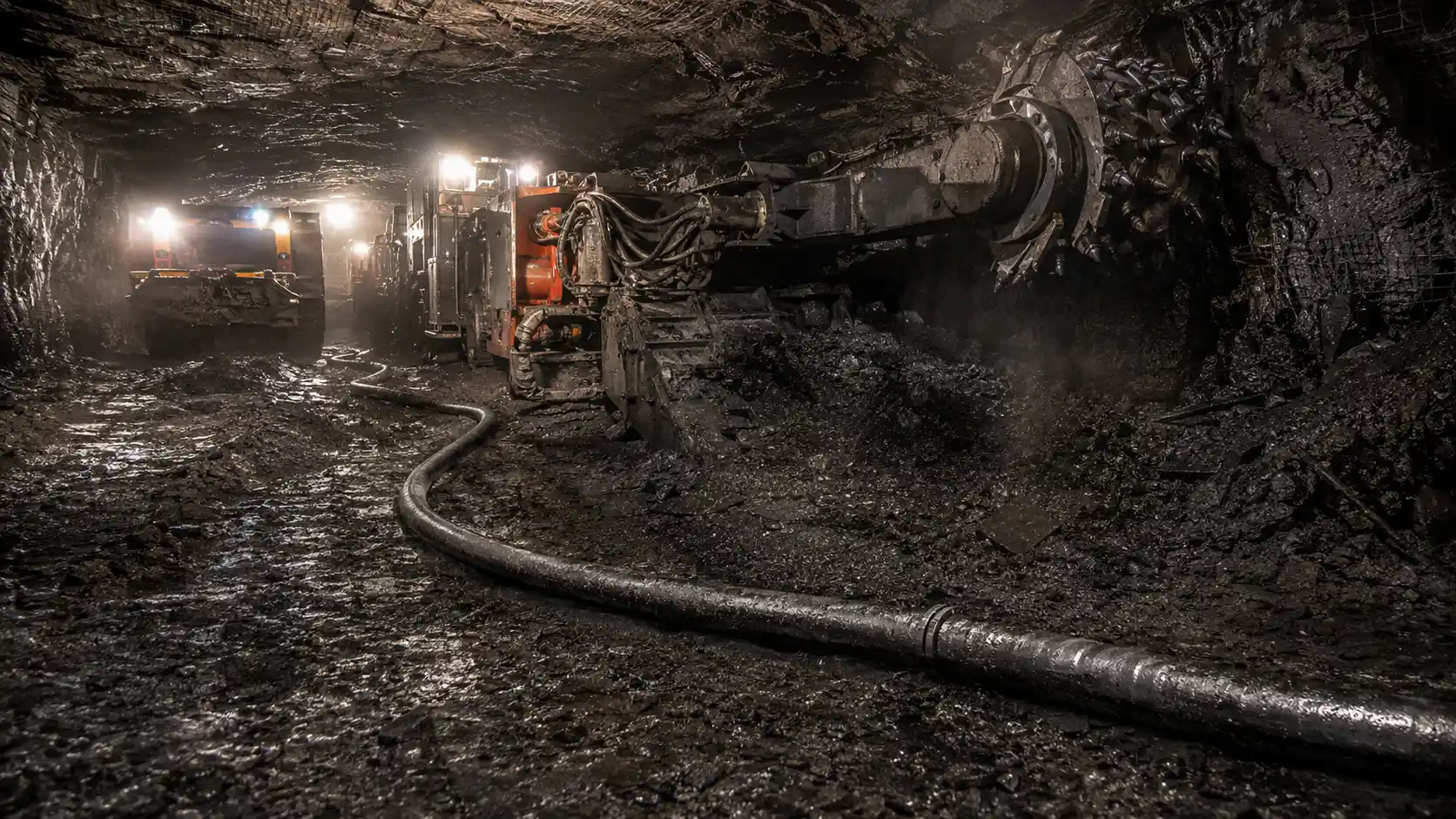
Type SHD means Shielded Heavy Duty. See what each letter stands for, what GC, CGC and PCG add, and the MSHA rules that force every layer to exist.
Read moreQuick answers about VDE Mining Cable from our engineers.
A VDE mining cable is identified by a DIN VDE 0250 type designation such as NSSHCGEÖU, NSHTOEU, (N)TSCGEWÖU or NTMCGCWOEU. Types differ in voltage class, earth and pilot-core layout, anti-torsion reinforcement and sheath compound. Prefixes and suffixes mark variants: R- for reeling duty, F- for fixed or occasionally moved runs, FO or LWL for fibre optics, and ABT for an added anti-torsion braid.
Both are 0.6/1 kV trailing cables with EPR insulation, pilot cores and a yellow PCP 5GM5 sheath. The (V) standard build has a copper–steel wire braid, about 15 N/mm² tensile strength, ±25°/m torsion and a 10 × OD bending radius. The (Z) reinforced build has a double-layer copper–steel braid with optional aramid, and its page lists about 30 N/mm², ±50°/m, 8 × OD and reeling up to 160 m/min.
R-(N)TSCGEWÖU is the reeling type for continuous winding, tensile load and torsion on shovels, draglines and excavators; it has a polyamide anti-torsion braid between a 5GM3 inner sheath and a 5GM5 or 5GM3 outer sheath. The F- prefix marks cable for fixed or occasionally moved runs such as mine substations, pump stations and shiftable conveyors, and is not recommended for continuous reeling.
Use only builds described as submersible or in-water. The (N)TSCGEWÖU and (N)TSCGECEWÖU submersible versions are listed for permanent use in salty or brackish water up to 300 m, for pumps, dredges and floating docks. NTSCGEWOEU W 3E has waterproof GM1b inner and 5GM3 outer sheaths for dredgers and pumps, and (N)TMCGCW11Y is listed for water pressure up to 10 bar (AD8).
R-(N)TSCGEWOEU FO and the FO versions of R-(N)TSCGEWÖU and (N)TSCGEWÖU carry an A-D(ZN)13Y module with 6, 12, 18 or 24 fibres of G50/125, G62.5/125 or E9/125. F-(N)TSCGEWÖU LWL TBM has an optional fibre element, and the listed (N)TSCGEWTOEUS OFE construction combines power and earth cores, 20 × 2.5 mm² control cores and 24 single-mode fibres.
The type designation and voltage class (U0/U); cores and cross-sections, including pilot, control and fibre elements; drum length and total length; the duty, whether fixed, trailing or reeling, with reel type, travel speed and tensile load; water, oil, temperature, flame or halogen-free requirements; and the required standard and test documents.
A special-cable manufacturer in Taicang, Suzhou, making heavy-duty and special cables since 2014.
UL and cUL, VDE, Korea KC, China MA and US MSHA approvals for the certified types, CE verification of conformity, and ISO 9001 quality management.
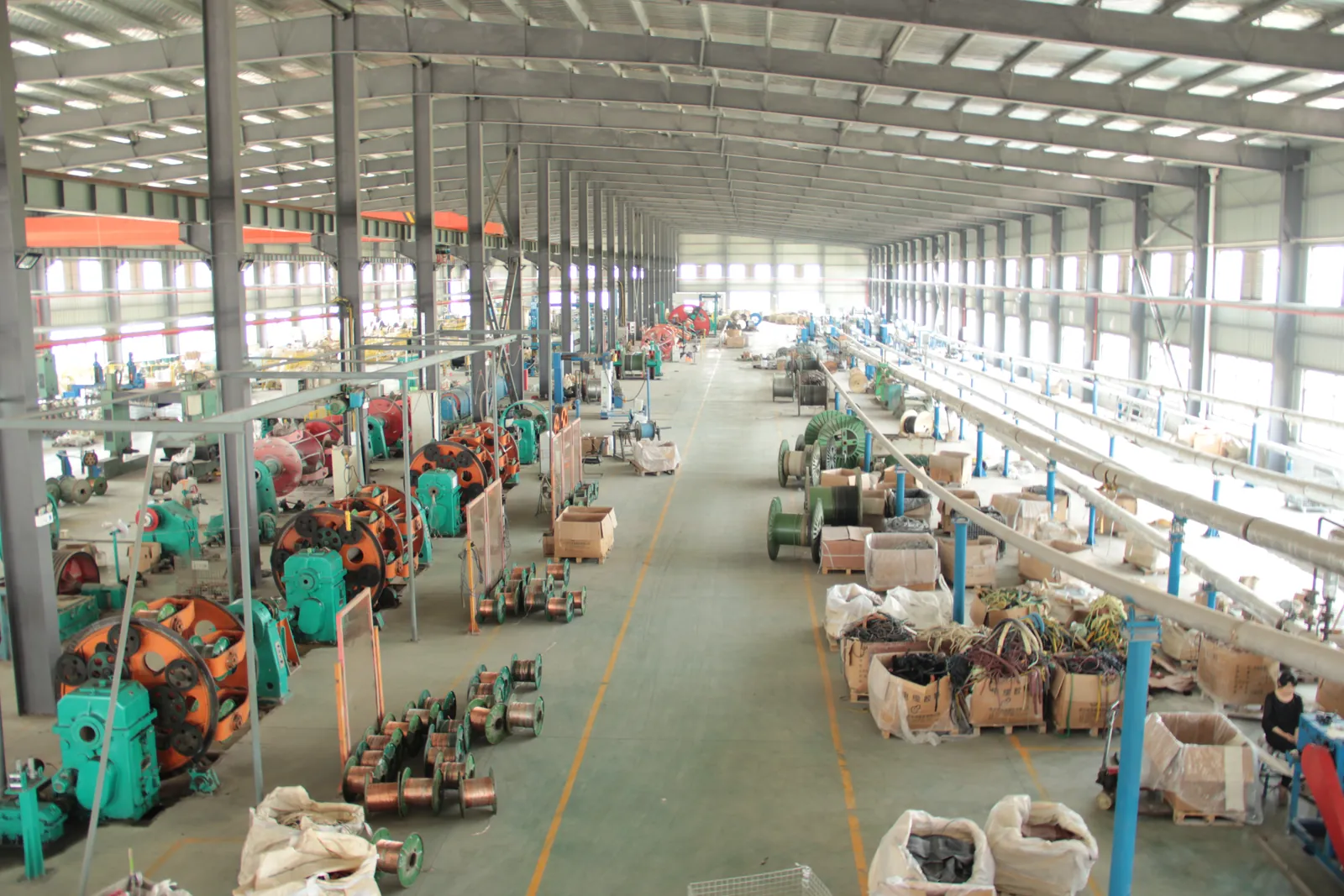
More than 200 sets of advanced production and test equipment at home and abroad, from compounding to final electrical testing.
Constructions engineered to VDE, ICEA, IEC and NEK 606 standards and checked against the real duty cycle of your equipment.
0.6/1 kV to 35 kV heavy-duty rubber cables, reeling and festoon crane cables, submersible, marine, ROV and high-temperature cables.
Special constructions, fibre-optic elements, colours, printing and lengths built to the specification of your project.
Cables working in tunnel engineering, marine and offshore equipment, mining, petrochemical, steel and urban construction projects around the world.
Send us the equipment, voltage, cores and operating conditions and our engineers will propose a cable construction and quotation.